
In short, boots are primarily categorized into four heights. These are ankle boots, which end at or just above the ankle; calf boots, which stop midway up the lower leg; knee-high boots, which rise to the knee; and over-the-thigh boots, the tallest category.
Choosing the right boot height isn't about style alone; it's a fundamental decision that balances your need for mobility against your need for ankle support and protection from the elements.
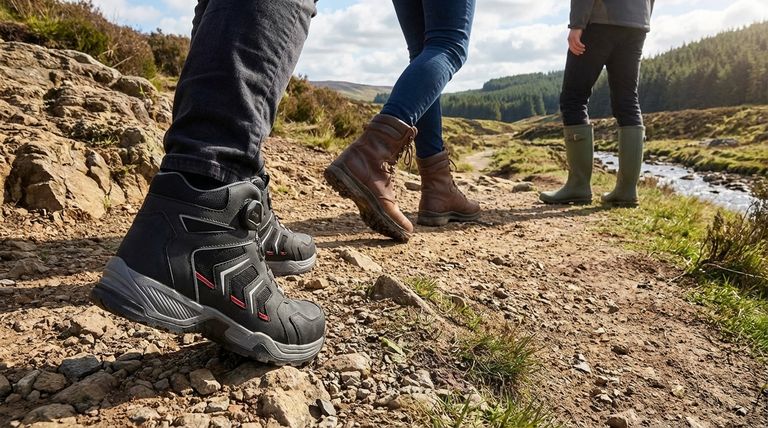
The Functional Spectrum of Boot Height
The height of a boot shaft directly dictates its performance characteristics. Understanding this relationship is key to selecting footwear that works with you, not against you.
Ankle Boots (Low-Cut): Maximum Mobility
Ankle boots are the shortest category, prioritizing flexibility and a wide range of motion. Their low cut makes them lightweight and less restrictive than taller options.
This design is ideal for daily wear, light trail hiking, or any activity where agility is more important than ankle protection.
Calf Boots (Mid-Cut): The Versatile Middle Ground
Extending up to the mid-calf, these boots represent a balance between mobility and support. This category includes many popular styles like combat boots and traditional cowboy boots.
They offer more substantial ankle support and protection from debris than ankle boots, making them suitable for more demanding hiking, work, or activities requiring a blend of sturdiness and flexibility.
Knee-High & Taller (High-Cut): Specialized Protection
This category includes boots that rise to the knee (like Wellington boots) or extend over the thigh. Their primary function is maximum protection, either from the environment or for a specific purpose.
High-cut boots provide the most ankle and lower-leg support, making them essential for rugged terrain. They also offer a superior barrier against deep water, snow, or other hazards.
Understanding the Trade-offs
Selecting a boot height always involves a compromise. Recognizing these trade-offs is crucial for avoiding common pitfalls.
Mobility vs. Ankle Support
This is the most critical trade-off. A lower cut offers greater flexibility for your ankle to move freely. A higher cut restricts that movement but provides significantly more stability, helping to prevent sprains on uneven ground.
Protection vs. Weight & Breathability
Taller boots naturally cover more of your leg, offering better protection from scrapes, water, and pests. However, this extra material adds weight and reduces airflow, which can lead to heat and moisture buildup during strenuous activity.
Style vs. Practicality
While all boots have a functional basis, some heights are driven heavily by aesthetics. Over-the-thigh boots, for example, are typically a fashion statement rather than a practical choice for technical performance. It's important to be clear about your primary objective.
How to Apply This to Your Goal
Your intended activity should be the deciding factor in your selection.
- If your primary focus is daily comfort and flexibility: Choose ankle boots for their lightweight design and freedom of movement.
- If your primary focus is all-around performance for hiking or work: Choose calf-height boots to get a reliable balance of ankle support and mobility.
- If your primary focus is maximum protection for rugged terrain or harsh weather: Choose knee-high boots for superior support and defense against the elements.
Ultimately, matching the boot's design to its intended purpose ensures both comfort and safety.
Summary Table:
| Boot Height | Key Characteristics | Best For |
|---|---|---|
| Ankle Boots | Maximum mobility, lightweight, flexible | Daily wear, light hiking, activities requiring agility |
| Calf Boots | Balanced ankle support and mobility, versatile | All-around hiking, work, demanding activities |
| Knee-High & Taller | Maximum protection, superior support, weather-resistant | Rugged terrain, harsh weather, specialized tasks |
Ready to source the perfect boots for your market?
As a large-scale manufacturer, 3515 produces a comprehensive range of footwear for distributors, brand owners, and bulk clients. Our production capabilities encompass all types of shoes and boots, from agile ankle boots to rugged knee-high models, ensuring you get the right blend of style, support, and performance for your customers.
Contact us today to discuss your bulk footwear needs and leverage our expertise for your success!
Visual Guide

Related Products
- Wholesale Durable Safety Boots | Custom Steel Toe & Puncture-Resistant Manufacturing
- Premium Wholesale Tactical Style Safety Shoes Boots with Quick Lacing
- Durable Goodyear Welt Leather Work Boots for Wholesale & Private Label
- Durable Leather Work Boots for Wholesale & Custom Manufacturing
- Premium Wholesale Waterproof Safety Boots High Performance Protection for Industrial Markets
People Also Ask
- What are the risks of using ordinary rubber boots in forest clearing? Why professional safety boots are essential
- What are the consequences of not wearing safety boots? Protect Your Finances and Career
- How should safety boots be cleaned to avoid damage? A Gentle Guide to Preserve Your Boots
- Why is proper storage important for safety boots? Preserve Protection and Extend Lifespan
- What are the key features of safety boots? Essential Protection for Hazardous Workplaces



















