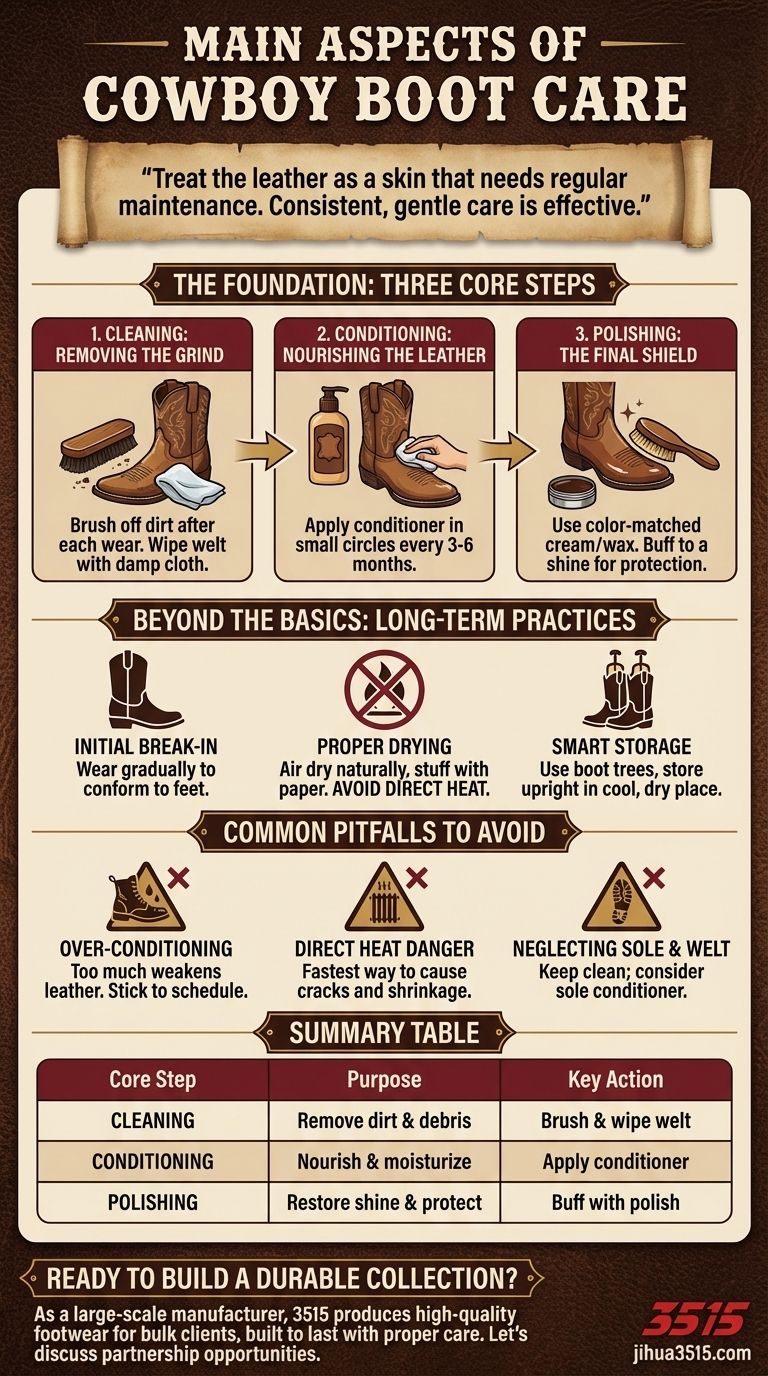
The core aspects of cowboy boot care are cleaning, conditioning, and polishing the leather. These three steps form the foundation of a routine that removes damaging dirt, restores essential moisture to prevent cracking, and provides a protective barrier to ensure your boots last for years.
The goal of proper boot care is not just to make them look good, but to treat the leather as a skin that needs regular maintenance. Consistent, gentle care is far more effective at preserving your investment than infrequent, aggressive cleaning.
The Foundation of Boot Care: The Three Core Steps
Proper maintenance revolves around a simple, repeatable cycle. Understanding the purpose of each step is key to performing it correctly and protecting the leather.
Step 1: Cleaning - Removing the Daily Grind
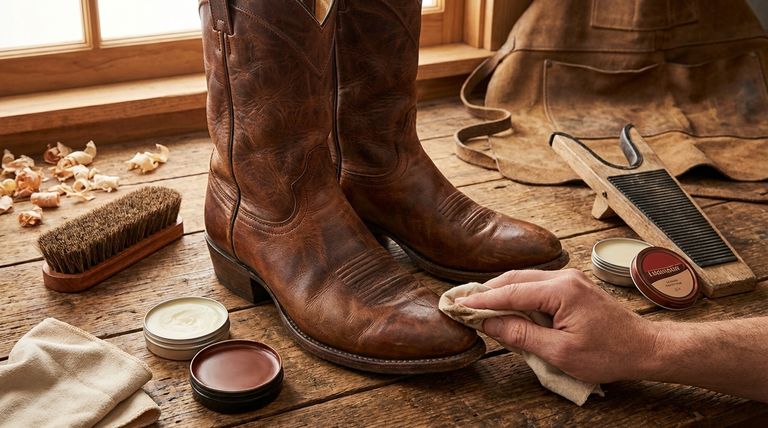
Before you do anything else, you must clean the boot's surface. Using a horsehair brush to remove loose dirt and dust after each wear is the single best habit you can adopt.
For a deeper clean, use a slightly damp cloth to wipe down the entire boot. Pay special attention to the welt—the seam where the sole is attached—as dirt often collects here and can degrade the stitching over time.
Step 2: Conditioning - Nourishing the Leather
Leather is a natural material that can dry out, become brittle, and crack. A leather conditioner is essentially a moisturizer for your boots, restoring the oils that keep the material flexible and strong.
Apply a small amount of a quality conditioner with a clean cloth, working it into the leather in small circles. Let it absorb completely before moving to the next step. Conditioning should be done every few months, or more often if your boots are exposed to harsh conditions.
Step 3: Polishing - The Final Shield
Polishing serves two purposes: it restores color and shine, and it adds a final protective layer against moisture and scuffs.
Choose a cream or wax polish that matches your boot's color. Apply a thin, even coat, let it dry, and then buff the boot to a shine with a clean, soft brush or cloth.
Beyond the Basics: Essential Long-Term Practices
While the three core steps form your regular routine, other practices are crucial for the overall health and longevity of your boots.
The Initial Break-In Period
New cowboy boots often require a break-in period to conform to your feet. Wear them for short periods at first and gradually increase the duration. This process is normal and is the first step in the life of your boots.
Proper Drying Techniques
If your boots become saturated with water, do not use direct heat to dry them. Heat from a radiator or hairdryer will parch the leather, causing it to shrink and crack.
Instead, stuff the boots with paper towels or newspaper to absorb the excess moisture from the inside. Then, let them air dry naturally in a well-ventilated area away from direct sunlight or heat sources.
Smart Storage Solutions
When you're not wearing your boots, proper storage maintains their shape and protects them from damage. Use boot trees to help the leather retain its form and prevent the shaft from collapsing.
Store them upright in a cool, dry place away from direct sunlight, which can fade and dry out the leather.
Common Pitfalls to Avoid
Knowing what not to do is as important as knowing what to do. These common mistakes can shorten the lifespan of high-quality boots.
Over-Conditioning the Leather
While conditioning is vital, too much of a good thing can be detrimental. Over-conditioning can oversaturate the leather, making it feel greasy, attracting more dirt, and potentially weakening its structure. Stick to a schedule of conditioning every 3-6 months.
The Danger of Direct Heat
This point cannot be overstressed. Exposing wet leather boots to any form of direct heat is the fastest way to cause permanent damage. Always choose slow, natural air drying.
Neglecting the Sole and Welt
The upper part of the boot, known as the vamp, gets most of the attention. However, the structural integrity lies in the sole and welt. Keep the welt stitching clean and consider applying a sole conditioner to leather soles to keep them from drying out and cracking.
Making the Right Choice for Your Goal
Your care routine should adapt to how you use your boots. Tailor your approach based on your primary objective.
- If your primary focus is daily wear and appearance: Make a quick brush-down after each use a non-negotiable habit to prevent dirt buildup.
- If your primary focus is long-term preservation: Invest in quality boot trees and a dedicated conditioner, and store your boots properly when not in use.
- If your primary focus is restoring worn or neglected boots: Start with a thorough cleaning using a dedicated leather soap, followed by several light applications of conditioner over a few days to slowly rehydrate the leather.
Ultimately, consistent care is the key to ensuring your cowboy boots not only look their best but also serve you well for a lifetime.
Summary Table:
| Core Step | Purpose | Key Action |
|---|---|---|
| Cleaning | Remove dirt and debris | Brush with a horsehair brush; wipe welt with a damp cloth |
| Conditioning | Nourish and moisturize leather | Apply quality conditioner every 3-6 months |
| Polishing | Restore shine and add protection | Use color-matched cream or wax; buff to a shine |
Ready to build a durable boot collection?
As a large-scale manufacturer, 3515 produces a comprehensive range of high-quality footwear for distributors, brand owners, and bulk clients. Our production capabilities encompass all types of durable shoes and boots, built to last with the proper care you've just learned about.
Let's discuss how we can support your business with reliable, well-crafted footwear.
Contact our team today to explore our catalog and partnership opportunities.
Visual Guide
Related Products
- Wholesale High-Traction Camo Boots - Custom Manufacturer for Brands
- Durable Leather Tactical Boots Wholesale & Custom Manufacturing for Brands
- High-Traction Suede Tactical Boots Wholesale & Custom Manufacturing
- Wholesale Lightweight Tactical Boots Custom Manufacturer for Desert & Combat Use
- Wholesale Waterproof Tactical Boots Custom Suede & High-Traction Soles
People Also Ask
- What are the key features of the new line of camo boots? Built for Extreme Cold & Rugged Terrain
- Are camo boots necessary for hunting success? Prioritize Performance Over Pattern
- How does the Rank Score Test identify the primary causes of premature failure in tactical and work boots? Key Insights
- What is the technical logic behind using closed-eye testing for tactical boots? Unlocking Peak Footwear Stability
- What shoes to wear for a security job? Durable, Protective Footwear for Long Shifts