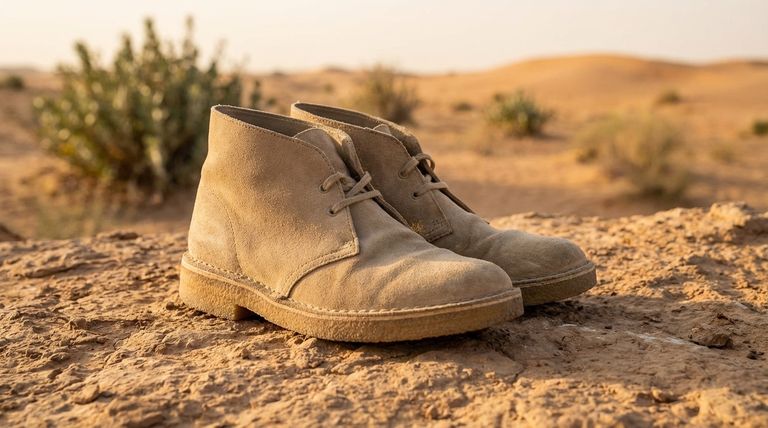
The Desert Boot's uniqueness stems directly from its minimalist construction and two signature materials: a soft, unstructured suede upper and a flexible crepe rubber sole. Unlike more rigid boots, its upper is turned outward and stitched directly to the sole, a method that prioritizes immediate, slipper-like comfort over structural complexity.
The core innovation of the Desert Boot is not what was added, but what was taken away. Its radical simplicity in construction and materials creates a level of flexibility and out-of-the-box comfort that traditional, more structured boots cannot match.
The Anatomy of an Icon: Deconstructing the Design
To understand the boot's enduring appeal, you must first understand its core components. Each element serves a specific functional purpose rooted in comfort and simplicity.
The Crepe Rubber Sole
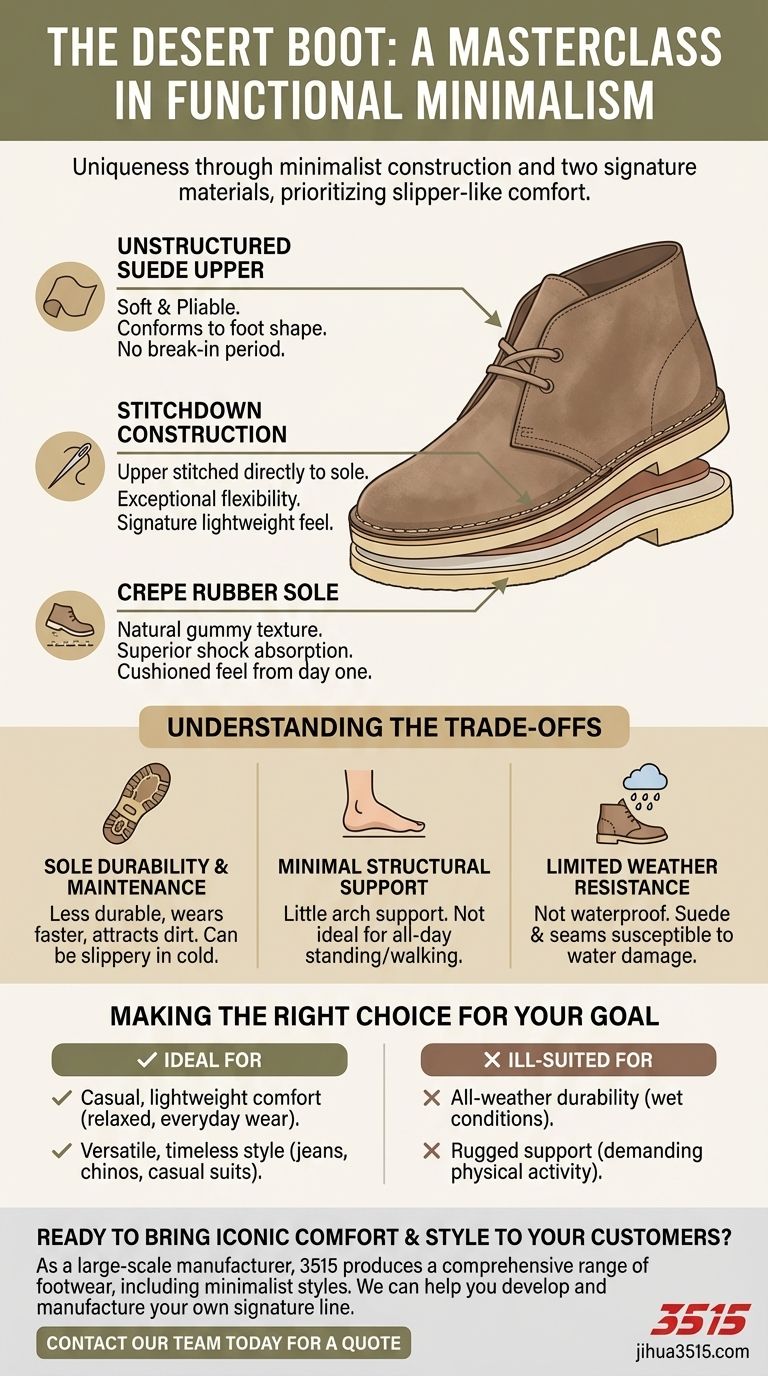
The foundation of the Desert Boot's comfort is its crepe rubber sole. This natural material is known for its gummy texture, which provides excellent shock absorption and a soft, cushioned feel underfoot.
Unlike dense, molded rubber soles, crepe is flexible and moves naturally with your foot from the very first wear, eliminating the stiff break-in period common with other boots.
The Unstructured Suede Upper
The boot almost exclusively uses a rough-suede upper. This material is soft, pliable, and requires little to no breaking in.
Its unstructured nature means it conforms to the shape of your foot rather than forcing your foot to conform to the boot, minimizing potential pressure points and friction.
The Stitchdown Construction
This is the most critical design element. In a stitchdown construction, the leather of the upper is turned outwards and sewn directly onto the midsole or sole.
This simple, effective method creates an exceptionally flexible bond between the upper and the sole. It's the primary reason for the boot's famous "slipper-like" feel, as it allows for a much greater range of motion.
Understanding the Trade-offs
The design choices that make the Desert Boot exceptionally comfortable also create inherent limitations. An objective assessment requires acknowledging these trade-offs.
Sole Durability and Maintenance
The softness that makes a crepe sole comfortable also makes it less durable than harder rubber compounds. It can wear down more quickly with heavy use and tends to attract dirt.
Furthermore, crepe rubber can become hard and slick in very cold weather, reducing its effectiveness.
Minimal Structural Support
The same minimalist design that provides flexibility offers very little arch support. The flat, unstructured nature of the boot may not be suitable for individuals requiring significant support for all-day wear or long-distance walking.
Limited Weather Resistance
The combination of a suede upper and a simple stitchdown construction offers minimal protection from the elements. Suede is susceptible to water damage, and the seam is not waterproof, making the Desert Boot a poor choice for rainy or wet conditions.
Making the Right Choice for Your Goal
The Desert Boot is an iconic piece of footwear, but its specific design makes it ideal for some situations and ill-suited for others.
- If your primary focus is casual, lightweight comfort: The boot's flexible sole and unstructured upper make it one of the best choices available for relaxed, everyday wear.
- If your primary focus is versatile, timeless style: Its simple, two-eyelet design is famously adaptable, pairing equally well with jeans, chinos, or even casual suits.
- If your primary focus is all-weather durability or rugged support: The boot's materials and construction are not designed for wet conditions or demanding physical activity.
Ultimately, the Desert Boot's design is a masterclass in functional minimalism, delivering unparalleled comfort by prioritizing flexibility above all else.
Summary Table:
| Design Element | Key Feature | Impact on Comfort & Style |
|---|---|---|
| Crepe Rubber Sole | Soft, natural rubber | Provides superior shock absorption and a flexible, cushioned feel from day one. |
| Unstructured Suede Upper | Soft, pliable leather | Conforms to the foot's shape for a slipper-like fit with no break-in period. |
| Stitchdown Construction | Upper stitched directly to the sole | Creates exceptional flexibility and the boot's signature lightweight, comfortable feel. |
Ready to bring this level of iconic comfort and style to your customers?
As a large-scale manufacturer, 3515 produces a comprehensive range of footwear for distributors, brand owners, and bulk clients. Our production capabilities encompass all types of shoes and boots, including styles that embody the perfect balance of minimalist design and superior comfort.
We can help you develop and manufacture your own signature footwear line. Contact our team today to discuss your production needs and get a quote.
Visual Guide
Related Products
- Wholesale Lightweight Tactical Boots Custom Manufacturer for Desert & Combat Use
- Durable Military Combat Boots with Water Drainage for Wholesale & OEM
- Wholesale High-Traction Camo Boots - Custom Manufacturer for Brands
- Durable Leather Tactical Boots Wholesale & Custom Manufacturing for Brands
- Durable Waterproof Rain Boots | Custom Manufacturer for Wholesale & Brands
People Also Ask
- What are the common types of combat boots? Find the Right Boot for Your Mission
- What specialized protections do tactical boots offer? Maximize Endurance with High-Performance Footwear
- How is the compatibility of polymer materials demonstrated in smart footwear? Enhancing Tactical & Training Performance
- What is the role of high-frequency acquisition hardware in technical skill analysis for outdoor and tactical boots?
- How does additive manufacturing equipment reduce environmental risks? Sustainable Tactics for Modern Footwear Production