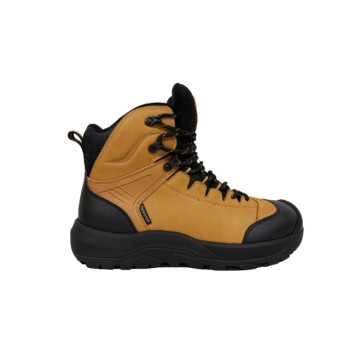
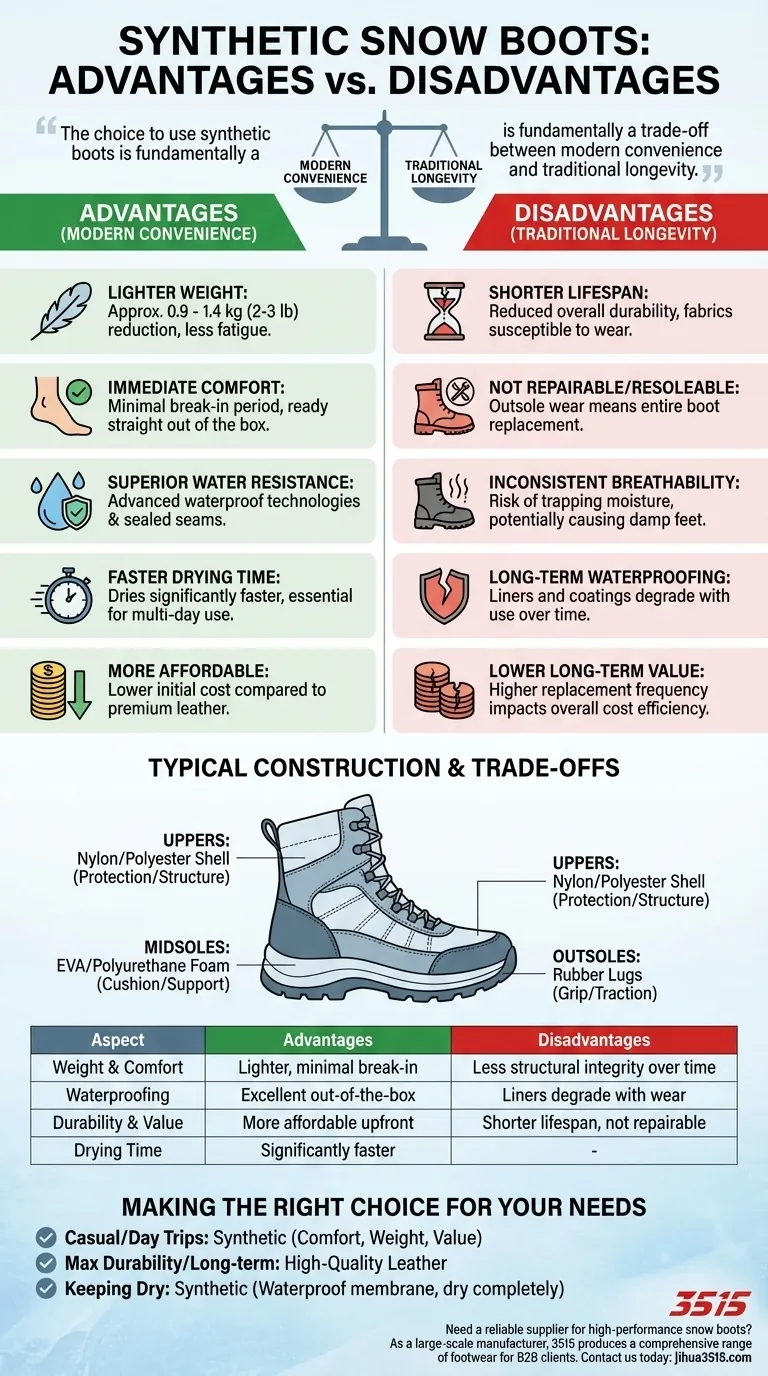
The primary advantages of synthetic snow boots are their lighter weight, immediate comfort with no break-in period, and faster drying times. They are often more affordable and feature advanced waterproof technologies straight out of the box. However, their main disadvantages are a shorter overall lifespan compared to high-quality leather and an inability to be repaired or resoled, which impacts their long-term value.
The choice to use synthetic boots is fundamentally a trade-off between modern convenience and traditional longevity. Synthetics excel in immediate, lightweight performance for most winter activities but sacrifice the long-term durability and repairability of premium leather.
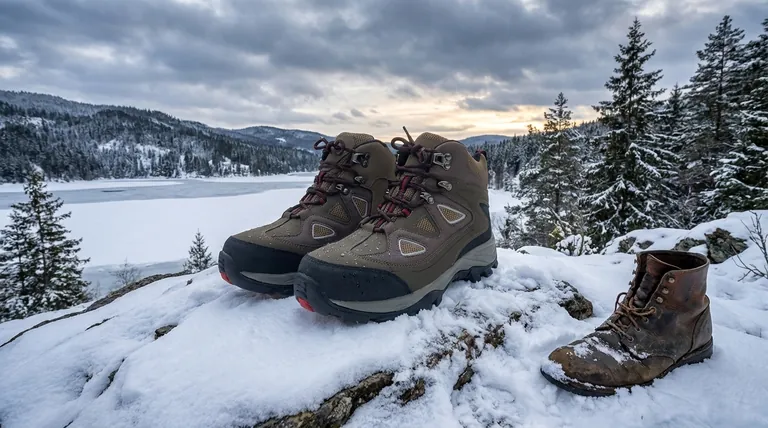
The Core Advantages of Synthetic Construction
Synthetic materials like nylon and polyester have revolutionized footwear by offering performance characteristics that are difficult to achieve with traditional materials.
Lightweight Performance
Synthetic boots are consistently lighter than their all-leather counterparts. This reduction in weight, often between 0.9 kg (2 lb) and 1.4 kg (3 lb) per pair, leads to less fatigue during long walks or hikes in the snow.
Superior Water Resistance
Most synthetic boots are designed to be either water-resistant or fully waterproof from the moment you buy them. They often incorporate waterproof liners and sealed seams to provide a reliable barrier against slush and snow.
Minimal Break-in Period
Unlike stiff, full-grain leather boots that can take weeks to mold to your feet, synthetic boots are generally comfortable immediately. Their flexible materials reduce the risk of blisters and discomfort on your first few wears.
Faster Drying Time
When synthetic boots do get wet, either externally or from internal sweat, they dry significantly faster than leather. This is a critical advantage for multi-day trips or even just ensuring your boots are ready for the next morning.
Understanding the Trade-offs and Disadvantages
While modern synthetics offer many benefits, they come with clear limitations that are important to understand before making a purchase.
The Durability Question
The primary drawback of synthetic boots is their reduced durability compared to high-quality leather. The fabrics are more susceptible to abrasion and cuts from rocks or ice, and the seams can wear out more quickly under heavy use.
Limited Repairability
Most synthetic boots cannot be resoled. Once the outsole wears down, the entire boot must be replaced. This contrasts sharply with premium leather boots, which can often be resoled multiple times, greatly extending their usable life.
The Breathability Paradox
Breathability in synthetic boots can be inconsistent. High-end models with advanced waterproof-breathable membranes excel at letting sweat vapor escape. However, cheaper synthetic boots can feel like wearing plastic bags, trapping moisture and leading to cold, damp feet even if no external water gets in.
Long-Term Waterproofing
While excellent when new, the waterproof liners and coatings on synthetic boots can degrade over time. Flexing and abrasion can wear down these barriers, compromising their long-term waterproof performance.
A Look at Typical Construction
Modern synthetic and hybrid boots are engineered systems with each part serving a specific purpose.
Uppers: The Protective Shell
The uppers are made from materials like nylon or polyester, sometimes combined with leather for added durability in key areas. This shell provides the boot's structure and primary defense against the elements.
Midsoles: Cushion and Support
The midsole is typically made from shock-absorbing foams like EVA (ethylene vinyl acetate) or polyurethane. This layer provides crucial cushioning and stability, reducing impact on your joints.
Outsoles: Grip on the Ground
The outsoles are almost always made of hard-wearing rubber. They feature aggressive, deep patterns called lugs designed to bite into snow and provide reliable traction on slippery surfaces.
Making the Right Choice for Your Needs
Selecting the right boot depends entirely on your intended use, budget, and priorities.
- If your primary focus is casual winter use and day trips: Synthetic boots are likely the ideal choice for their immediate comfort, light weight, and excellent value.
- If your primary focus is maximum durability and long-term investment: A high-quality full-grain leather boot, which can be maintained and resoled, is the superior option for heavy-duty use.
- If your primary focus is keeping feet dry across varied conditions: Look for synthetic boots with a proven waterproof membrane and sealed seams, but always remember to remove insoles to allow internal moisture to dry completely.
Ultimately, understanding these material trade-offs empowers you to select a boot that performs exactly as you need it to in winter conditions.
Summary Table:
| Aspect | Advantages of Synthetic | Disadvantages of Synthetic |
|---|---|---|
| Weight & Comfort | Lighter, minimal break-in period | Less structural integrity over time |
| Waterproofing | Excellent out-of-the-box performance | Liners can degrade with wear |
| Durability & Value | More affordable upfront | Shorter lifespan, not repairable/resoleable |
| Drying Time | Dries significantly faster than leather | - |
Need a reliable supplier for high-performance snow boots?
As a large-scale manufacturer, 3515 produces a comprehensive range of footwear for distributors, brand owners, and bulk clients. Our production capabilities encompass all types of synthetic and leather boots, ensuring you get the right product for your market's needs.
Contact us today to discuss your requirements and get a quote!
Visual Guide
Related Products
- Premium Insulated Safety Boots and Shoes for Wholesale & Bulk Orders
- Durable Waterproof Rain Boots | Custom Manufacturer for Wholesale & Brands
- Factory Direct Wholesale Rain Boots Durable Waterproof & Fully Customizable
- Wholesale Waterproof Tactical Boots Custom Suede & High-Traction Soles
- Wholesale Lightweight Tactical Boots Custom Manufacturer for Desert & Combat Use
People Also Ask
- What are the recommended insulation ratings for mild winter conditions? A Guide for Active & Stationary Workers
- How does insulation thickness correlate with temperature ranges? A Guide to Choosing the Right Warmth
- What insulation level is needed for severe cold and stationary work? 1200g or Higher is Essential
- What safety advantages do insulated boots offer beyond warmth? Dielectric Protection & Superior Grip
- How does fleece lining contribute to the warmth of insulated boots? Trapping Air for Superior Cold Protection