
For a proper fit, you should almost always buy the Clarks Desert Boot a half size smaller than your standard sneaker size. This boot is known for running large and is only offered in a single standard width. The suede upper will stretch and conform to your foot with wear, so a fit that feels snug at first is often ideal.
The core challenge in sizing the Clarks Desert Boot is balancing its larger-than-standard length against its single width and the eventual stretching of the suede. The definitive advice is to size down, anticipating the material will mold to your foot over time.
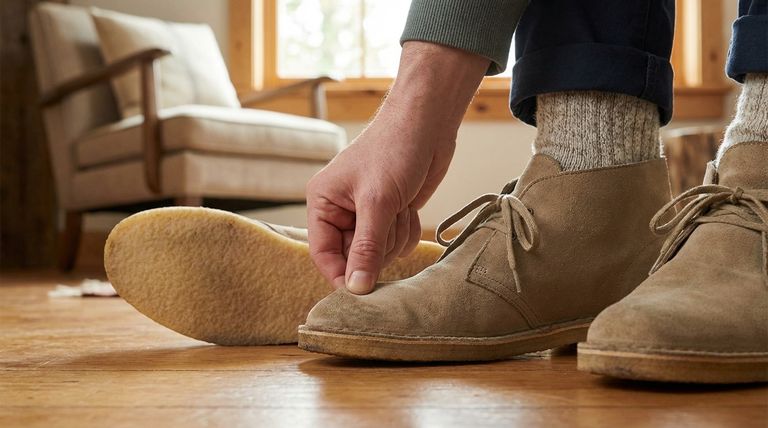
Deconstructing the Clarks Desert Boot Fit
To understand why the sizing advice is so specific, we need to look at the three key components of the boot's construction: its length, its material, and its sole.
The "Half Size Down" Rule
This is the most consistent piece of advice for a reason. The boot's last, the form it's shaped around, is longer than that used for most athletic sneakers. Going down a half size from your Nike or Adidas size correctly aligns your foot with the boot's intended flex point.
The Suede Factor: A Snug Start is Key
The upper of the most popular Desert Boot models is made from suede, a famously pliable leather. It will stretch and relax, especially across the width of your foot.
A boot that feels slightly tight (but not painful) across the sides when you first try it on will likely break in to a perfect, glove-like fit after a few days of wear.
The Crepe Sole's Unique Feel
The soft, natural crepe rubber sole is a signature feature that provides a cushioned, flexible experience. Many describe it as feeling like walking in comfortable slippers.
However, this comfort comes from flexibility, not structure. The sole offers very little arch support or torsional stability, a critical factor for those who need a more supportive shoe for all-day wear.
How to Test for the Perfect Fit
When trying on the boots, whether at home or in a store, follow these steps to confirm you have the right size.
Check Your Toe Room
You should have about half an inch of space between the end of your longest toe and the front of the boot. Your toes should not feel crammed or be pressing against the leather.
Assess the Heel and Midfoot
Your foot should feel securely held in place across the instep, where you tie the laces. A small amount of heel slip when you walk is normal for new boots, but it should not be excessive.
Wear the Right Socks
Always try on boots with the same type of socks you intend to wear with them. A thick sock can make a significant difference in how a boot fits compared to a thin dress sock.
Understanding the Trade-offs
The unique fit and feel of the Desert Boot come with inherent compromises that are crucial to understand before you buy.
Pro: Exceptional Lightweight Comfort
The combination of unstructured suede and a soft crepe sole makes the boot incredibly lightweight and comfortable right out of the box, requiring minimal break-in time.
Con: Limited Arch Support
This is not a workhorse boot designed for standing on hard surfaces all day. The lack of a structured insole and shank means arch support is minimal, which can lead to foot fatigue for some wearers.
Con: Durability Concerns
The very features that make the boot comfortable also impact its longevity. The suede is prone to scuffing and staining, and the soft crepe sole can wear down relatively quickly with frequent use on abrasive surfaces like pavement.
The Resole Option
While the sole may wear out, the leather uppers are often quite durable. A significant advantage of this boot is that a skilled cobbler can resole it, extending its life far beyond the original crepe sole.
Making the Right Sizing Choice
Use your primary goal to make a final decision on sizing and suitability.
- If your primary focus is a classic, casual style: Go a half size down from your sneaker size, and trust that the initial snugness will give way to a custom fit.
- If you have particularly wide or narrow feet: Trying the boots on in person is non-negotiable, as the single standard width may be a deal-breaker for you.
- If your primary focus is all-day support: Acknowledge that regardless of the fit, the unstructured nature of the Desert Boot may not provide the stability you need.
By understanding how the boot's design informs its fit, you can make an informed choice that works for your feet and your needs.
Summary Table:
| Sizing Factor | Key Consideration | Recommendation |
|---|---|---|
| Length | Runs longer than standard sneakers. | Size down a half size from your sneaker size. |
| Width | Only available in a standard width. | Try on in person if you have wide/narrow feet. |
| Material | Suede upper will stretch with wear. | A snug (not painful) initial fit is ideal. |
| Sole | Soft crepe rubber offers flexibility, not support. | Not ideal for all-day wear if you need arch support. |
Need a Perfect Fit for Your Customers?
As a large-scale manufacturer, 3515 produces a comprehensive range of footwear for distributors, brand owners, and bulk clients. Our production capabilities encompass all types of shoes and boots, ensuring consistent sizing, quality materials, and reliable support.
Let us help you deliver the perfect fit and style to your market. Contact our team today to discuss your manufacturing needs.
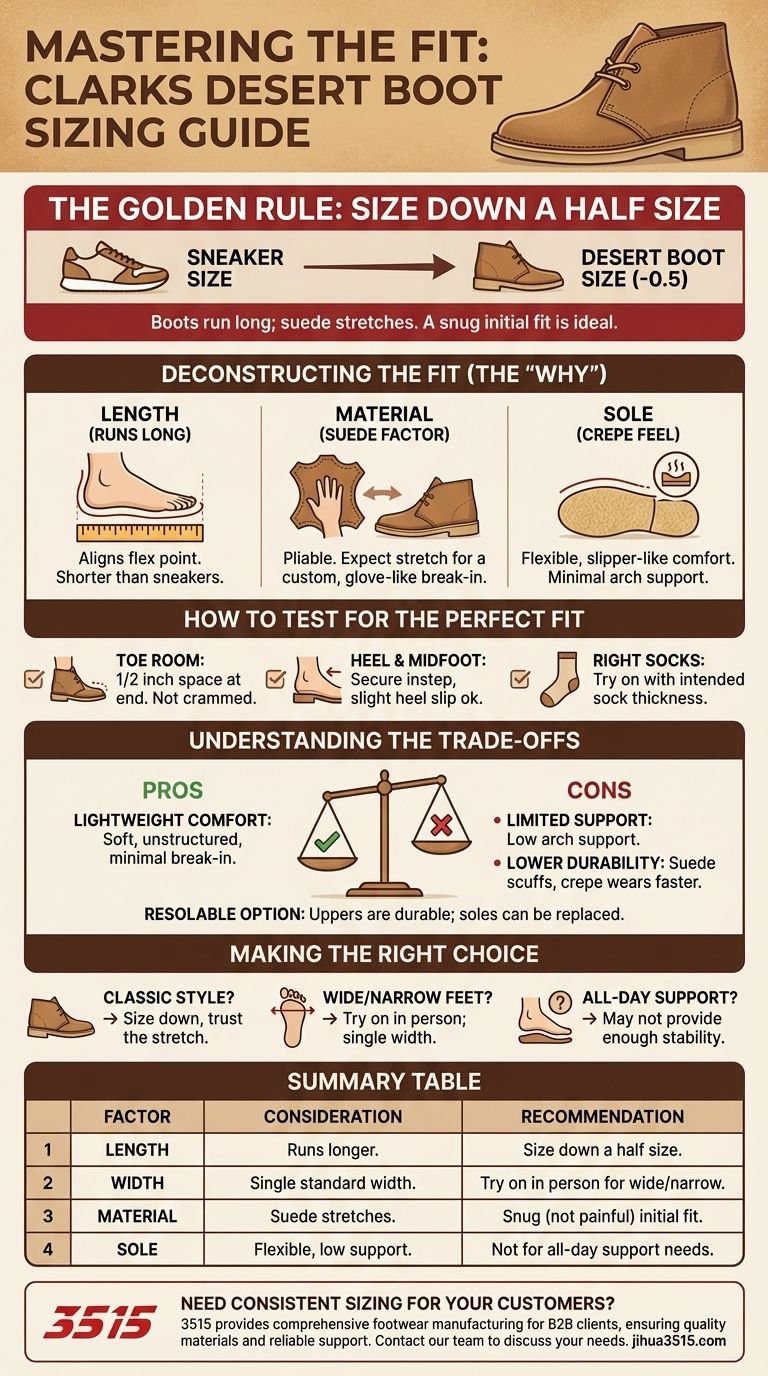
Visual Guide
Related Products
- Wholesale Lightweight Tactical Boots Custom Manufacturer for Desert & Combat Use
- Durable Leather Tactical Boots Wholesale & Custom Manufacturing for Brands
- Durable Military Combat Boots with Water Drainage for Wholesale & OEM
- Wholesale Waterproof Tactical Boots Custom Suede & High-Traction Soles
- Durable High-Ankle Tactical Boots Wholesale Manufacturer for Custom & Bulk Orders
People Also Ask
- What are the common types of combat boots? Find the Right Boot for Your Mission
- What specialized protections do tactical boots offer? Maximize Endurance with High-Performance Footwear
- How does additive manufacturing equipment reduce environmental risks? Sustainable Tactics for Modern Footwear Production
- What are the different types of tactical boots available? Find the Right Boot for Your Mission
- How is the compatibility of polymer materials demonstrated in smart footwear? Enhancing Tactical & Training Performance

















