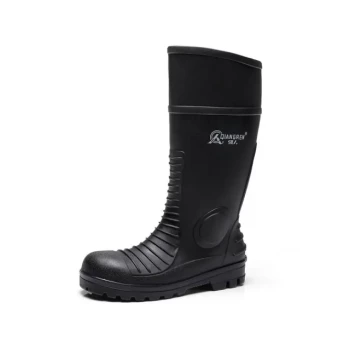
In short, the long-term benefits of PVC work boots are rooted in their exceptional cost-effectiveness, reliable waterproof and chemical protection, and lightweight design. For specific applications, they provide lasting value by offering essential safety features at a significantly lower price point than many alternatives.
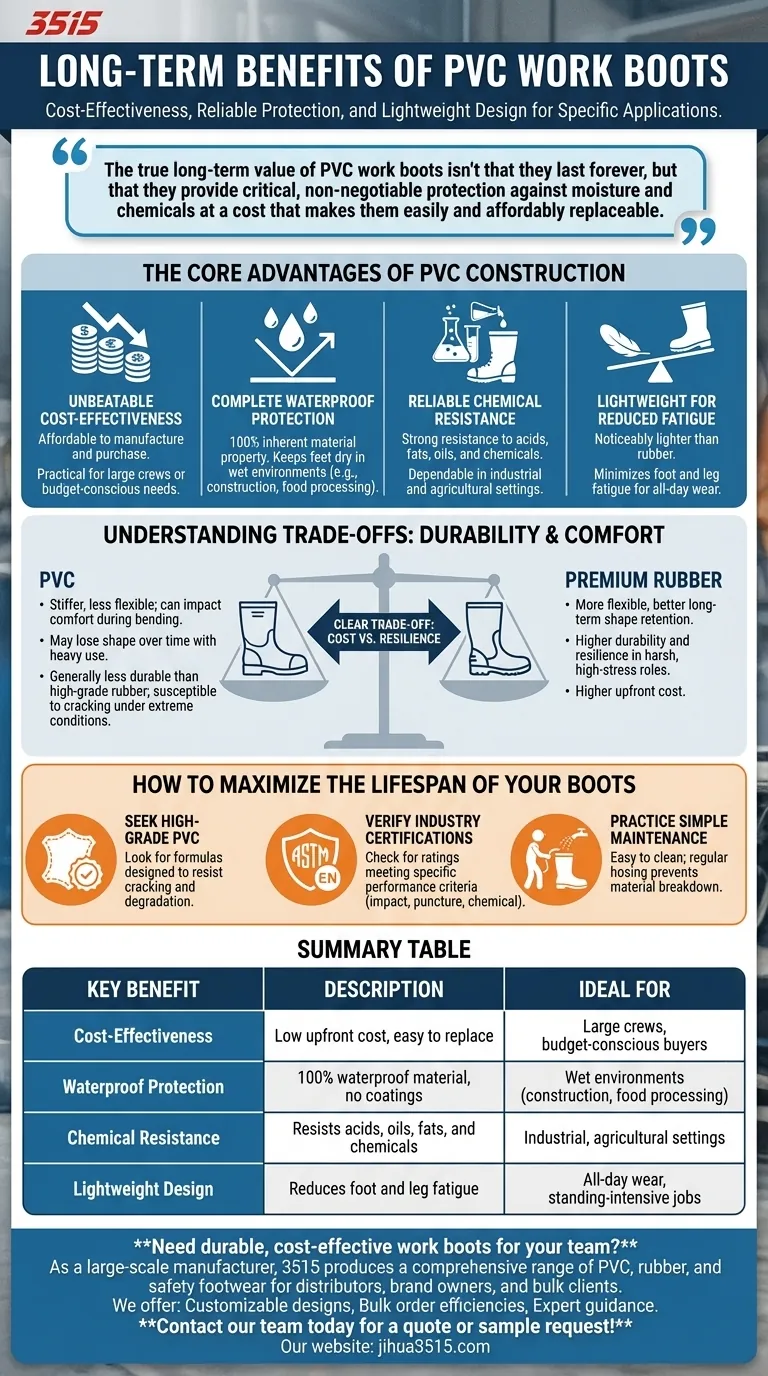
The true long-term value of PVC work boots isn't that they last forever, but that they provide critical, non-negotiable protection against moisture and chemicals at a cost that makes them easily and affordably replaceable.
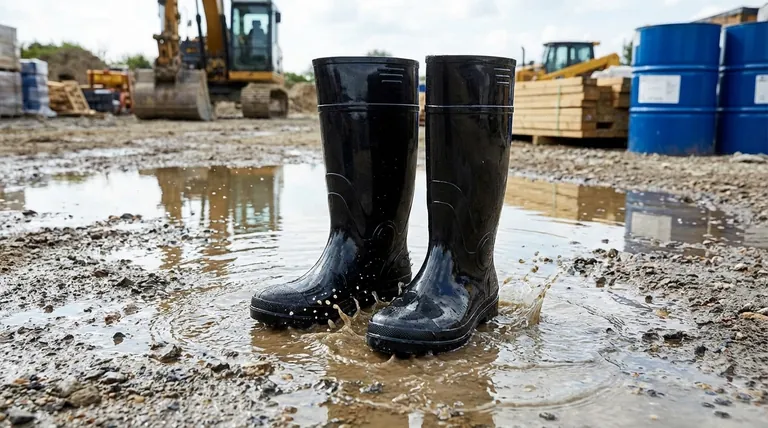
The Core Advantages of PVC Construction
Polyvinyl chloride (PVC) is a synthetic polymer that offers several distinct advantages when used in work footwear, making it a staple in many industries.
Unbeatable Cost-Effectiveness
PVC is affordable and easy to manufacture, which translates directly to a lower purchase price. This makes PVC boots a highly practical choice for large crews or for individuals who need reliable protection without a large upfront investment.
Complete Waterproof Protection
The material is 100% waterproof. This is not a coating or a treatment but an inherent property of PVC, ensuring your feet stay dry in wet environments, from construction sites to food processing plants.
Reliable Chemical Resistance
PVC offers strong resistance to a variety of acids, fats, oils, and other chemicals. The specific level of protection can vary by model, but it provides a dependable barrier in many industrial and agricultural settings.
Lightweight for Reduced Fatigue
Compared to traditional materials like rubber, PVC is noticeably lighter. This reduction in weight minimizes foot and leg fatigue, a significant benefit for anyone who spends the entire day on their feet.
Understanding the Trade-offs: Durability and Comfort
While PVC offers excellent value, it's crucial to understand its limitations. The choice to use PVC involves a clear trade-off between its low cost and its long-term physical resilience compared to premium materials.
Flexibility and Stiffness
PVC boots are generally stiffer and less flexible than rubber boots. This can impact comfort during tasks that require a lot of bending or squatting.
Long-Term Shape Retention
Over time and with heavy use, some PVC boots can lose their original shape. This can affect fit and support, which is a key consideration for long-term daily wear.
Overall Durability
While durable enough for many jobs, PVC is generally considered less durable than high-grade rubber. It can be more susceptible to cracking or splitting in extreme temperatures or under constant, high-stress physical demands.
How to Maximize the Lifespan of Your Boots
To ensure you get the most value from your PVC boots, focus on the quality of the product, not just the material itself.
Seek Out High-Grade PVC
Not all PVC is created equal. Look for boots made from high-grade formulas specifically designed to resist cracking and degradation, extending their usable lifespan.
Verify Industry Certifications
Always check for safety certifications (like ASTM or EN standards). These ratings ensure the boot has been tested to meet specific performance criteria for things like impact resistance, sole puncture, and chemical protection.
Practice Simple Maintenance
One of the best features of PVC is that it's extremely easy to clean and maintain. Regularly hosing off dirt and chemicals prevents material breakdown and keeps the boots in good working order.
Making the Right Choice for Your Goal
Selecting the right boot means matching the material's strengths to your specific job requirements.
- If your primary focus is budget and reliable protection from water or light chemicals: PVC boots offer an unbeatable combination of safety and low cost, making them the ideal choice for environments like agriculture, food processing, or general maintenance.
- If your primary focus is maximum durability and comfort in harsh, physically demanding roles: You should carefully weigh the upfront savings of PVC against the potentially longer lifespan and greater flexibility of a premium rubber or neoprene boot.
Ultimately, choosing the right PVC boot is about understanding it as a highly effective tool for a specific set of tasks.
Summary Table:
| Key Benefit | Description | Ideal For |
|---|---|---|
| Cost-Effectiveness | Low upfront cost, easy to replace | Large crews, budget-conscious buyers |
| Waterproof Protection | 100% waterproof material, no coatings | Wet environments (construction, food processing) |
| Chemical Resistance | Resists acids, oils, fats, and chemicals | Industrial, agricultural settings |
| Lightweight Design | Reduces foot and leg fatigue | All-day wear, standing-intensive jobs |
Need durable, cost-effective work boots for your team?
As a large-scale manufacturer, 3515 produces a comprehensive range of PVC, rubber, and safety footwear for distributors, brand owners, and bulk clients. We offer:
- Customizable designs to meet your specific safety standards and branding needs
- Bulk order efficiencies that reduce costs without compromising on quality
- Expert guidance to help you select the right footwear for your industry’s demands
Let’s discuss how our PVC work boots can deliver long-term value for your operations. Contact our team today for a quote or sample request!
Visual Guide
Related Products
- Wholesale Customizable Safety Boots Durable & Protective Footwear Manufacturing
- Wholesale Heavy-Duty Waterproof Steel Toe Work Boots OEM Manufacturer
- Durable Leather Moc Toe Work Boots for Wholesale & Custom Manufacturing
- Durable Leather Work Boots for Wholesale & Custom Manufacturing
- Durable Leather Work Boots for Wholesale & Custom OEM Manufacturing
People Also Ask
- Why are industrial safety boots with steel toes necessary for machine operators? Essential Foot Protection for Safety
- What is the history of steel toe work boots? From German Invention to Modern Safety Standard
- What are the different types of steel toe work boots? Choose the Right Boot for Your Job
- What are the pros and cons of steel toe work boots? A Guide to Maximum Protection vs. Comfort
- What styles can safety toe work boots come in? From Classic to Casual, Find Your Perfect Fit