
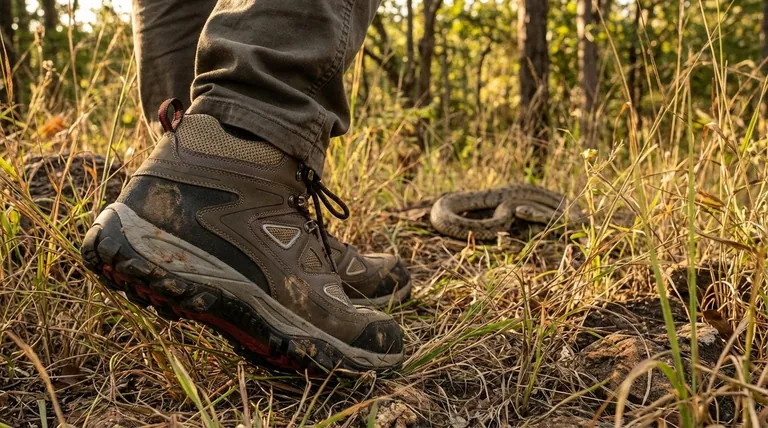
In short, most snakes cannot bite through leather boots. The combination of thick, dense leather and a high shaft provides a formidable barrier that the fangs of most common snake species cannot penetrate, protecting your feet and lower legs from potential bites.
The core takeaway is that while standard leather work or hiking boots offer significant protection against the majority of snakebites, your safety ultimately depends on the boot's material quality, the snake's size, and your own situational awareness.
Why Leather Boots Offer Protection
A snakebite is a rapid injection mechanism. For it to be successful, the snake's fangs must pierce the target surface and deliver venom. Sturdy footwear directly interferes with this process.
The Barrier of Thickness and Density
A snake's fangs, while sharp, are often relatively short and delicate. They are designed to pierce skin and flesh, not tough, non-yielding materials.
The dense, thick nature of a quality leather boot is simply too much for most fangs to puncture effectively. The material resists the initial piercing force.
The Importance of Shaft Height
Many snakebites occur on the ankle or lower calf because these are the areas closest to a snake on the ground.
Boots with high shafts, such as work boots or traditional cowboy boots, extend this zone of protection well above the foot, covering the most likely strike zones.
Key Factors That Influence Protection
Not all boots or all situations are equal. The level of protection you can expect is influenced by several variables.
Boot Material and Construction
There is a significant difference between a rugged, thick leather work boot and a soft, pliable fashion boot. Stiff, thick leather provides the most reliable defense.
Double-layered construction or the inclusion of other synthetic materials can further enhance this protective capability.
Snake Size and Species
The effectiveness of any boot is relative to the threat. While a standard boot can stop most common snakes, a very large snake with exceptionally long fangs could theoretically pose a greater challenge.
However, for the vast majority of encounters, a sturdy leather boot is more than sufficient.
Understanding the Limitations
Relying on footwear alone is not a complete safety strategy. It's crucial to understand that boots provide resistance, not absolute immunity.
Protection is Not a Guarantee
While a direct bite is unlikely to succeed, a glancing strike or a bite to an unprotected area above the boot line is still possible. No single piece of gear replaces caution.
Situational Awareness is Paramount
The most effective way to prevent a snakebite is to avoid the snake entirely. Boots are your last line of defense, not your first.
Be highly aware of your surroundings, especially in common snake habitats like tall grasses, rocky terrain, low-lying areas, and dense woods.
Making the Right Choice for Your Safety
Your choice of footwear should align with your environment and activity level.
- If your primary focus is general hiking or yard work: A standard pair of high-quality, thick leather hiking or work boots offers excellent and sufficient protection.
- If your primary focus is working in high-risk snake habitats: Consider investing in boots specifically rated as "snake-proof" for the highest level of assurance.
Ultimately, combining appropriate footwear with vigilant awareness is the most effective strategy for staying safe outdoors.
Summary Table:
| Factor | Importance for Protection |
|---|---|
| Boot Material | Thick, dense leather provides the best barrier against fangs. |
| Shaft Height | High shafts (e.g., work boots) protect ankles and lower calves. |
| Snake Species | Effective against most common snakes; larger species may pose a greater risk. |
| Situational Awareness | Essential for avoiding encounters; boots are a last line of defense. |
Ensure your team is equipped with the right protective footwear. As a large-scale manufacturer, 3515 produces a comprehensive range of durable leather boots and work footwear for distributors, brand owners, and bulk clients. Our boots are crafted with the thick, high-quality materials discussed in this article, providing reliable protection for outdoor work and hiking. Let us help you source the right footwear for your safety needs.
Contact us today to discuss your requirements and get a quote!
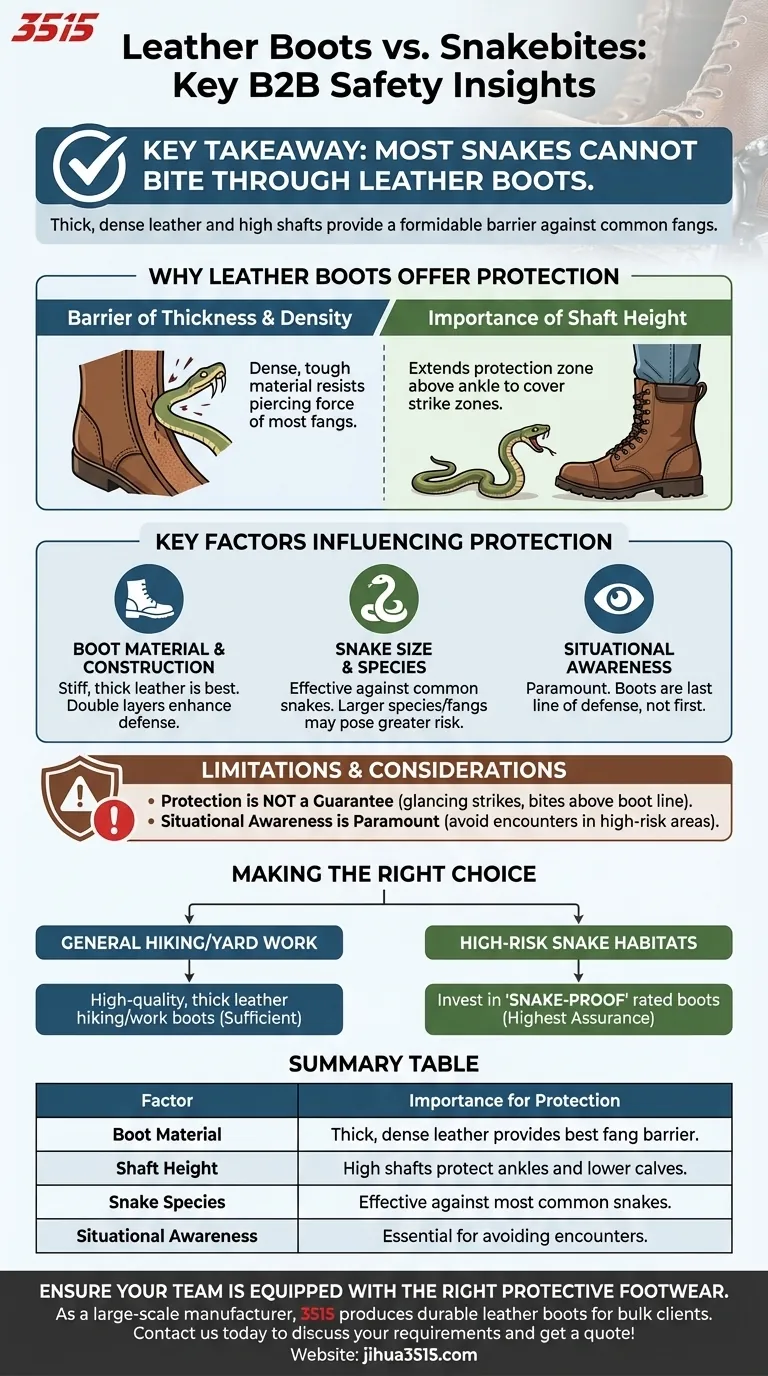
Visual Guide
Related Products
- Wholesale Leather Work Boots with Customizable Wedge Sole for Brands
- Durable Leather Work Boots for Wholesale & Custom OEM Manufacturing
- Durable Leather Work Boots for Wholesale & Custom Manufacturing
- Durable Leather Work Boots Wholesale Manufacturer & Custom Factory
- Durable Goodyear Welt Leather Work Boots for Wholesale & Private Label
People Also Ask
- What is the difference between full-grain and top-grain leather? Premium Material Guide for Boot Manufacturers
- What are the advantages of leather as an upper material for work boots? Unmatched Durability & Custom Comfort
- How can leather work boots be protected from environmental elements? A 3-Step Guide to Lasting Durability
- What is the complete process for deep cleaning leather work boots? A Step-by-Step Guide to Preserve Your Investment
- What are the key qualities of leather for work boots? Superior Durability, Breathability & Custom Fit

















