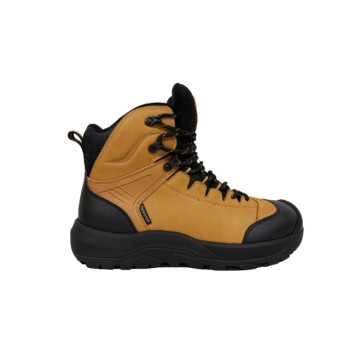
To secure performance in freezing conditions, the primary features to prioritize are thermal efficiency (insulation type and weight), moisture management (waterproof membranes like Gore-Tex or rubber shells), and traction (deep lugged outsoles). You must ensure the boot provides adequate warmth through materials like Thinsulate, Primaloft, or wool, while simultaneously preventing external moisture ingress and maintaining stability on ice or snow.
The most common error in selecting winter footwear is prioritizing maximum insulation without considering activity level. A boot designed for sedentary warmth will lead to sweating and subsequent freezing during high-output activities like hiking, making the match between intended use and technical features the single most important factor.
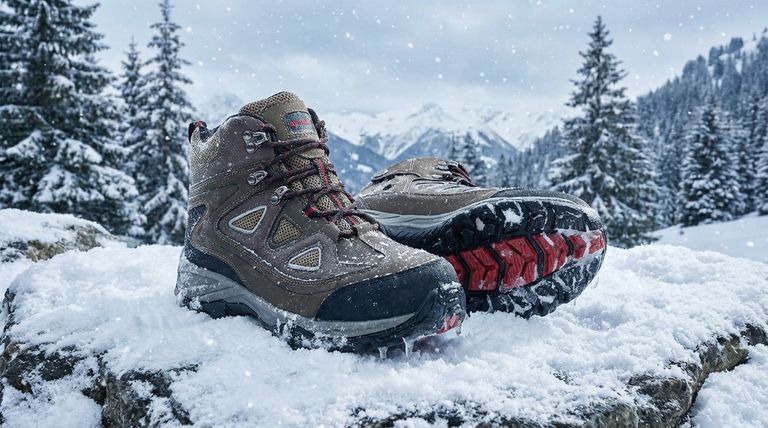
Thermal Regulation and Insulation
Understanding Insulation Types
The core function of a winter boot is to retain body heat. Look for proven synthetic insulations like Thinsulate or Primaloft, or natural fibers like wool. These materials trap warm air near the skin while allowing moisture to escape.
The Critical Role of Fit and Circulation
Insulation requires air space to function correctly. A boot that is too tight restricts blood circulation, which is the primary source of heat for your extremities.
Sizing for Warmth
To maintain this necessary air gap, you should ensure the boot is neither too tight nor too loose. It is often advisable to test boots with the specific thickness of socks you intend to wear to guarantee the toe box remains roomy enough for movement.
Moisture Management and Materials
Waterproofing Systems
Wet feet lose heat 25 times faster than dry feet. For extreme wet snow or slush, full rubber lowers or shells offer absolute impermeability. For drier snow or active use, breathable membranes like Gore-Tex prevent water entry while allowing sweat vapor to escape.
Upper Material Durability
Leather remains a superior choice for winter uppers due to its natural water resistance and durability against abrasion. Suede offers a softer aesthetic but requires consistent treatment with a protector to prevent staining and water damage.
Height and Coverage
The height of the boot shaft is a functional feature, not just a stylistic one. Taller boots prevent deep snow from entering over the top, which is critical for hiking or shoveling in unplowed areas.
Traction and Stability
Lug Depth and Pattern
On snow, friction is generated by the boot biting into the surface. Look for outsoles with deep, aggressive lugs that can shed snow accumulation rather than packing it in.
Compound Stiffness
The rubber compound matters. Softer rubber grips better on ice but wears faster on pavement. For activities like winter cycling, a stiff sole is necessary for pedaling efficiency, whereas hiking requires a balance of support and flex.
Understanding the Trade-offs
Warmth vs. Weight
There is an inherent trade-off between insulation and agility. Heavily insulated boots (often rated for extreme negatives) are significantly heavier and bulkier, leading to faster fatigue during walking.
Waterproofing vs. Breathability
While rubber boots are completely waterproof, they have zero breathability. If you are hiking or walking vigorously, your feet will sweat, and that moisture will eventually turn cold. Breathable membranes are superior for active use but may wet out in standing water over time.
Support vs. Comfort
Rigid ankle support acts as a safety mechanism on uneven, frozen terrain but can feel restrictive for casual urban wear. You must decide if you need the protection of a technical hiker or the flexibility of a slip-on style.
Making the Right Choice for Your Goal
To select the correct tool for your environment, assess your primary activity:
- If your primary focus is Static Activity (e.g., shoveling, spectator sports): Prioritize maximum insulation weight and a thick, conductive-resistant sole to block cold from the ground.
- If your primary focus is Active Hiking or Snowshoeing: Prioritize breathability and ankle support to manage sweat and uneven terrain, accepting slightly less insulation.
- If your primary focus is Urban Commuting: Prioritize style and ease of use (slip-on or zippers) with moderate waterproofing, as you will likely be transitioning between outdoors and heated indoors.
- If your primary focus is Winter Cycling: Prioritize a stiff sole for power transfer and a windproof outer shell to mitigate wind chill at speed.
True winter protection is achieved not by buying the warmest boot on the market, but by buying the boot that manages your specific combination of external weather and internal heat output.
Summary Table:
| Feature Category | Key Considerations | Best For Activity Type |
|---|---|---|
| Thermal Insulation | Type (Thinsulate, Primaloft, Wool), Fit for air gap, Sizing | Static, low-output activities |
| Moisture Management | Waterproofing (Gore-Tex, Rubber), Upper Material (Leather), Shaft Height | Active hiking, wet snow conditions |
| Traction & Stability | Lug Depth, Rubber Compound, Sole Stiffness | Icy terrain, winter hiking, cycling |
| Activity Match | Warmth vs. Weight, Waterproofing vs. Breathability, Support vs. Comfort | Aligning boot features with your primary use case |
Ready to find the perfect winter boot for your needs?
As a large-scale manufacturer, 3515 produces a comprehensive range of high-performance footwear for distributors, brand owners, and bulk clients. Our production capabilities encompass all types of technical winter boots, from heavily insulated models for static use to breathable, supportive hikers for active adventures.
We can help you source or develop the ideal winter boot that perfectly balances insulation, waterproofing, and traction for your target market. Let's discuss your requirements.
Contact our expert team today for a consultation.
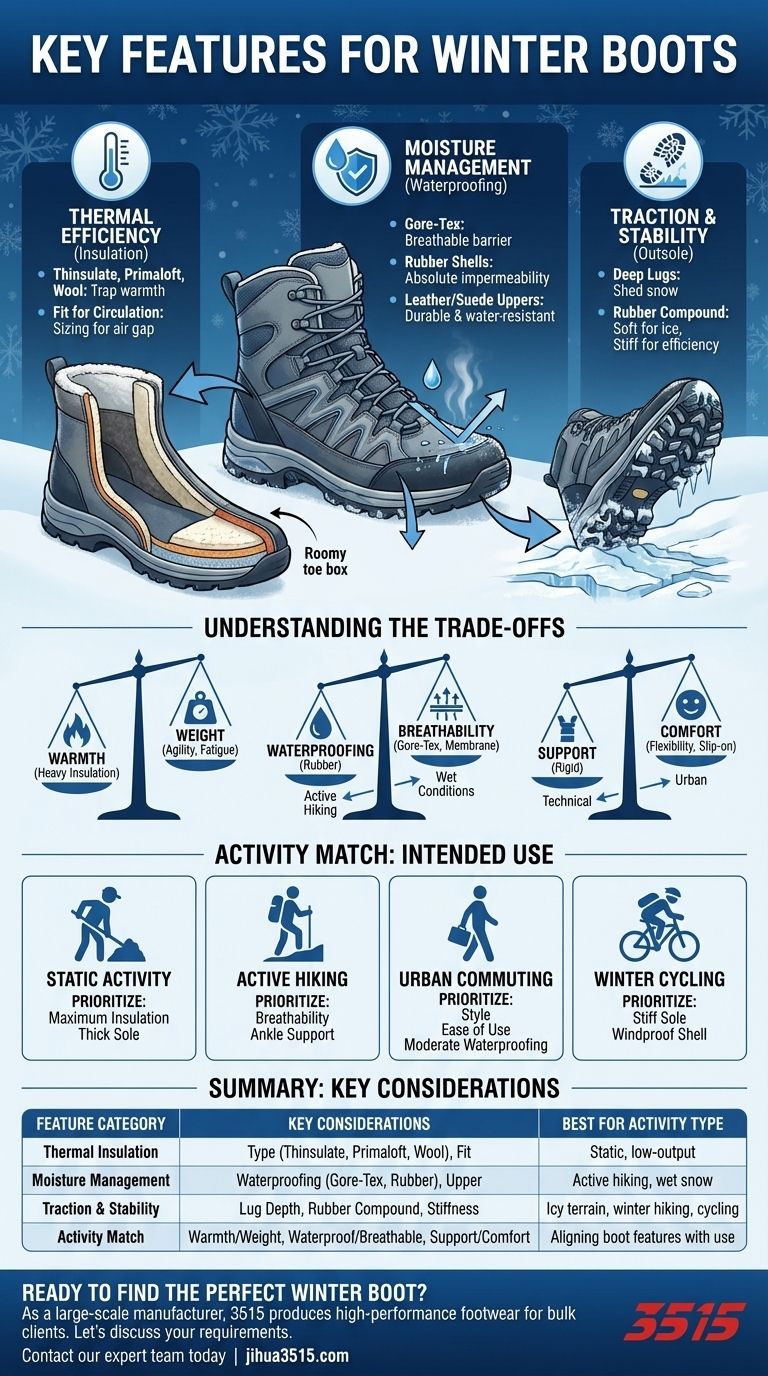
Visual Guide
Related Products
- Premium Insulated Safety Boots and Shoes for Wholesale & Bulk Orders
- Factory Direct Wholesale Rain Boots Durable Waterproof & Fully Customizable
- Durable Waterproof Rain Boots | Custom Manufacturer for Wholesale & Brands
- Wholesale Waterproof Tactical Boots Custom Suede & High-Traction Soles
- Premium Waterproof High-Cut Industrial Safety Boots for Wholesale and Bulk Orders
People Also Ask
- What are the recommended insulation ratings for mild winter conditions? A Guide for Active & Stationary Workers
- How does insulation thickness correlate with temperature ranges? A Guide to Choosing the Right Warmth
- What insulation level is needed for severe cold and stationary work? 1200g or Higher is Essential
- What safety advantages do insulated boots offer beyond warmth? Dielectric Protection & Superior Grip
- How does fleece lining contribute to the warmth of insulated boots? Trapping Air for Superior Cold Protection