
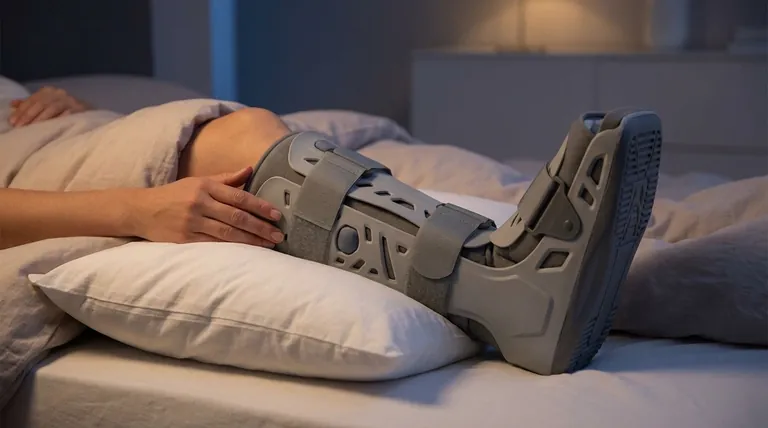
Wearing a medical walking boot at night is a critical component of your recovery. It serves to immobilize your injured foot or ankle, preventing unintentional movements during sleep that can delay healing or cause further damage. The boot ensures your foot remains in a stable, neutral position, which is essential for proper tissue repair while your body rests.
The primary purpose of wearing a walking boot while you sleep is not for comfort, but for protection. It acts as a rigid guardian, preventing the subconscious movements and poor positioning that can undermine the healing process while you are unaware.
The Unconscious Risks of Sleeping with an Injury
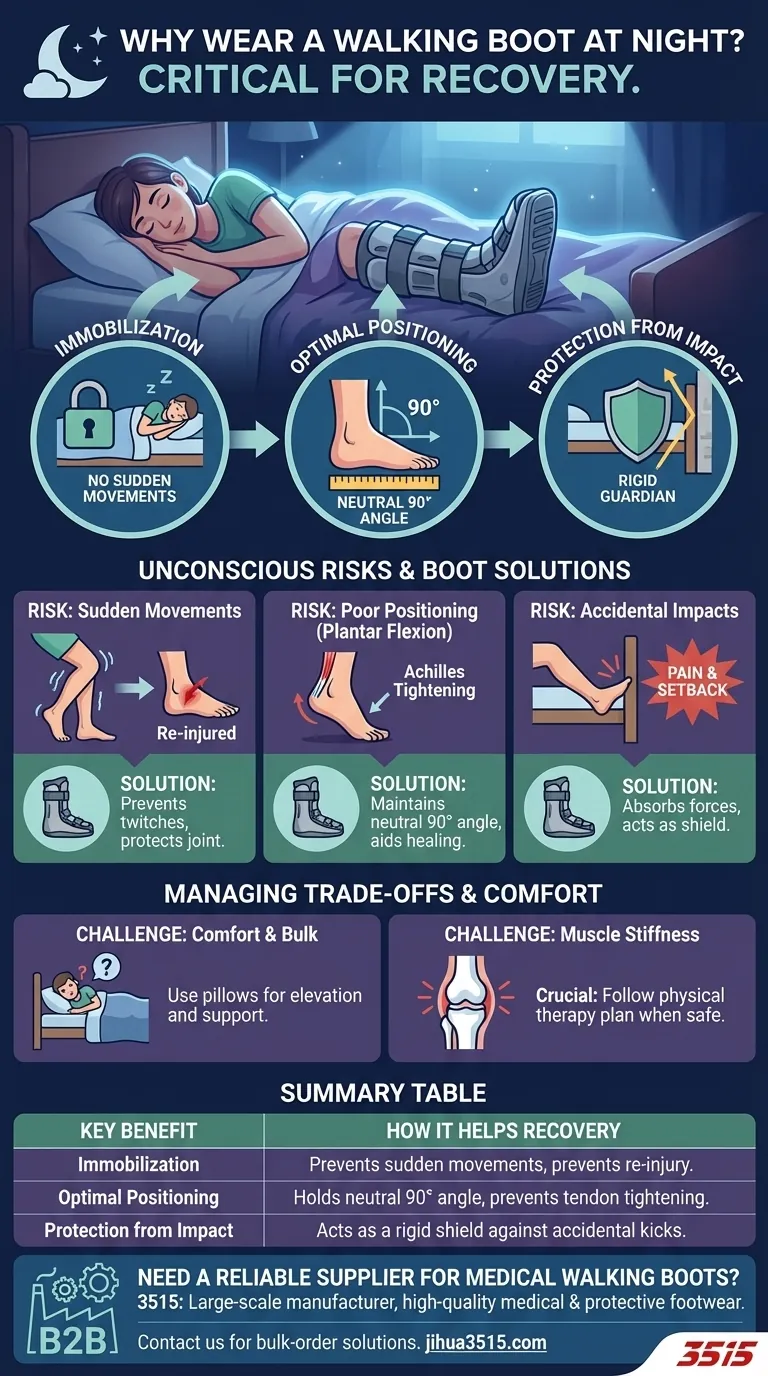
When you sleep, you lose conscious control over your body's movements. An unprotected injury is vulnerable to several risks that a walking boot is specifically designed to mitigate.
Preventing Sudden Movements
During deep sleep or dreaming, sudden twitches or shifts in position are common. These movements can easily re-injure a delicate ankle or foot, undoing the progress your body has made.
The boot acts as a rigid external shell, effectively immobilizing the joint and protecting it from these involuntary actions.
Maintaining Optimal Foot and Ankle Position
Without support, your foot may naturally drop into a pointed position (plantar flexion) while you sleep. Holding this posture for hours can tighten the Achilles tendon and other soft tissues.
This can make your first steps in the morning painful and impede the overall healing process. The boot maintains a neutral 90-degree angle, which is the ideal position for recovery.
Guarding Against Accidental Impacts
It's easy to forget about your injury while asleep. You might accidentally kick the bed frame, the wall, or your other leg.
Such an impact can be intensely painful and cause a significant setback. The boot's sturdy construction absorbs these accidental forces, acting as a protective shield for the injured area.
Understanding the Trade-offs
While essential, wearing a walking boot to bed is not without its challenges. Acknowledging these trade-offs is key to managing your recovery effectively.
The Challenge of Comfort
A walking boot is inherently bulky and rigid, which can make finding a comfortable sleeping position difficult. Its size and weight may disrupt your normal sleep patterns initially.
Using pillows to elevate and support the booted leg can often help alleviate this discomfort and improve sleep quality.
Potential for Muscle Stiffness
Keeping the ankle and foot immobilized for extended periods can lead to stiffness and some muscle atrophy. This is an expected consequence of protecting the injury.
This stiffness is why a structured physical therapy and rehabilitation plan is crucial once your doctor determines it is safe to begin moving the joint again.
When to Follow Medical Advice
Your physician or orthopedic specialist prescribed the boot for a specific reason based on your unique injury. Their instructions are paramount.
Never decide to stop wearing the boot at night without first consulting your doctor. Doing so could compromise your recovery and lead to long-term complications.
Making the Right Choice for Your Recovery
Adhering to your prescribed treatment plan is the most reliable way to ensure a complete and efficient return to health. Your nightly discipline directly impacts your daily progress.
- If your primary focus is rapid and proper healing: Consistently wearing the boot at night is non-negotiable to prevent setbacks and maintain the optimal healing environment.
- If you are struggling with discomfort or poor sleep: Talk to your doctor about strategies to improve comfort, such as pillow positioning, but do not abandon the boot without medical guidance.
- If you are concerned about long-term stiffness: Focus on following the current protocol and discuss a future physical therapy plan with your provider to safely regain strength and mobility.
Following your prescribed protocol, even when inconvenient, is the most direct path to a full and efficient recovery.
Summary Table:
| Key Benefit | How It Helps Recovery |
|---|---|
| Immobilization | Prevents sudden, unconscious movements during sleep that can re-injure the foot or ankle. |
| Optimal Positioning | Holds the foot at a neutral 90-degree angle to prevent tendon tightening and morning pain. |
| Protection from Impact | Acts as a rigid shield against accidental kicks or bumps during the night. |
Need a reliable supplier for medical walking boots?
As a large-scale manufacturer, 3515 produces a comprehensive range of high-quality medical and protective footwear for distributors, brand owners, and bulk clients. Our production capabilities ensure durable, comfortable walking boots that support patient recovery.
Contact us today to discuss your supply needs and discover how we can support your business with dependable, bulk-order footwear solutions.
Visual Guide
Related Products
- Durable Military Combat Boots with Water Drainage for Wholesale & OEM
- Wholesale Waterproof Tactical Boots Custom Suede & High-Traction Soles
- Wholesale Safety Boots Manufacturer for Custom & Private Label Orders
- Heavy-Duty Waterproof Nubuck Safety Boots Safety Shoes for Bulk Supply
- High-Traction Suede Tactical Boots Wholesale & Custom Manufacturing
People Also Ask
- Why must gait validation for military applications be conducted in combat boots? Ensure Data Accuracy for Soldiers
- What are the common types of combat boots? Find the Right Boot for Your Mission
- What factors should be considered when choosing military boots for hiking? Durability vs. Weight for Your Terrain
- What are the key considerations when choosing military boots? Prioritize Compliance, Environment & Fit
- How should the midfoot and heel fit in military boots? Achieve a Snug, Secure Fit for Blister Prevention


















