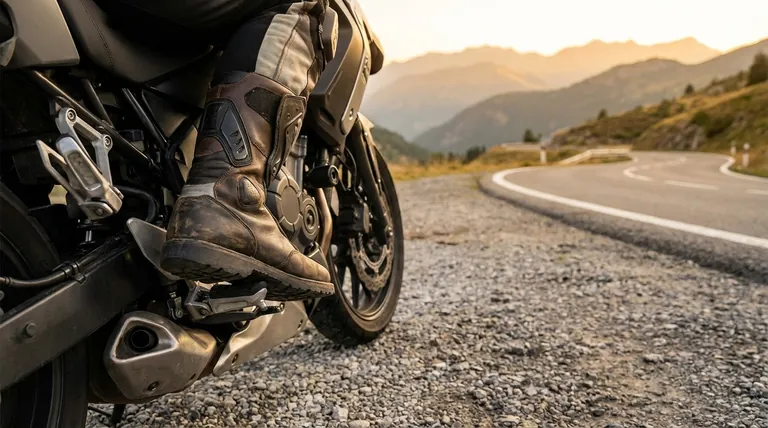
The key features to consider when choosing motorcycle touring boots are a balance of comprehensive protection, all-weather capability, and sustained comfort. A quality touring boot must include a waterproof membrane, reinforced protection for the shin, ankle, and heel, and be designed for all-day wear on and off the bike.
The central challenge in selecting a touring boot is not just finding the right features, but understanding your primary riding environment. The ideal boot for a cross-country highway trip is fundamentally different from one designed for exploring unpaved backroads.
The Three Pillars of a True Touring Boot
Every good touring boot is built on three fundamental principles. Understanding these will form the basis of your evaluation.
Pillar 1: Comprehensive Protection
Your feet and ankles are incredibly vulnerable in an incident. Touring boots are engineered specifically to mitigate these risks.
Look for reinforced shin plates and integrated ankle protection. These components shield you from impacts and prevent unnatural twisting motions.
The toe box and heel cup should also be rigid to protect against crushing forces. This structural integrity is non-negotiable for serious riding.
Pillar 2: All-Weather Performance
Touring involves unpredictable weather. Your boots must function as a reliable barrier against the elements.
A high-quality waterproof and breathable membrane is essential. This keeps your feet dry from rain while allowing sweat vapor to escape, preventing discomfort on long, warm days.
Boot height also plays a critical role. Taller boots provide better coverage, preventing water from splashing in from the top and offering more support.
Pillar 3: Long-Haul Comfort
Protection is useless if the boot is too uncomfortable to wear for a full day of riding.
A breathable insole and lining help with temperature and moisture management inside the boot.
The overall design should allow for natural movement without creating pressure points, both when riding and when walking around during a stop.
The Critical Distinction: Road vs. Adventure Touring
The single most important decision is choosing a boot that matches your terrain. This choice dictates the balance between flexibility and rigidity.
Road Touring Boots: The Marathon Runner
These boots are optimized for long-distance asphalt riding. They prioritize flexibility and all-day comfort.
They offer substantial protection but are generally less bulky and easier to walk in than their off-road counterparts, making them ideal for tours with frequent stops.
Adventure (ADV) Boots: The Off-Road Specialist
ADV boots are designed for mixed-terrain riding that includes dirt, gravel, and unpaved roads.
They feature greater rigidity for stability when standing on the footpegs and have a more aggressive, tessellated sole for grip on loose surfaces. Protection is often more substantial to handle the demands of off-road riding.
Understanding the Trade-offs
There is no single "perfect" boot. Every design choice involves a compromise. Recognizing these trade-offs is the key to making an informed decision.
Protection vs. Walkability
More armor and rigidity means more protection. However, this same stiffness makes boots, particularly ADV models, feel clunky and awkward to walk in.
Consider how much time you'll spend off the bike. If your tours involve significant walking, a more flexible road boot may be a better fit.
Waterproofing vs. Breathability
Even the best waterproof membranes have limits. In extremely hot and dry climates, a fully waterproof boot can feel warm and limit airflow.
Some riders in desert environments may opt for a non-waterproof, highly ventilated boot, but for most touring, a waterproof membrane is the correct choice.
Making the Right Choice for Your Ride
Your decision should be guided by a realistic assessment of how and where you ride.
- If your primary focus is cross-country asphalt touring: Choose a dedicated road touring boot that prioritizes flexibility and walking comfort.
- If your primary focus is exploring backroads and unpaved trails: Select a more rigid adventure boot for its superior off-road grip and enhanced protection.
- If you need one boot for varied riding, including commuting: A mid-height, less aggressive road touring boot often provides the best balance of everyday usability and touring-level protection.
Choosing the right boot is about investing in your safety, endurance, and enjoyment for the journey ahead.
Summary Table:
| Feature | Road Touring Boots | Adventure (ADV) Boots |
|---|---|---|
| Primary Use | Long-distance asphalt riding | Mixed-terrain, off-road riding |
| Protection | Reinforced shin/ankle; flexible | More rigid; enhanced impact protection |
| Sole | Smoother for on-bike comfort | Aggressive, tessellated for off-road grip |
| Walkability | Better for walking during stops | Stiffer, less comfortable for walking |
Ready to Gear Up for Your Next Tour?
As a large-scale manufacturer, 3515 produces a comprehensive range of high-performance motorcycle boots for distributors, brand owners, and bulk clients. Whether you need durable road touring boots for highway miles or rugged adventure boots for off-road exploration, our production capabilities ensure quality, protection, and comfort.
Contact us today to discuss your specific needs and discover how we can equip you with the perfect touring footwear.
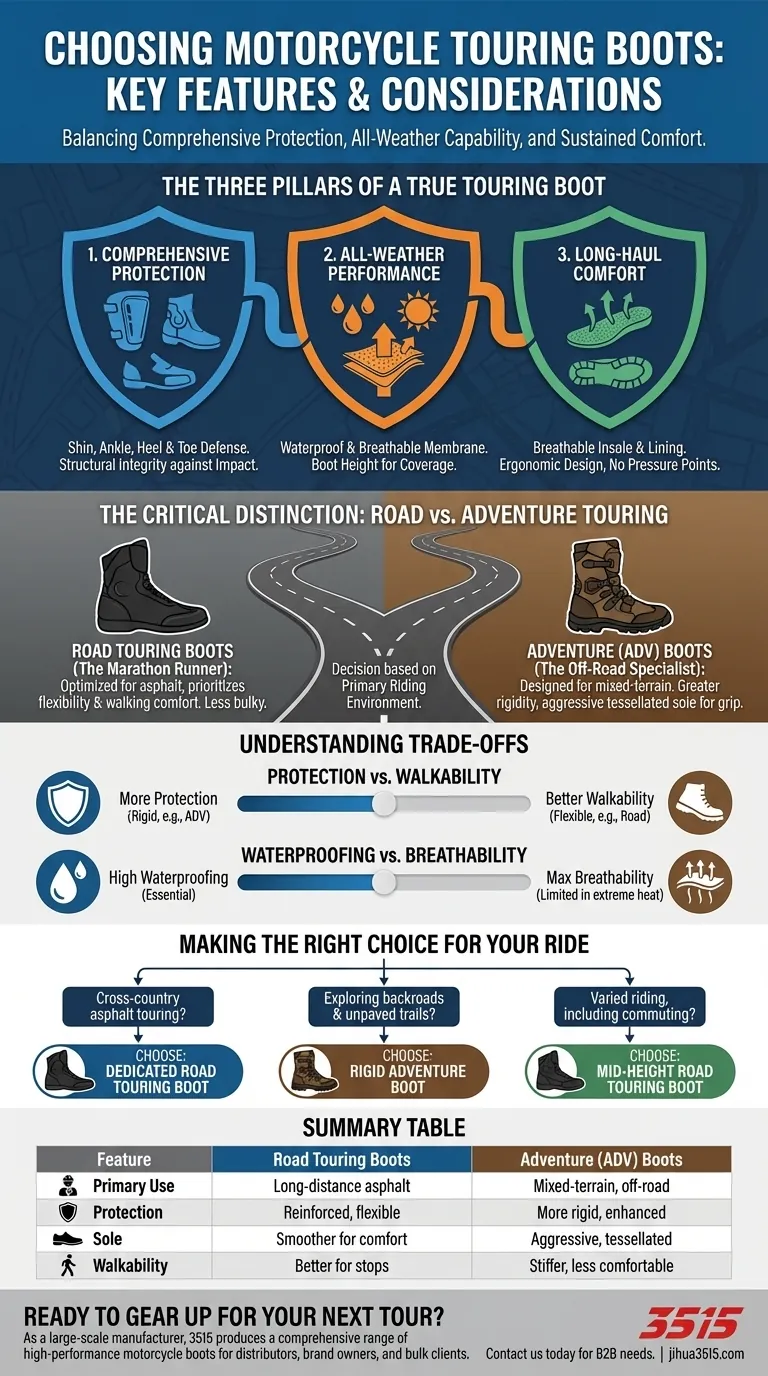
Visual Guide
Related Products
- Durable Spiked Camouflage Boots Wholesale & Factory Production
- Wholesale High-Traction Camo Boots - Custom Manufacturer for Brands
- Durable Mid-Cut Tactical Boots for Wholesale & Private Label
- Wholesale Tactical Boots High-Traction & Reflective for Bulk & Brand Orders
- Durable Goodyear Welt Leather Work Boots for Wholesale & Private Label
People Also Ask
- How does boot height affect waterproofing? Choose the Right Height for Ultimate Protection
- What are the best types of shoes for different gardening conditions? Find Your Perfect Match.
- What role does camouflage play in hunting boots? It's More Than Just a Pattern
- What should you look for to ensure boots are fully waterproof? The Essential 2-Part System
- How does boot construction affect waterproofing? The Science Behind Truly Dry Feet