
Riding boots are specifically engineered to provide critical support for both the foot and ankle, a design born from the unique physical demands of equestrian sports. This specialized construction stabilizes the rider's lower leg, protects against common injuries, and enhances communication with the horse, making them an essential piece of safety equipment.
The primary benefit of a riding boot is not just general support, but targeted stability. It is designed to brace the ankle against the specific rotational forces of riding while ensuring the foot has a secure, safe, and effective platform in the stirrup.
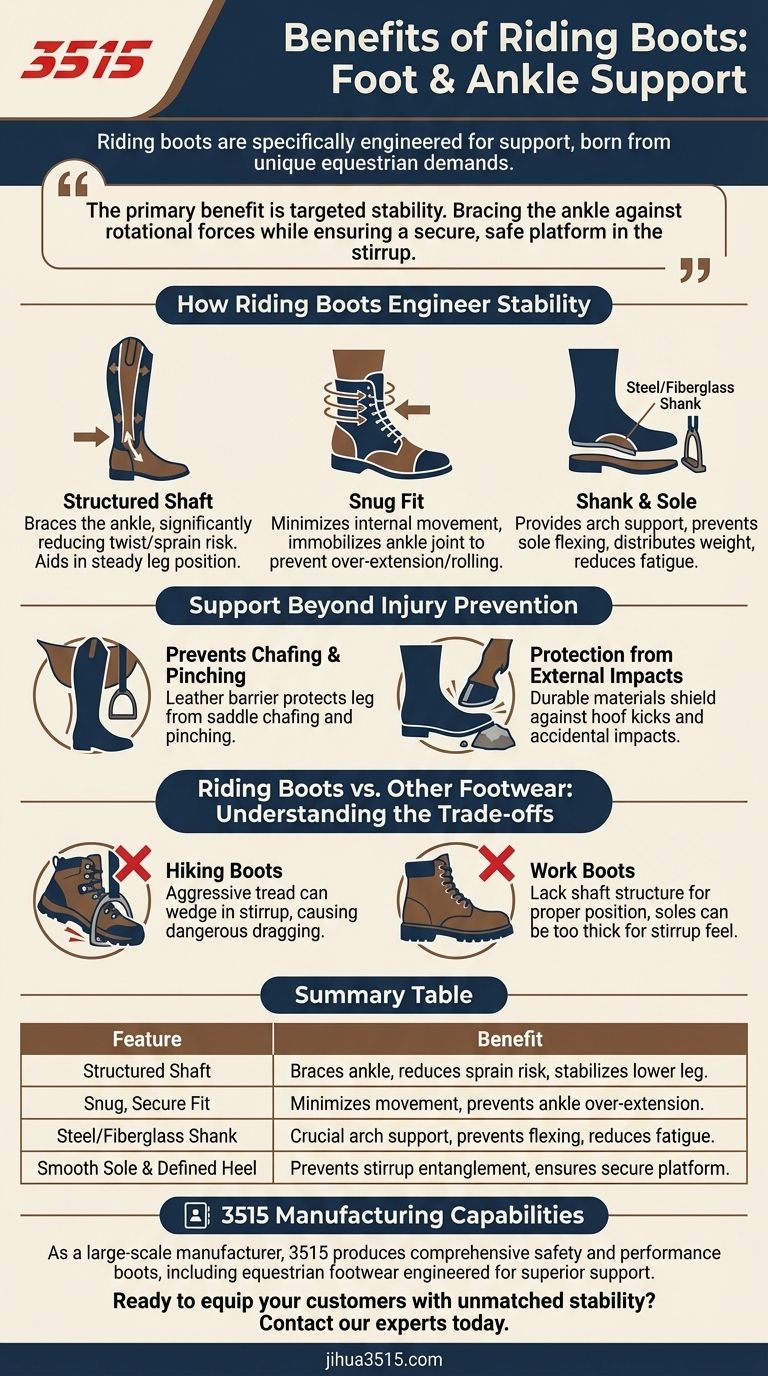
How Riding Boots Engineer Stability
The support offered by a riding boot is a result of several intentional design features working in concert. Each element serves a purpose directly related to a rider's needs in the saddle.
The Role of the Structured Shaft
A riding boot’s shaft, whether a short paddock boot or a tall dress boot, is more rigid than that of a typical shoe. This height and structure brace the ankle, significantly reducing the risk of twists or sprains if a rider loses their footing in a stirrup.
For long boots, this support extends up the entire lower leg. This helps the rider maintain a steady and correct leg position against the horse's side, which is fundamental for clear communication.
The Importance of a Snug Fit
Riding boots are designed for a close, secure fit. This minimizes internal foot movement and helps immobilize the ankle joint, preventing the over-extension or lateral rolling that can lead to injury.
Adjustable features, like laces on paddock boots or custom fitting for tall boots, allow the rider to achieve a personalized level of support.
The Function of the Shank and Sole
Most quality riding boots incorporate a steel or fiberglass shank into the sole. This rigid component provides crucial arch support and prevents the sole from flexing excessively over the narrow stirrup iron.
This design distributes the rider's weight more evenly across the foot, which dramatically reduces foot fatigue during long rides and creates a more stable base of support.
Support Beyond Injury Prevention
While safety is paramount, the support from riding boots directly translates into better riding performance and comfort.
Preventing Chafing and Pinching
The leather of a tall riding boot creates a smooth, protective barrier between the rider's leg and the saddle's stirrup leathers. This prevents the painful chafing and pinching that can occur with shorter footwear, allowing for a more comfortable and focused ride.
Protection from External Impacts
The durable materials of a riding boot offer significant protection. They shield the foot and ankle from impacts, such as an accidental kick from a hoof or being stepped on, which are real risks when working with large animals.
Understanding the Trade-offs: Riding Boots vs. Other Footwear
It is crucial to understand why other types of boots, even those with ankle support, are not safe or suitable substitutes for riding.
Why Hiking Boots Are Unsafe
Hiking boots are designed for grip on the ground. Their deep, aggressive tread can easily become wedged in a stirrup, creating an extremely dangerous situation where a rider could be dragged in a fall.
The Limitations of Work Boots
While many work boots have a suitable heel, they often lack the specific shaft structure needed to support a proper riding position. Furthermore, their soles may be too thick or clunky, preventing the rider from having a good "feel" of the stirrup.
Making the Right Choice for Your Goal
Selecting the correct boot depends on your specific equestrian discipline and needs.
- If your primary focus is safety and versatility for daily use: Paddock boots with a proper heel and smooth sole offer excellent ankle support and are comfortable for work around the stable.
- If your primary focus is formal competition and maximum leg stability: Traditional tall boots provide the most comprehensive support for the lower leg and are required for many show disciplines.
- If your primary focus is preventing foot fatigue: Look for a boot with a well-designed steel shank, which will provide the necessary arch support for long hours in the saddle.
Investing in proper riding footwear is a foundational decision for your safety, comfort, and effectiveness as a rider.
Summary Table:
| Feature | Benefit |
|---|---|
| Structured Shaft | Braces the ankle, reduces risk of twists/sprains, and stabilizes the lower leg. |
| Snug, Secure Fit | Minimizes foot movement and immobilizes the ankle joint to prevent over-extension. |
| Steel/Fiberglass Shank | Provides crucial arch support, prevents sole flexing, and reduces foot fatigue. |
| Smooth Sole & Defined Heel | Prevents stirrup entanglement and ensures a secure, stable platform. |
As a large-scale manufacturer, 3515 produces a comprehensive range of footwear for distributors, brand owners, and bulk clients. Our production capabilities encompass all types of safety and performance boots, including equestrian footwear engineered for superior support.
Ready to equip your customers with riding boots that offer unmatched foot and ankle stability? Contact our experts today to discuss your manufacturing needs and learn how we can help you deliver high-quality, supportive equestrian boots to your market.
Visual Guide
Related Products
- Heavy-Duty Waterproof Nubuck Safety Boots Safety Shoes for Bulk Supply
- Premium Wholesale Tactical Style Safety Shoes Boots with Quick Lacing
- Wholesale High-Traction Camo Boots - Custom Manufacturer for Brands
- Durable Goodyear Welt Leather Work Boots for Wholesale & Private Label
- Wholesale Tactical Boots High-Traction & Reflective for Bulk & Brand Orders
People Also Ask
- What primary protective functions do professional safety boots provide in urban solid waste recovery and waste picking processes? Discover Dual-Layer Protection.
- How do safety boots reduce cutting hazards? Essential Protection for Your Workforce
- Which organizations develop safety standards for work boots? Ensure Compliance & Worker Safety
- What are the common types of safety boots and their primary uses? A Guide to Industrial Footwear
- Why is ankle and arch support important in safety footwear? Prevent Injury & Fatigue



















