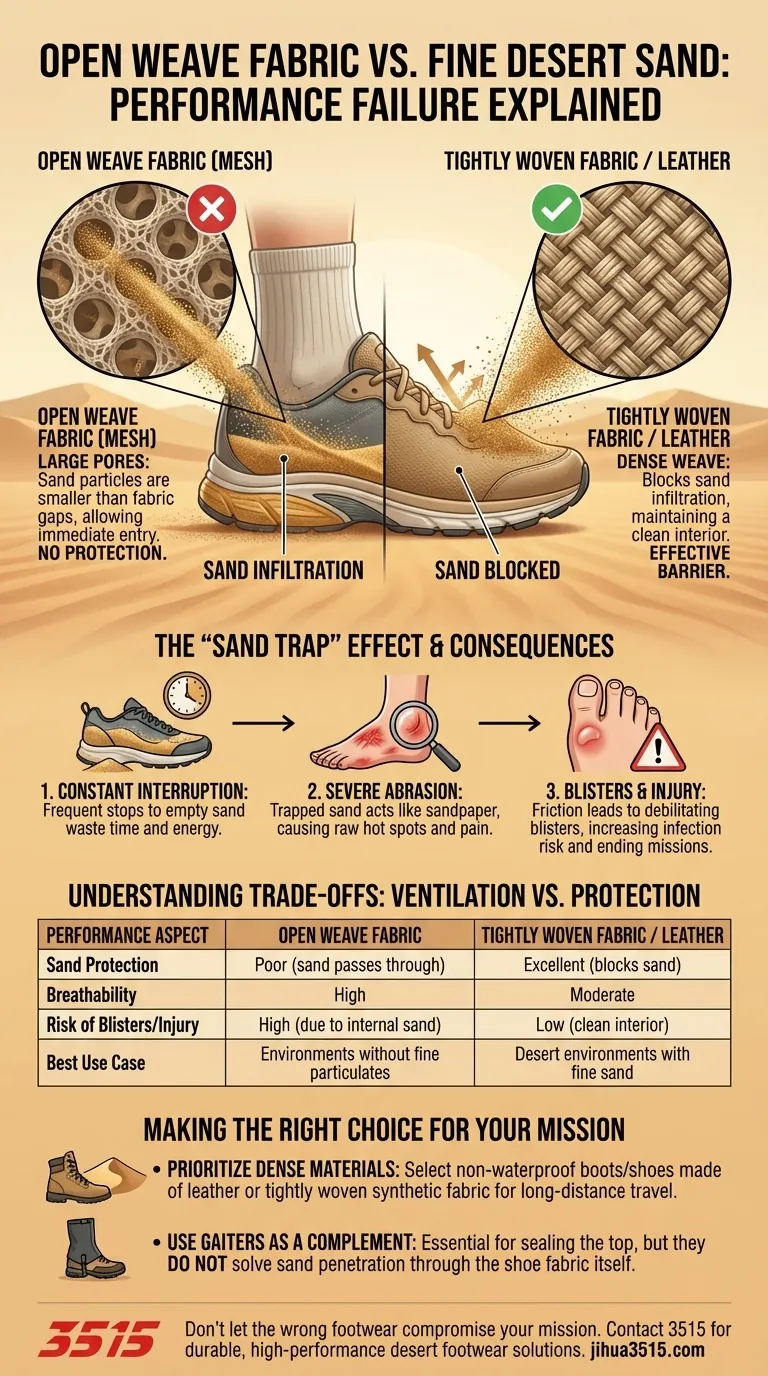
In short, open weave fabric performs poorly in environments with fine sand. This type of material, often found in mesh running shoes and highly breathable hikers, features pores that are too large to block minuscule sand particles. As a result, footwear fills with sand almost immediately, leading to severe discomfort and foot damage.
The core issue is a mismatch between the fabric's design and the environment. While open weave fabric excels at ventilation, it offers virtually no protection against the fine, abrasive sand common in deserts, creating a direct path to friction, blisters, and mission failure.
The Mechanics of Failure: Weave vs. Sand
The problem with open weave fabrics in the desert is a simple matter of physics. The material's primary advantage in other climates—its breathability—becomes its critical vulnerability.
Designed for Air, Not Particles
Open weave and mesh fabrics are engineered with thousands of tiny gaps. In most conditions, this allows heat and water vapor to escape efficiently, keeping your feet cooler and drier.
However, fine desert sand particles are often smaller than these gaps. This allows sand to pass directly through the upper material of the shoe with every step.
The "Sand Trap" Effect
Once inside the shoe, the sand has no easy way out. It accumulates rapidly, filling the space around your socks and toes. This creates a constant, abrasive environment inside your footwear.
The Cascade of Negative Consequences
A shoe full of sand isn't just a minor annoyance; it's a catalyst for a series of problems that can compromise your safety and effectiveness in the field.
Constant Interruption and Inefficiency
The sheer volume of sand requires frequent stops to remove your shoes and empty them. This constant interruption breaks your rhythm, wastes valuable time, and consumes energy.
Severe Abrasion
Sand is highly abrasive. As it grinds between your sock, foot, and the inside of the shoe, it acts like sandpaper on your skin. This quickly wears down skin, creating raw, painful hot spots.
Blisters and Injury
The friction generated by trapped sand is the primary cause of blisters. What begins as a hot spot can rapidly develop into a debilitating blister, making every step painful and increasing the risk of infection.
Understanding the Trade-offs: Ventilation vs. Protection
Choosing the right footwear is about managing competing priorities. In the desert, protection from fine particulates must take precedence over maximum airflow.
The Flaw in "More Breathability" Logic
It's tempting to think the most breathable shoe is best for the heat. However, the benefits of that ventilation are completely negated once the shoe is filled with an insulating, friction-causing layer of sand.
The Superiority of Tightly Woven Materials
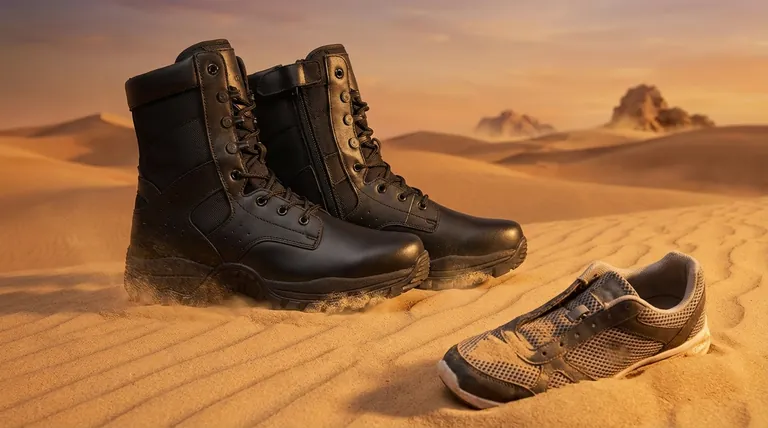
Footwear made from tightly woven synthetic fabrics, leather, or suede offers far greater resistance to sand infiltration. While they may feel warmer initially, they maintain a clean interior environment, which is crucial for long-term foot health.
The Role of Gaiters
Gaiters are an essential piece of equipment for sealing the top of your boot or shoe. They prevent sand from entering around the ankle, but they cannot solve the problem of sand penetrating the fabric of the shoe itself. They are a complement to, not a replacement for, proper footwear.
Making the Right Choice for Your Environment
Your footwear choice should be dictated by the specific challenges of your intended environment. For fine desert sand, the answer is clear.
- If your primary focus is long-distance travel in fine sand: Prioritize non-waterproof boots or shoes made of leather or a very dense, tight-weave synthetic fabric.
- If your activity is short and on coarser ground: A more breathable shoe combined with a tall, well-sealed gaiter might be a manageable compromise.
- If you must use open weave footwear: Understand the consequences and be prepared to stop constantly while implementing a rigorous foot care regimen to manage inevitable hot spots.
Ultimately, selecting footwear that properly seals out environmental hazards is the foundation of any successful desert trek.
Summary Table:
| Performance Aspect | Open Weave Fabric | Tightly Woven Fabric/Leather |
|---|---|---|
| Sand Protection | Poor (sand passes through) | Excellent (blocks sand) |
| Breathability | High | Moderate |
| Risk of Blisters/Injury | High (due to internal sand) | Low (clean interior) |
| Best Use Case | Environments without fine particulates | Desert environments with fine sand |
Don't let the wrong footwear compromise your mission. As a large-scale manufacturer, 3515 produces a comprehensive range of durable, high-performance footwear designed for extreme environments like the desert. Our expertise in materials like tightly woven synthetics and leather ensures your team has the protection and comfort needed for success. Whether you are a distributor, brand owner, or bulk client, we can deliver the right solution.
Contact 3515 today to discuss your specific needs and get a quote for reliable desert footwear.
Visual Guide