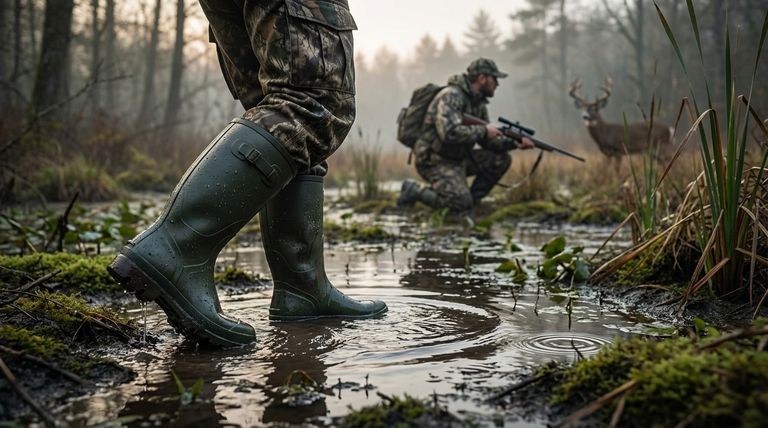
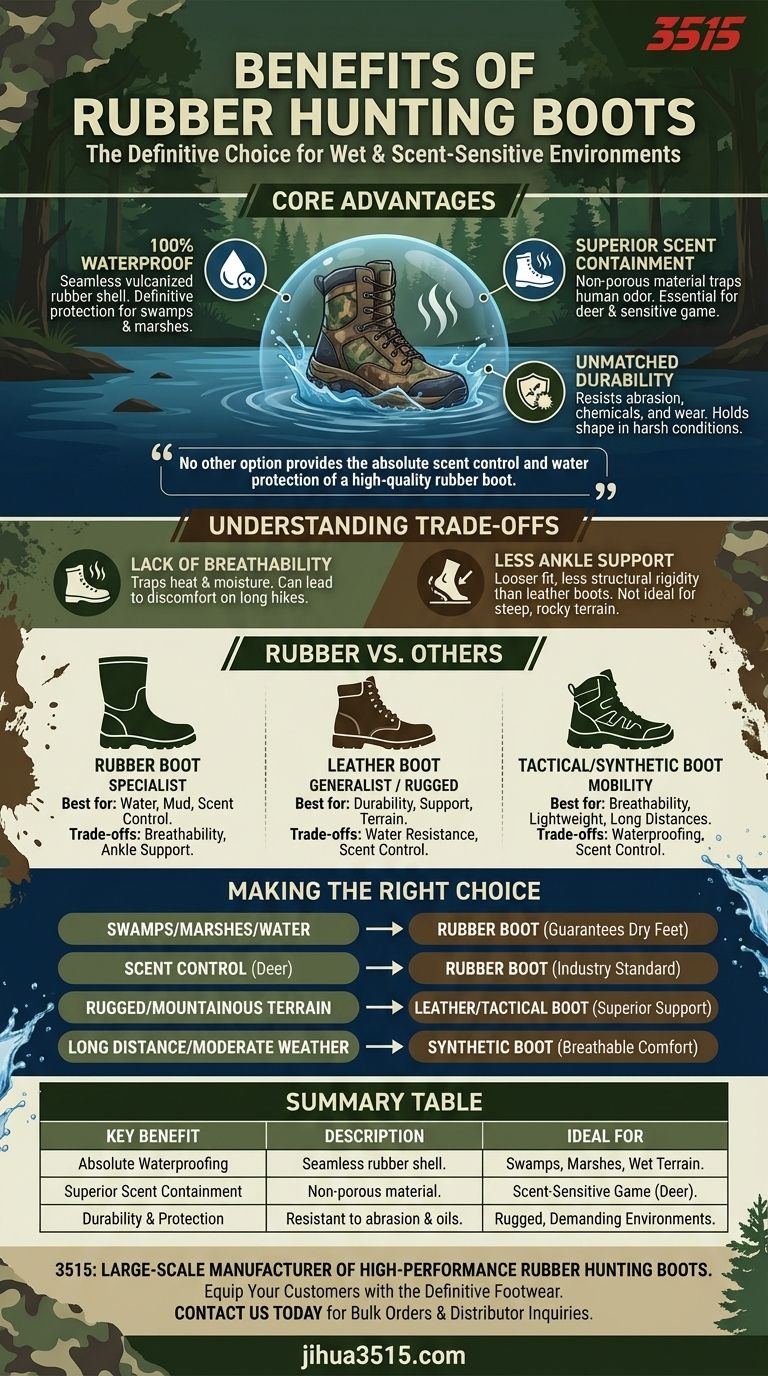
The primary benefits of rubber hunting boots are their completely waterproof nature and their ability to contain human scent. This makes them the definitive choice for hunting in wet, marshy, or swampy environments and for pursuing scent-sensitive animals like deer.
While other boot materials offer advantages in breathability or support, no other option provides the absolute scent control and water protection of a high-quality rubber boot, making it a specialized tool for specific hunting conditions.
The Core Advantages of Rubber Boots
To understand why rubber boots are essential for certain hunters, we need to look at their unique material properties. They are not an all-purpose solution, but for their intended use, they are unparalleled.
Absolute Waterproofing
Rubber boots are constructed from vulcanized rubber, creating a single, seamless, and non-porous shell. This design ensures they are 100% watertight.
Unlike leather or fabric boots that rely on membranes and treatments which can eventually fail, a rubber boot's inherent structure provides a reliable barrier against water. This is critical for comfort and safety in swamps, marshes, and creeks.
Superior Scent Containment
Rubber is a non-porous material, which means it does not absorb or release odors easily. This is arguably its most significant advantage for many types of hunting.
Human scent is easily detected by animals with a keen sense of smell. Rubber boots trap your scent inside the boot, preventing it from contaminating your trail and alerting game to your presence.
Unmatched Durability and Protection
The vulcanization process makes rubber extremely durable and resistant to wear and tear. It holds its shape over time and resists abrasion from brush and rocks.
Furthermore, rubber offers excellent resistance to oils, chemicals, and other harsh substances you might encounter in the field, ensuring long-lasting protection.
Understanding the Trade-offs
No single piece of gear is perfect for every situation. The very properties that make rubber boots exceptional in wet and scent-focused scenarios create disadvantages in others.
Lack of Breathability
The biggest drawback of rubber is that it does not breathe. The same non-porous quality that keeps water and scent out also traps heat and moisture (sweat) in.
On long hikes or in warmer weather, this can lead to significant discomfort and pruned, unhealthy feet. Managing moisture with specialized socks becomes critical.
Ankle Support and Fit
Traditional rubber boots often have a looser fit and less structural rigidity than leather or tactical boots. This can translate to less ankle support on steep, rocky, or uneven terrain.
While some modern designs have improved this, they generally do not offer the same level of stability as a tightly-laced leather boot designed for mountaineering.
How Rubber Compares to Other Boot Types
Choosing the right boot means matching the material to the terrain and the hunt. Rubber is a specialist, while other materials serve as generalists or different kinds of specialists.
Rubber vs. Leather Boots
Leather boots are prized for their durability in rugged terrain and their ability to mold to your foot over time, providing a custom, comfortable fit. They offer superior breathability compared to rubber.
However, leather requires maintenance to remain water-resistant and will never be as fully waterproof or scent-free as a rubber boot.
Rubber vs. Tactical/Synthetic Boots
Tactical or synthetic boots are lightweight, breathable, and often require no break-in period. Their moisture-wicking properties make them ideal for high-exertion activities and warmer climates.
While many are water-resistant, they are not truly waterproof in the way rubber is. They are designed for mobility and comfort on trails, not for standing in water.
Making the Right Choice for Your Hunt
Your decision should be driven entirely by the environment you hunt in and the game you pursue.
- If your primary focus is hunting in swamps, marshes, or crossing water: A rubber boot is the only choice that guarantees completely dry feet.
- If your primary focus is scent control for deer or other sensitive game: Rubber is the industry standard for minimizing your scent trail.
- If your primary focus is traversing rugged, dry, or mountainous terrain: A leather or supportive tactical boot will provide superior ankle support and long-term comfort.
- If your primary focus is covering long distances in moderate weather: A lightweight, breathable synthetic boot will keep your feet more comfortable by managing sweat.
Ultimately, choosing the right boot is about selecting the best tool for the specific demands of your hunt.
Summary Table:
| Key Benefit | Description | Ideal For |
|---|---|---|
| Absolute Waterproofing | Seamless rubber shell provides 100% water protection. | Swamps, marshes, wet terrain. |
| Superior Scent Containment | Non-porous material traps human scent. | Hunting scent-sensitive game like deer. |
| Durability & Protection | Resistant to abrasion, oils, and harsh chemicals. | Rugged, demanding environments. |
As a large-scale manufacturer, 3515 produces a comprehensive range of durable, high-performance rubber hunting boots for distributors, brand owners, and bulk clients. Our production capabilities ensure top-tier waterproofing and scent control for hunters who demand reliability. Ready to equip your customers with the definitive footwear for wet and scent-sensitive hunts? Contact us today to discuss your specific needs and volume requirements!
Visual Guide
Related Products
- Durable Spiked Camouflage Boots Wholesale & Factory Production
- Durable Rubber Sole Outdoor Shoes Wholesale & Custom Manufacturing
- Factory Direct Wholesale Rain Boots Durable Waterproof & Fully Customizable
- Wholesale Durable Camouflage Canvas Shoes with High-Traction Cleated Rubber Sole
- High-Traction Suede Tactical Boots Wholesale & Custom Manufacturing
People Also Ask
- How does boot height affect waterproofing? Choose the Right Height for Ultimate Protection
- What are the best types of shoes for different gardening conditions? Find Your Perfect Match.
- What role does camouflage play in hunting boots? It's More Than Just a Pattern
- What should you look for to ensure boots are fully waterproof? The Essential 2-Part System
- How does boot construction affect waterproofing? The Science Behind Truly Dry Feet