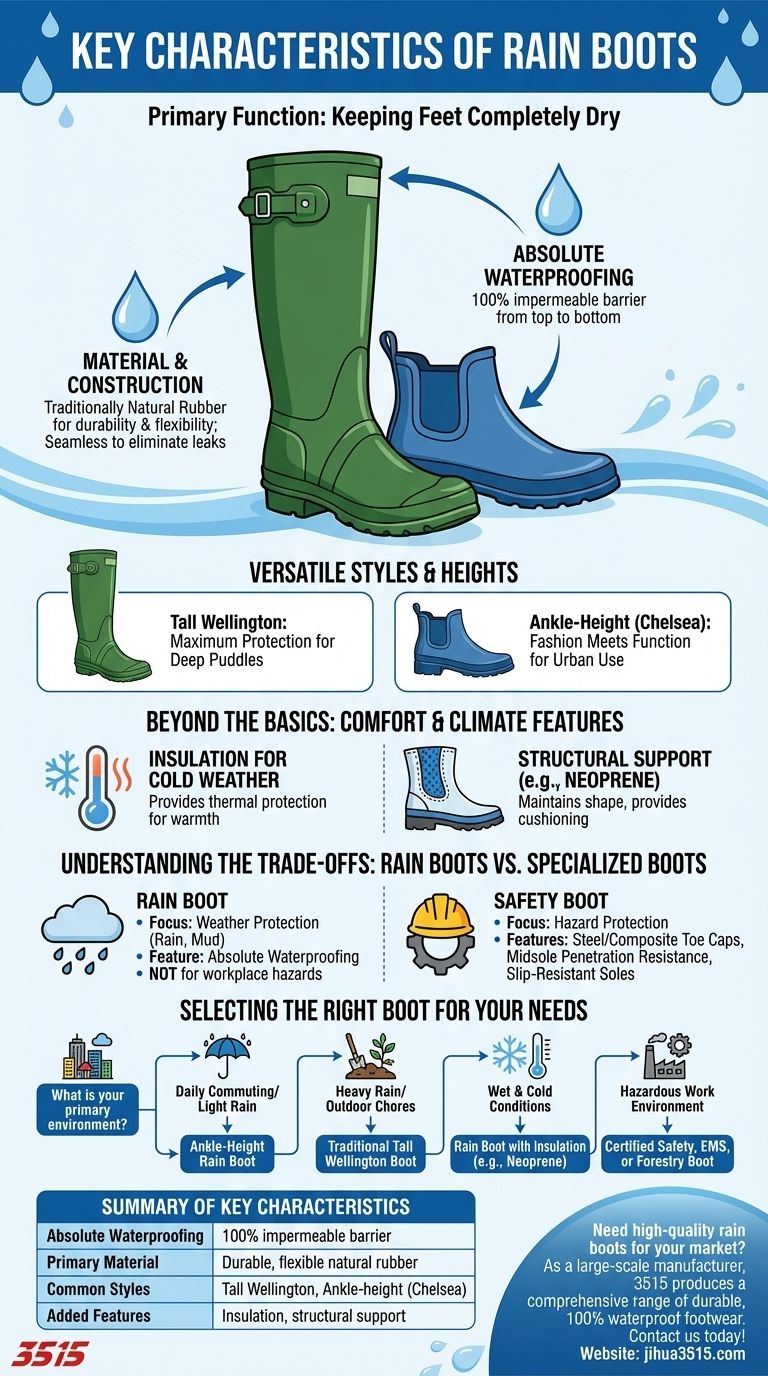
At their core, rain boots are defined by one primary function: to keep your feet completely dry. They are waterproof footwear, traditionally made from natural rubber, designed to provide an impermeable barrier against precipitation and puddles. While classic tall "Wellington" boots are common, modern styles often include ankle-height versions that blend fashion with function.
The single most important characteristic of a rain boot is its absolute waterproofing. This singular focus on repelling environmental moisture is what distinguishes it from specialized safety and work boots, which offer waterproofing as just one of many protective features.

The Fundamental DNA of a Rain Boot
Every rain boot is built around a few non-negotiable principles. These core traits define the category and ensure the boot performs its essential job.
Absolute Waterproofing
This is the boot's reason for being. Rain boots are constructed to be 100% waterproof from top to bottom, preventing any moisture from penetrating the outer shell.
This makes them ideal for walking through rain, puddles, or mud without the risk of getting your socks—and feet—wet.
Material and Construction
The classic material for rain boots is natural rubber. This material is inherently waterproof, durable, and flexible, making it perfect for this type of footwear.
The construction is typically simple and seamless to eliminate potential points of leakage.
Versatile Styles and Heights
Rain boots are no longer limited to a single design. The tall "Wellington" style offers maximum protection for deep puddles or muddy conditions.
In recent years, shorter ankle-height versions, often in a Chelsea boot style, have become popular for urban environments, offering waterproofing in a more fashionable and less cumbersome package.
Beyond the Basics: Features for Comfort and Climate
While waterproofing is universal, other features are adapted for different conditions and user needs, enhancing comfort and usability.
Insulation for Cold Weather
Standard rain boots protect from water but not from cold. For winter or use in colder climates, many rain boots are insulated to provide thermal protection and keep feet warm.
Structural Support
Some designs incorporate materials like a 4-millimeter neoprene lining. This adds structure to the boot, helping it maintain its shape while also providing a modest level of insulation and cushioning for greater comfort.
Understanding the Trade-offs: Rain Boots vs. Specialized Boots
A common point of confusion is how a rain boot differs from other waterproof work boots. The distinction lies in their intended purpose: weather protection versus hazard protection.
The Limit of a Standard Rain Boot
A rain boot's job is to protect you from rain, puddles, and mud. It is not designed to protect you from workplace or environmental hazards like falling objects or sharp terrain.
Safety Boots
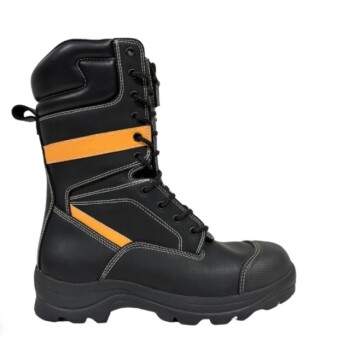
Specialized safety boots are built for industrial environments. While they are often waterproof, their key features include steel or composite toe caps for impact protection, midsole penetration resistance, and slip-resistant soles rated for specific surfaces.
EMS and Forestry Boots
Even more specialized boots are designed for extreme conditions. EMS boots have puncture-resistant soles and moisture barriers to protect against chemicals. Forestry boots feature cut protection, aggressive Vibram soles for grip, and GORE-TEX waterproofing for breathability.
Selecting the Right Boot for Your Needs
Choosing the correct boot depends entirely on the environment you will be in.
- If your primary focus is daily commuting and light rain: A stylish, ankle-height rain boot offers practical waterproofing without the bulk of a traditional boot.
- If your primary focus is heavy rain, gardening, or outdoor chores: A traditional tall Wellington boot provides the best protection from deep puddles and mud.
- If your primary focus is wet and cold conditions: Look for a rain boot with added insulation like neoprene to ensure your feet stay warm and dry.
- If your primary focus is a hazardous work environment: A standard rain boot is inadequate; you need a certified safety, EMS, or forestry boot that meets specific protection standards.
Understanding these core characteristics ensures you choose footwear that perfectly matches your environment and purpose.
Summary Table:
| Key Characteristic | Description |
|---|---|
| Absolute Waterproofing | 100% impermeable barrier from top to bottom. |
| Primary Material | Durable, flexible natural rubber. |
| Common Styles | Tall Wellington boots and ankle-height (Chelsea) boots. |
| Added Features | Insulation for cold weather and structural support (e.g., neoprene lining). |
Need high-quality rain boots for your market?
As a large-scale manufacturer, 3515 produces a comprehensive range of durable, 100% waterproof footwear for distributors, brand owners, and bulk clients. Whether you need classic tall Wellingtons or modern ankle-height styles, our production capabilities ensure top-quality boots that keep feet dry.
Contact us today to discuss your requirements and get a quote!
Visual Guide
Related Products
- Factory Direct Wholesale Rain Boots Durable Waterproof & Fully Customizable
- Durable Waterproof Rain Boots | Custom Manufacturer for Wholesale & Brands
- Durable Military Combat Boots with Water Drainage for Wholesale & OEM
- Premium Wholesale Waterproof Safety Boots High Performance Protection for Industrial Markets
- High Performance Fire-Retardant Waterproof Safety Boots
People Also Ask
- What are the characteristics of rain boots? A Guide to Waterproof Footwear for Every Need
- What factors should be considered when choosing rain boots? Find the Perfect Boot for Your Needs
- What are the main differences between rain boots and snow boots? Choose the Right Boot for Your Climate
- How should one decide between PVC and rubber for rain boots? A Guide to Choosing the Right Material
- Why are rain boots more flexible and comfortable than snow boots? The Key Differences Explained