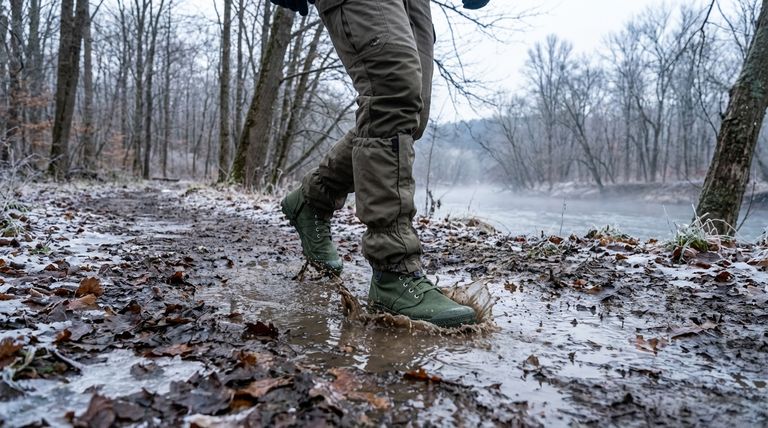
Staying active is crucial when wearing wellies in cold weather because your movement is what generates the body heat necessary to keep your feet warm. While wellies are excellent at blocking water and wind, their insulating properties are most effective when there is a heat source—your active body—to trap inside. Without activity, your feet can become cold despite the protection of the boot.
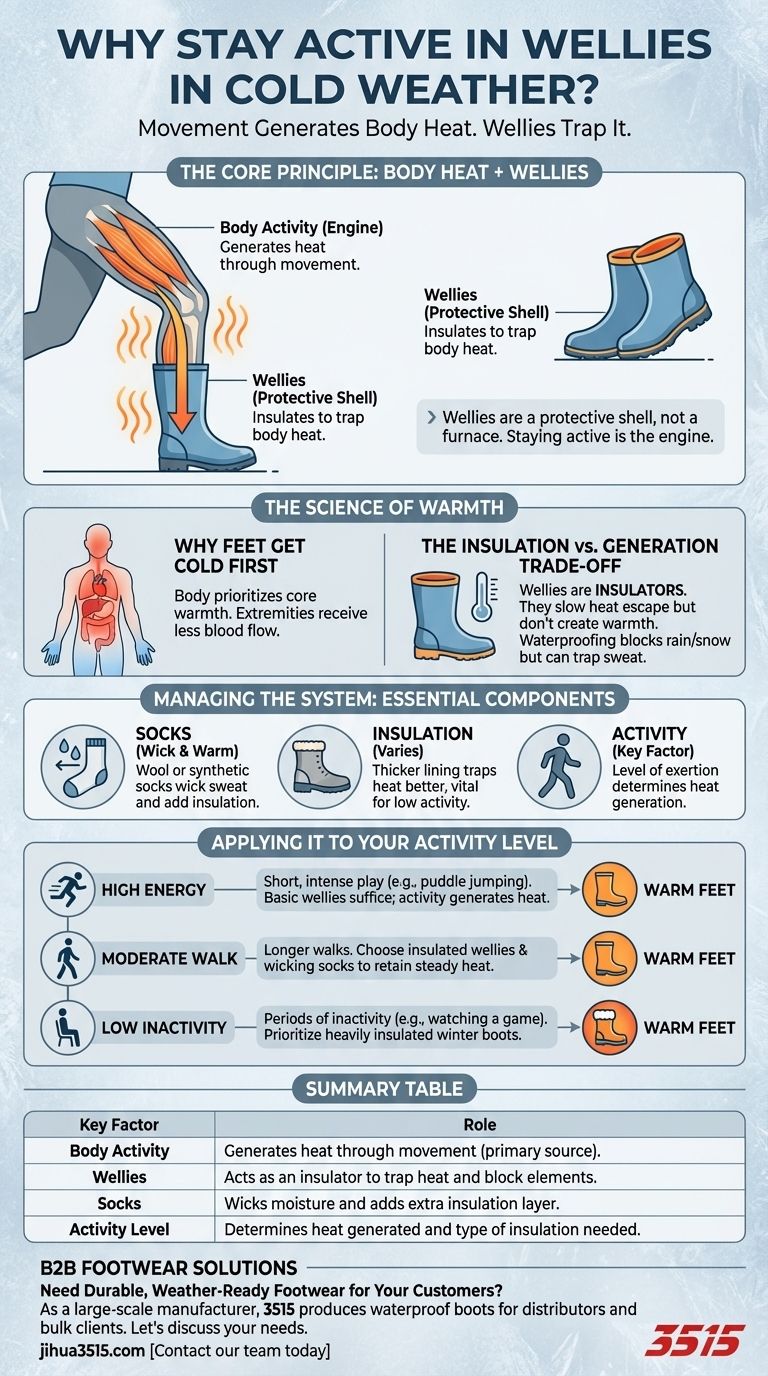
Wellies are a protective shell, not a furnace. They excel at trapping heat and blocking moisture, but they don't generate warmth on their own. Staying active is the engine that produces the necessary body heat, turning your boots from a simple barrier into an effective cold-weather system.
The Core Principles of Staying Warm
To understand why activity is so critical, we need to look at the relationship between your body, your boots, and the cold environment.
Why Feet Get Cold First
Your body prioritizes keeping your core organs warm. Feet, being the farthest extremity from the heart, receive less blood flow in cold conditions as the body works to conserve heat. This makes them naturally more vulnerable to the cold.
How Your Body Generates Heat
The primary source of warmth is your own metabolism. When you move—whether running, walking, or just wiggling your toes—your muscles contract. This process consumes energy and releases a significant amount of it as heat, which is then circulated through your bloodstream.
The Role of Wellies: Insulation vs. Generation
Wellies serve as an insulator. Their job is to slow down the rate at which the heat your body generates escapes into the cold air. A thick, waterproof material is excellent at this, but it can only trap heat that is already present.
Understanding the Trade-offs
While essential for wet conditions, wellies have specific characteristics you must manage to stay comfortable.
The Insulation Varies
Not all wellies are created equal. Basic rubber boots offer minimal insulation. Models designed for colder weather often include thicker materials or fleece linings to trap heat more effectively, which is vital during periods of lower activity.
Waterproofing is a Double-Edged Sword
The waterproof nature of wellies is perfect for keeping rain and snow out. However, it also means they are not very breathable. Sweat from your feet can get trapped, and if you stop moving, that moisture will rapidly cool down, making your feet feel even colder.
The Critical Role of Socks
The right socks are a non-negotiable part of the system. A good pair of wool or synthetic socks will wick moisture away from your skin while adding an extra layer of insulation, working in tandem with your boots to keep you dry and warm.
How to Apply This to Your Activity
Your strategy for staying warm should match your planned level of exertion. Use these guidelines to make the best choice.
- If your primary focus is short, high-energy play (like puddle jumping): Basic wellies will likely suffice, as the intense activity will generate more than enough heat to keep feet warm.
- If your primary focus is a longer, moderate walk: Choose wellies with some insulation and pair them with moisture-wicking socks to retain the steady heat you generate.
- If you expect periods of inactivity (like watching an outdoor game): Prioritize heavily insulated winter boots over standard wellies, as you won't be generating enough heat through movement to stay warm.
Ultimately, think of warmth as a partnership between your body's activity and your gear's ability to protect it.
Summary Table:
| Key Factor | Role in Keeping Feet Warm |
|---|---|
| Body Activity | Generates heat through muscle movement; the primary source of warmth. |
| Wellies (Boots) | Acts as an insulator to trap body heat and block moisture from the outside. |
| Socks | Wicks moisture and adds an extra layer of insulation to keep feet dry. |
| Activity Level | Determines the amount of heat generated and the type of insulation needed. |
Need Durable, Weather-Ready Footwear for Your Customers?
As a large-scale manufacturer, 3515 produces a comprehensive range of waterproof boots and footwear for distributors, brand owners, and bulk clients. Whether you need basic wellies for high-energy activities or heavily insulated winter boots for lower-exertion use, our production capabilities ensure quality and reliability for all your needs.
Let’s discuss how we can provide the right footwear solutions for your market. Contact our team today to get started.
Visual Guide
Related Products
- Wholesale Durable Camouflage Canvas Shoes with High-Traction Cleated Rubber Sole
- Wholesale Breathable Training Shoes Custom Athletic Footwear Manufacturer
- Durable Waterproof Rain Boots | Custom Manufacturer for Wholesale & Brands
- Lightweight Breathable Training Shoes for Wholesale & Custom OEM Manufacturing
- Wholesale Durable Safety Boots Manufacturer Customizable Steel Toe Work Boots
People Also Ask
- Why is the selection of high-strength fabric materials necessary in the production of canvas shoes and training shoes?
- What are the properties of canvas as a shoe material? A Guide to Lightweight Comfort & Style
- Can canvas shoes be worn in rainy conditions? The Truth About Water Resistance
- What are some examples of vulcanized shoes? Discover the Flexibility and Board Feel of Classic Sneakers
- What are the characteristics of canvas as a shoe material? A Guide to Lightweight, Breathable Footwear