
For wet weather, the most critical features in Wellington boots are a completely waterproof rubber construction, a high-grip, slip-resistant outsole, and a level of insulation appropriate for the temperature. These elements work together to ensure your feet remain dry, warm, and secure on slippery surfaces.
The best Wellington boot isn't just about being waterproof. The core challenge is matching the sole's grip and the lining's insulation to the specific wet conditions you'll be facing, whether that's a mild rainy day or a frigid, icy worksite.
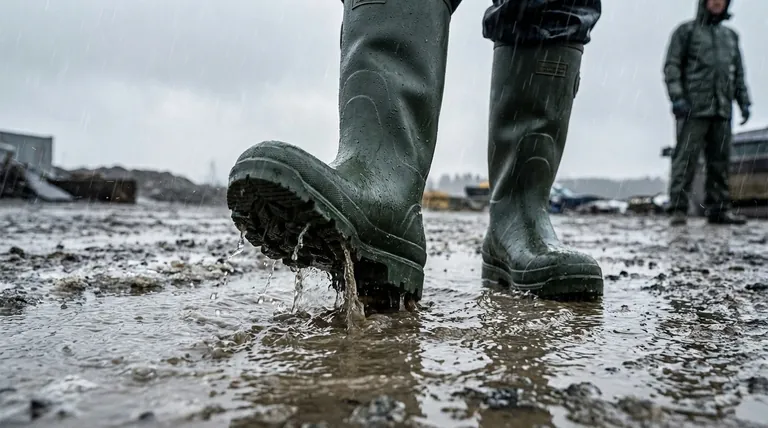
The Foundational Pillars of a Quality Wellington Boot
To make an informed decision, you must first understand the non-negotiable features that define a functional Wellington boot. These are the core components that deliver safety and basic protection.
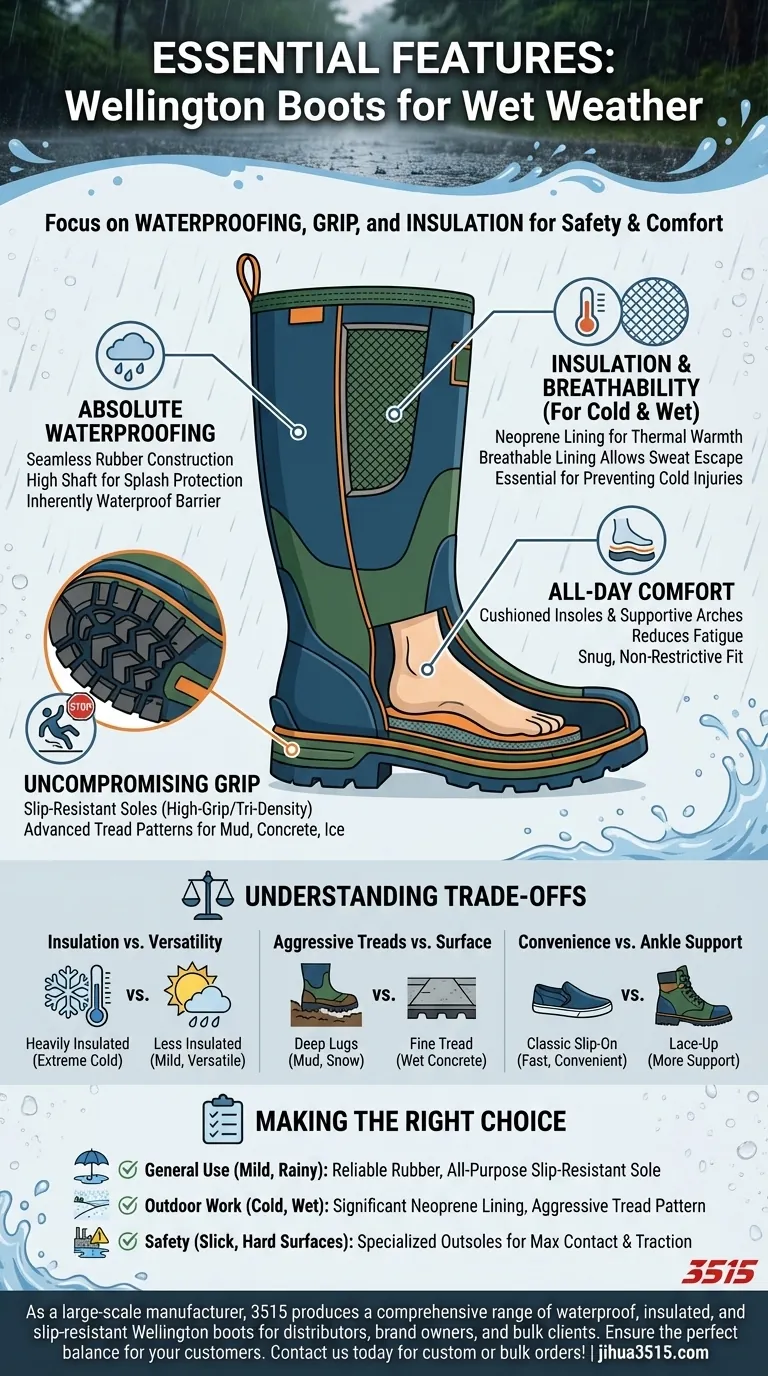
Absolute Waterproofing
Wellington boots are traditionally made from high-quality rubber. This material is inherently waterproof, providing a seamless barrier against moisture penetration.
The signature high shaft of the boot adds another layer of protection, keeping your lower legs dry from splashes and deeper puddles.
Uncompromising Grip
The outsole is your primary point of contact with the ground and is critical for safety. Look for boots explicitly labeled with slip-resistant soles.
For enhanced safety on particularly slick surfaces like wet mud, concrete, or ice, seek out boots with super-grippy or tri-density soles. These advanced designs use specific tread patterns and rubber compounds to maximize traction.
All-Day Comfort
A boot's comfort is determined by its internal construction. Features like cushioned insoles and supportive arches reduce fatigue during long periods of wear.
The classic slip-on, laceless design offers convenience, but it's crucial to ensure a snug fit that prevents excessive foot movement without being restrictive.
Adapting to Your Environment
Beyond the basics, the right boot for you depends entirely on the specific environment you'll be in. A boot designed for a cool, rainy day on the farm is fundamentally different from one needed for outdoor work in freezing rain.
Just Wet vs. Cold and Wet
For wet but mild conditions, a standard, non-insulated boot is sufficient. However, for cold and wet weather, insulation is essential to prevent heat loss and potential health risks like trench foot or frostbite.
Look for boots with a neoprene lining. This material provides excellent thermal insulation while maintaining flexibility and waterproofing, keeping your feet both dry and warm.
Breathability: A Critical Factor
In some insulated models, a breathable lining is included. This feature allows moisture vapor (sweat) to escape, which is crucial for keeping feet dry from the inside out and maintaining warmth effectively.
Understanding the Trade-offs
Selecting the perfect boot involves balancing competing features. Understanding these trade-offs is key to avoiding a poor choice for your specific needs.
Insulation vs. Versatility
Heavily insulated boots are excellent for extreme cold but can be uncomfortably warm and heavy in milder weather. A less insulated boot is more versatile but offers inadequate protection when temperatures drop significantly.
Aggressive Treads vs. Surface Type
Deep, aggressive lugs designed for mud and snow can feel unstable and wear down quickly on hard, flat surfaces like pavement. Conversely, a finer tread pattern ideal for wet concrete may not provide enough grip in deep mud.
Convenience vs. Ankle Support
The classic slip-on style is fast and convenient. However, this design inherently offers less ankle support than a traditional lace-up work boot, which can be a consideration for work on uneven terrain.
Making the Right Choice for Your Goal
Your primary activity should guide your final decision. Consider which of the following scenarios best matches your needs.
- If your primary focus is general use in mild, rainy weather: Prioritize a quality rubber build with a reliable, all-purpose slip-resistant sole for comfort and safety.
- If your primary focus is working outdoors in cold, wet conditions: Select a boot with a significant neoprene lining for insulation and a more aggressive tread pattern for superior grip.
- If your primary focus is safety on slick, hard surfaces: Seek out specialized outsoles designed for maximum surface contact and traction, such as those found on marine or industrial-grade boots.
By looking beyond simple waterproofing, you can select a boot that performs as a true piece of essential equipment for your specific conditions.
Summary Table:
| Key Feature | Why It Matters | Ideal For |
|---|---|---|
| Waterproof Rubber Construction | Provides a seamless barrier against moisture | All wet weather conditions |
| Slip-Resistant Outsole | Ensures safety and stability on slick surfaces | Wet mud, concrete, ice |
| Neoprene Insulation | Keeps feet warm in cold and wet environments | Freezing rain, icy worksites |
| Breathable Lining | Allows sweat to escape, keeping feet dry from the inside | Long-term wear, active use |
| Cushioned Insole & Arch Support | Reduces fatigue for all-day comfort | Extended outdoor work or activities |
As a large-scale manufacturer, 3515 produces a comprehensive range of Wellington boots for distributors, brand owners, and bulk clients. Our production capabilities encompass all types of waterproof, insulated, and slip-resistant footwear tailored to your specific wet weather needs. Ensure your customers get the perfect balance of protection, comfort, and durability — contact us today to discuss your custom or bulk order requirements!
Visual Guide
Related Products
- Durable Waterproof Rain Boots | Custom Manufacturer for Wholesale & Brands
- Durable Goodyear Welt Leather Work Boots for Wholesale & Private Label
- Wholesale Durable Leather Work Boots | 8-Inch Goodyear Welt Manufacturer
- High-Traction Suede Tactical Boots Wholesale & Custom Manufacturing
- Premium Wholesale Tactical Style Safety Shoes Boots with Quick Lacing
People Also Ask
- What are the main materials for waterproof rain boots? Choose the Right Material for Durability & Comfort
- What is the overall recommendation for choosing rain boot materials? A Guide to Rubber vs. PVC
- How does boot height affect waterproofing? Choose the Right Height for Ultimate Protection
- Why are rain boots more flexible and comfortable than snow boots? The Key Differences Explained
- What are the best types of shoes for different gardening conditions? Find Your Perfect Match.



















