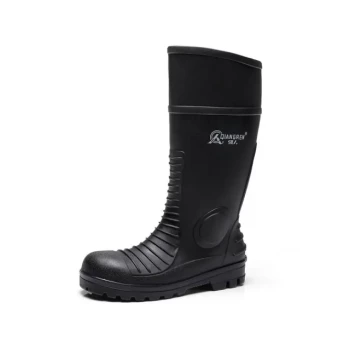
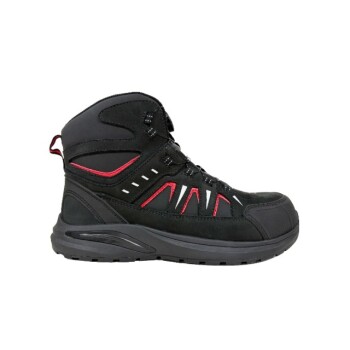
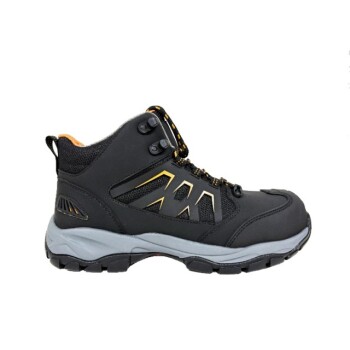
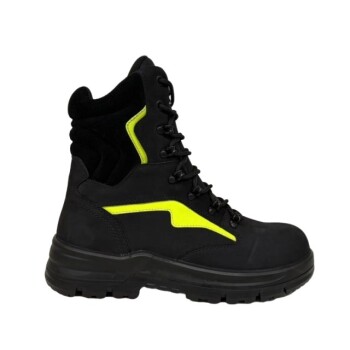
Beyond the steel toe itself, the ideal construction boot is a system of four critical features working in unison. When buying steel toe boots, you must evaluate them based on their overall protection, long-term durability, all-day comfort and support, and specific adaptations for your work environment, such as waterproofing.
The search for the right steel toe boot isn't about finding the strongest toe cap. It's about selecting a tool that provides comprehensive safety, lasting durability, and essential comfort tailored to the unique hazards and conditions of your job site.
Deconstructing the Four Pillars of a Quality Boot
A boot's value is determined by how well it performs as a complete piece of personal protective equipment. Each of the following pillars is equally important for ensuring safety and productivity.
Pillar 1: Uncompromising Protection
The most obvious feature is the steel toe cap, which provides rigid, uncompromising protection against crushing and falling object hazards common in construction.
However, true protection extends to the entire boot. A high-quality, non-slip sole is non-negotiable, providing critical traction to prevent accidents on wet, oily, or slick surfaces.
For many, electrical hazard resistance is another vital layer of safety, protecting you from extreme and often unseen dangers on the worksite.
Pillar 2: Engineered for Durability
A construction boot is an investment that must withstand daily abuse. Durability ensures your boot will not fail prematurely, preserving its protective qualities for the long term.
Look for signs of tough construction, such as reinforced stitching, high-quality leather or synthetic materials, and a securely bonded sole. These elements ensure the boot can handle the constant stress of a demanding environment.
Pillar 3: All-Day Comfort and Support
Safety features are rendered ineffective if a boot is too uncomfortable to wear correctly or for an entire shift. Comfort is a crucial component of safety and productivity.
Proper fit is paramount. Choosing the right size prevents painful and distracting foot ailments like blisters and calluses that arise from excessive pressure or friction.
Additionally, features like breathable materials and supportive insoles help manage moisture and reduce the physical strain of being on your feet for long hours.
Pillar 4: Adaptation to Your Environment
Your specific job site dictates the final set of features you need. A boot that excels in one environment may be unsuitable for another.
Waterproof capabilities are essential if you frequently work in wet, rainy, or muddy conditions. This feature keeps your feet dry, preventing discomfort and potential health issues.
Understanding the Trade-offs of Steel Toes
While steel toes offer exceptional protection, it's critical to understand their inherent characteristics to ensure they are the right choice for your specific needs.
The Issue of Weight
Steel is heavy. Steel toe boots are noticeably heavier than their composite toe counterparts, which can contribute to foot fatigue over a long workday.
Temperature Conduction
Steel is a conductor. This means steel toe boots can become uncomfortably hot in high-temperature environments and extremely cold in freezing conditions, transferring the ambient temperature directly to your feet.
Workplace Inconveniences
The metallic nature of the cap can be a hindrance in certain jobs. They will consistently set off metal detectors and can be problematic on sites with powerful magnetic surfaces.
The Cost Advantage
Despite these trade-offs, steel toe boots are often less expensive than boots made with more advanced composite materials, offering a robust and budget-friendly safety solution.
Making the Right Choice for Your Job
Use your daily tasks as the primary guide to selecting the right features.
- If your primary focus is heavy-duty demolition or industrial work: Prioritize maximum impact protection where the proven strength of a steel toe is the most critical feature.
- If your primary focus is working in wet, muddy, or slick conditions: Your top priorities must be certified waterproofing and a high-traction, non-slip sole.
- If your primary focus is all-day wear across varied, less hazardous tasks: Place the greatest emphasis on a perfect fit, good support, and breathable materials to minimize fatigue.
- If your primary focus is working in extreme temperatures or sites with metal detectors: Acknowledge the limitations of steel and consider a boot with a composite safety toe instead.
Ultimately, the right boot is a purpose-built tool that matches its protective features to the specific demands of your daily work.
Summary Table:
| Feature Pillar | Key Considerations |
|---|---|
| Protection | Steel toe cap, non-slip sole, electrical hazard resistance |
| Durability | Tough construction, reinforced stitching, high-quality materials |
| Comfort & Support | Proper fit, breathable materials, supportive insoles |
| Environmental Adaptation | Waterproofing, insulation, specific sole patterns |
As a large-scale manufacturer, 3515 produces a comprehensive range of steel toe boots for distributors, brand owners, and bulk clients. Our production capabilities encompass all types of safety footwear, ensuring you get durable, comfortable, and fully protective boots tailored to your specific work environment. Get a custom quote for your next order and experience the 3515 difference in quality and value. Contact our team today!
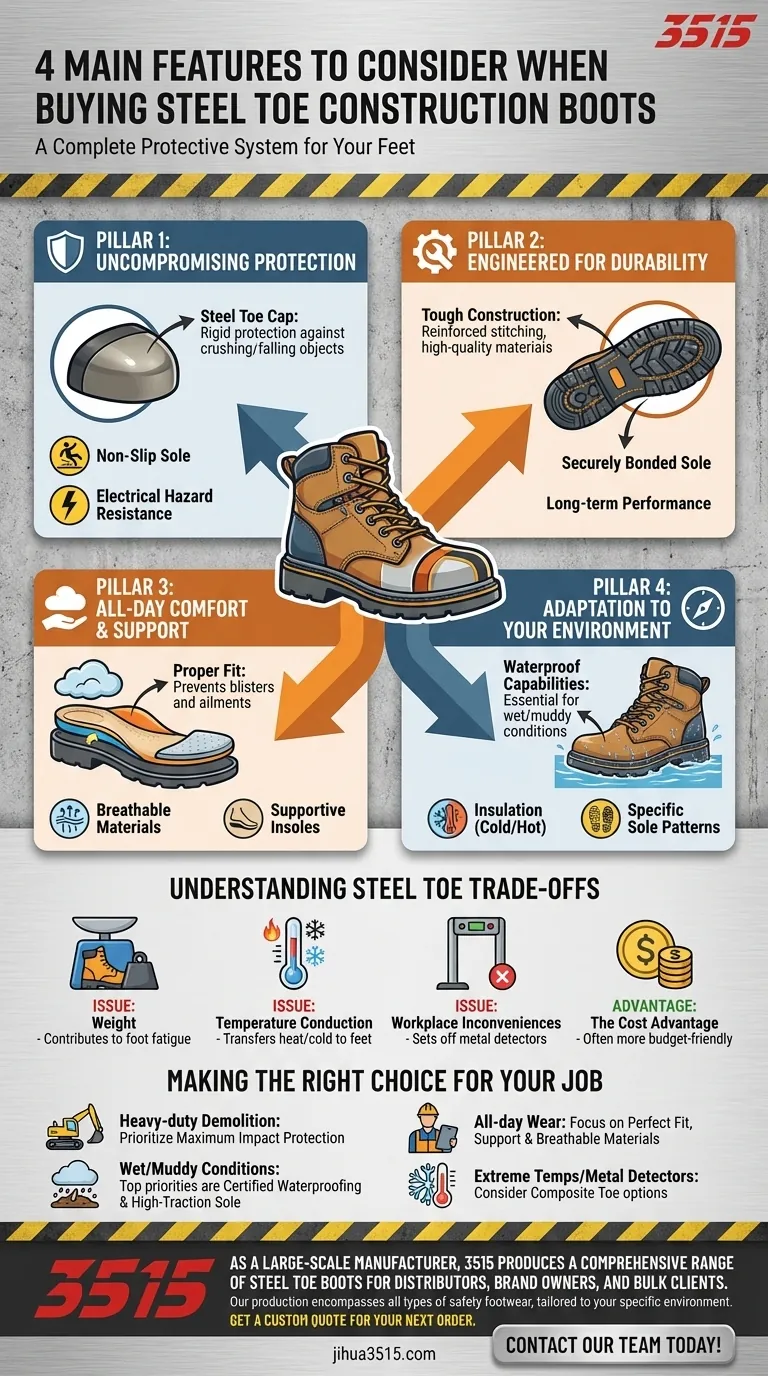
Visual Guide
Related Products
- Wholesale Durable Safety Boots Manufacturer Customizable Steel Toe Work Boots
- Durable Steel Toe Safety Boots Wholesale & Custom Manufacturing
- Wholesale Durable Breathable Safety Boots Custom OEM Manufacturer
- Wholesale Durable 6-Inch Work Boots | Custom & Private Label Manufacturer
- Puncture-Resistant Velcro Safety Boots for Wholesale & Custom Manufacturing
People Also Ask
- What are the pros and cons of steel toe work boots? A Guide to Maximum Protection vs. Comfort
- What are the different types of steel toe work boots? Choose the Right Boot for Your Job
- What is the history of steel toe work boots? From German Invention to Modern Safety Standard
- How much weight can steel toe work boots withstand? Unpacking the 3,372 lb. Safety Standard
- What are some common myths about steel toe work boots? Debunked for Modern Workers