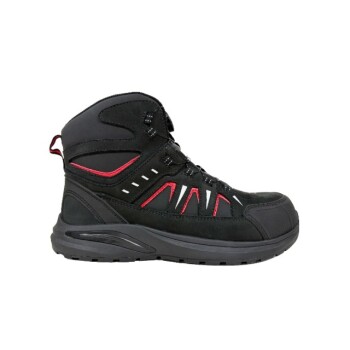
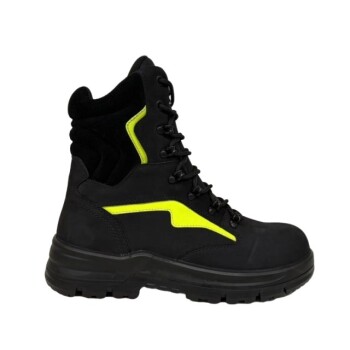
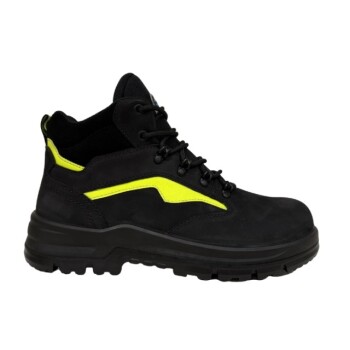
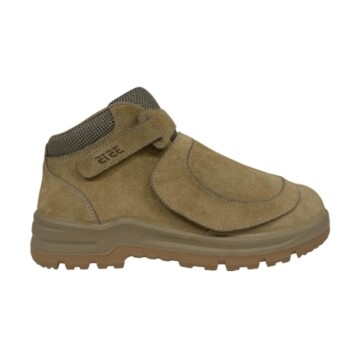
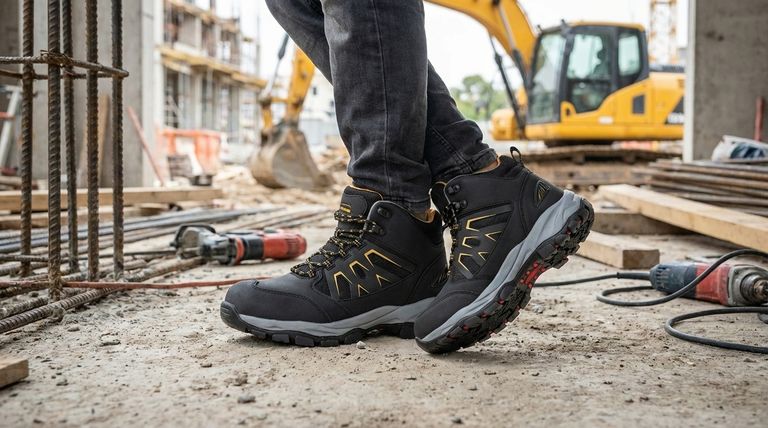
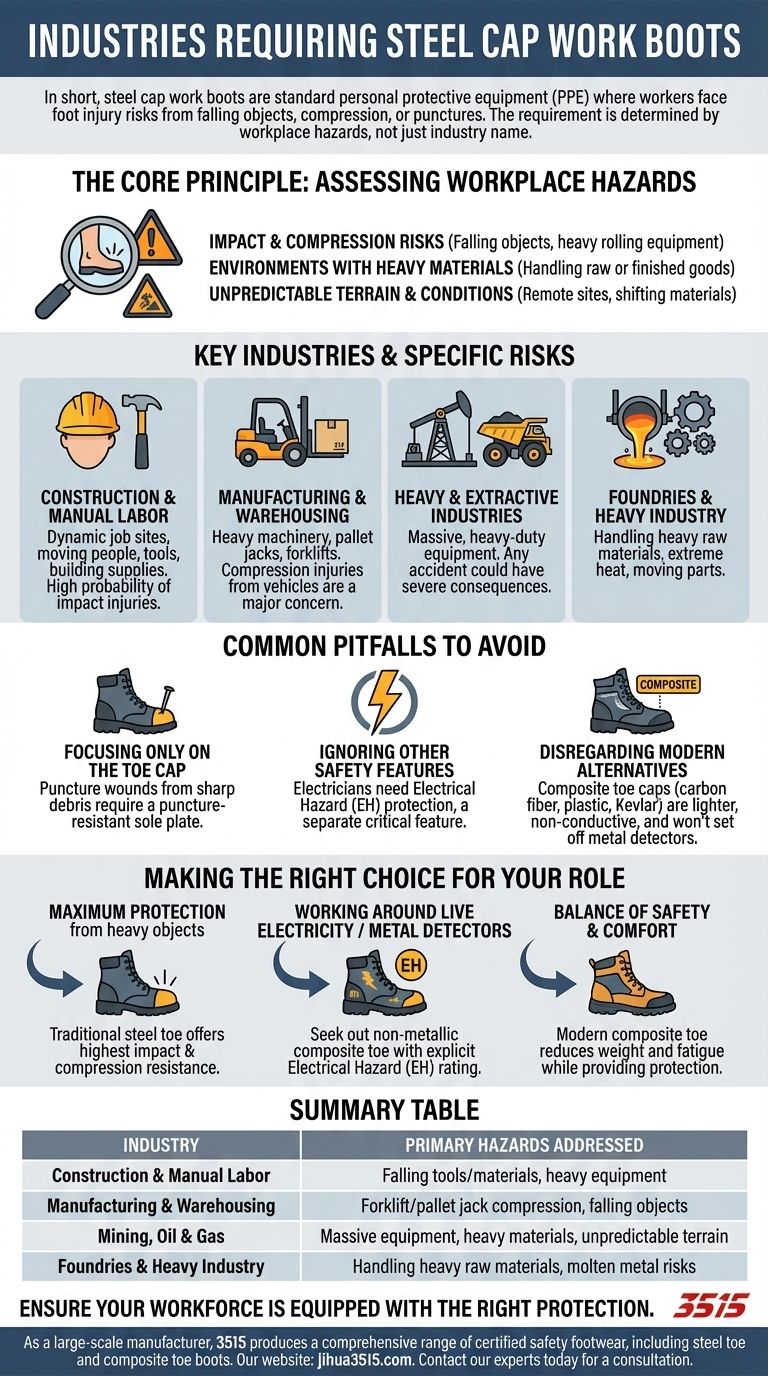
In short, steel cap work boots are standard personal protective equipment (PPE) in any industry where workers face a significant risk of foot injury from falling objects, compression, or punctures. This includes sectors like construction, manufacturing, warehousing, and heavy industries such as mining, foundries, and oil and gas operations.
The requirement for steel cap boots isn't determined by the industry's name, but by the specific workplace hazards present. The fundamental goal is to mitigate the risk of impact and compression injuries to the toes and feet.
The Core Principle: Assessing Workplace Hazards
The need for safety footwear is dictated by a formal or informal risk assessment of a worker's environment. The presence of specific, predictable dangers is what makes a steel cap boot a requirement.
Impact and Compression Risks
The primary reason for a steel cap is to protect the toes from crushing forces. This includes risks from both falling objects and heavy rolling equipment.
Industries like construction, manufacturing, and dock work constantly expose workers to falling tools, heavy materials, and machinery like forklifts. A steel cap is designed to withstand significant force, preventing a catastrophic injury.
Environments with Heavy Materials
Sectors that handle heavy raw or finished goods rely on this protection. Foundries, factories, and material transportation roles all involve moving items that could easily cause severe foot damage if dropped or mishandled.
Unpredictable Terrain and Conditions
Many jobs require working in environments that are not perfectly controlled. This is common in remote mine sites, on oil rigs, or during manual labor like ditch digging. The steel cap provides a crucial layer of defense against shifting materials or equipment.
Key Industries and Their Specific Risks
While the principle of hazard assessment is universal, certain industries have well-established risk profiles that make steel cap boots a default requirement.
Construction and Manual Labor
For builders, electricians, and general laborers, the job site is a dynamic environment. The constant movement of people, tools, and building supplies creates a high probability of impact injuries, making steel toes an essential piece of PPE.
Manufacturing and Warehousing
In factories and distribution centers, the primary risks come from heavy machinery, pallet jacks, and forklifts. A compression injury from a vehicle running over a foot is a major concern that steel caps are specifically designed to prevent.
Heavy and Extractive Industries
Industries like mining and oil drilling operate with massive, heavy-duty equipment. The scale of the materials and machinery means any accident could have severe consequences, making maximum foot protection non-negotiable.
Common Pitfalls to Avoid
Choosing safety footwear involves more than just looking for a steel cap. Understanding the limitations and alternatives is key to making an informed decision.
Focusing Only on the Toe Cap
A steel cap protects against impact and compression, but many job sites have other dangers. Puncture wounds from nails or sharp debris are also a significant risk, requiring boots with a puncture-resistant sole plate.
Ignoring Other Safety Features
Professions like electricians need boots that are also rated for Electrical Hazard (EH) protection. This is a separate feature from the toe cap and is critical for preventing electrocution.
Disregarding Modern Alternatives
While steel has been the standard for decades, composite toe caps made from materials like carbon fiber, plastic, or Kevlar are now common. They meet the same safety standards as steel but are lighter, do not conduct electricity, and will not set off metal detectors.
Making the Right Choice for Your Role
Your specific job duties should dictate your choice of footwear.
- If your primary focus is maximum protection from heavy objects: A traditional steel toe boot offers the highest, time-tested standard of impact and compression resistance.
- If your primary focus is working around live electricity or metal detectors: You must seek out boots with a non-metallic composite toe and an explicit Electrical Hazard (EH) rating.
- If your primary focus is a balance of safety and all-day comfort: A modern composite toe boot often provides the necessary protection while reducing weight and fatigue.
Ultimately, selecting the right safety footwear begins with a clear understanding of the specific hazards you face on the job.
Summary Table:
| Industry | Primary Hazards Addressed |
|---|---|
| Construction & Manual Labor | Falling tools/materials, heavy equipment |
| Manufacturing & Warehousing | Forklift/pallet jack compression, falling objects |
| Mining, Oil & Gas | Massive equipment, heavy materials, unpredictable terrain |
| Foundries & Heavy Industry | Handling heavy raw materials, molten metal risks |
Ensure your workforce is equipped with the right protection.
As a large-scale manufacturer, 3515 produces a comprehensive range of certified safety footwear, including steel toe and composite toe boots, for distributors, brand owners, and bulk clients. Our production capabilities encompass all types of industrial shoes and boots designed to meet the specific hazards of your industry.
Contact our experts today for a consultation on the ideal safety footwear solutions for your business needs.
Visual Guide
Related Products
- Wholesale Durable 6-Inch Work Boots | Custom & Private Label Manufacturer
- Wholesale Customizable Safety Boots Durable & Protective Footwear Manufacturing
- Wholesale Heavy-Duty Waterproof Steel Toe Work Boots OEM Manufacturer
- Wholesale Durable Safety Boots Manufacturer Customizable Steel Toe Work Boots
- Wholesale Durable Breathable Safety Boots Custom OEM Manufacturer
People Also Ask
- What are the pros and cons of steel toe work boots? A Guide to Maximum Protection vs. Comfort
- What is the history of steel toe work boots? From German Invention to Modern Safety Standard
- What are the different types of steel toe work boots? Choose the Right Boot for Your Job
- How much weight can steel toe work boots withstand? Unpacking the 3,372 lb. Safety Standard
- Is there any truth to the myth about steel toe boots causing toe injuries upon impact? Debunking Common Safety Concerns