At their core, winter boots fall into two main categories. The first is casual boots designed for everyday use like commuting and walking on cleared paths, prioritizing style and moderate warmth. The second is technical or backcountry boots, built for more demanding activities like winter hiking and snowshoeing, emphasizing maximum insulation, waterproofing, and aggressive traction.
The most critical factor in choosing a winter boot is not a specific feature, but your intended activity. Matching the boot's design to its purpose ensures you get the right balance of warmth, protection, and mobility without overspending or being unprepared.
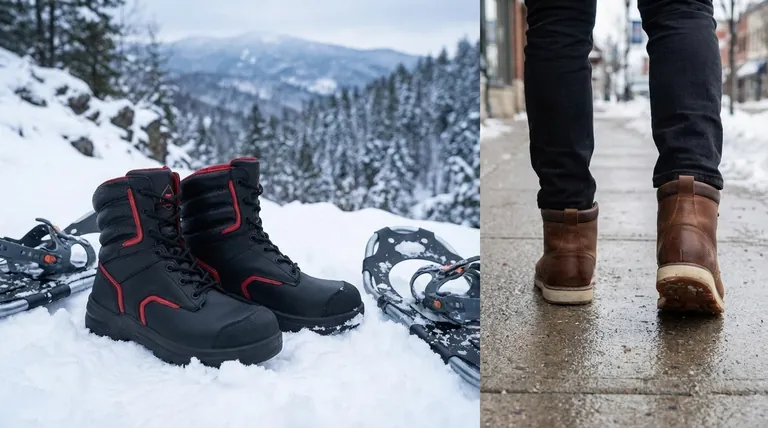
The Two Core Categories of Winter Boots
Understanding the fundamental split between casual and active-use boots is the first step. Each is engineered with a completely different environment and level of exertion in mind.
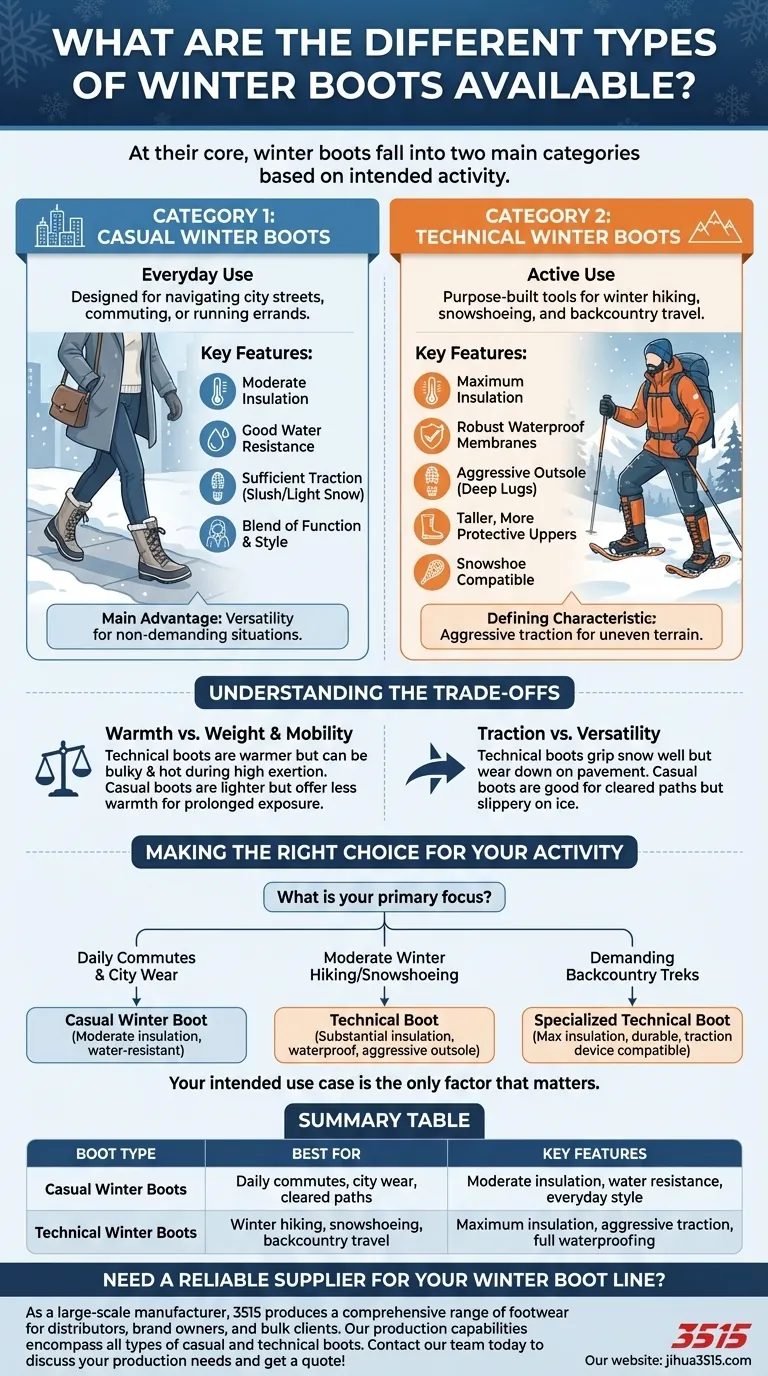
Category 1: Casual Winter Boots (Everyday Use)
These boots are your daily drivers for cold weather. They are designed for navigating city streets, commuting to work, or running errands when conditions are cold and potentially slick.
Their primary features include moderate insulation and good water resistance, sufficient for slush and light snow. While they provide better traction than a sneaker, their outsoles are not designed for deep snow or icy trails.
The main advantage of casual winter boots is their blend of function and style, making them versatile for wear in a variety of non-demanding situations.
Category 2: Technical Winter Boots (Active Use)
When you move from cleared sidewalks to trails and deep snow, you enter the realm of technical boots. These are purpose-built tools for winter hiking, snowshoeing, and demanding backcountry travel.
These models feature significantly more insulation, robust waterproof membranes, and taller, more protective uppers. Their most defining characteristic is an aggressive outsole, often made by specialists like Vibram, with deep lugs for gripping snow and uneven terrain.
Some technical boots are specifically designed for snowshoeing, featuring stiffer uppers and a "heel welt" or ledge on the back to securely hold a snowshoe binding.
Understanding the Trade-offs
Choosing the wrong type of boot leads to distinct problems. There is no single "best" winter boot, only the best boot for a specific task.
Warmth vs. Weight and Mobility
Heavily insulated, technical boots are exceptionally warm when you are standing still but can become bulky, heavy, and hot during high-exertion activities or when worn indoors.
Conversely, a lighter casual boot is more comfortable for driving and walking around town but will fail to provide adequate warmth and protection during prolonged exposure on a cold trail.
Traction vs. Versatility
The deep, aggressive lugs on a technical boot are essential for gripping snow but can feel clumsy and wear down quickly on dry pavement.
The less aggressive tread on a casual boot is perfectly adequate for a cleared sidewalk but offers dangerously little grip on an icy or snow-covered hiking path.
Making the Right Choice for Your Activity
Your intended use case is the only factor that matters. Be realistic about where you will spend the majority of your time in your boots.
- If your primary focus is daily commutes and city wear: A casual winter boot with moderate insulation and water-resistant materials is your ideal choice.
- If your primary focus is moderate winter hiking or snowshoeing: You need a technical boot with substantial insulation, a fully waterproof design, and an aggressive outsole for reliable traction.
- If your primary focus is demanding backcountry treks: A specialized technical boot with maximum insulation, durable uppers, and compatibility with traction devices like microspikes or snowshoes is non-negotiable.
Ultimately, selecting the right winter boot is about aligning the footwear's specific design with your personal winter activities.
Summary Table:
| Boot Type | Best For | Key Features |
|---|---|---|
| Casual Winter Boots | Daily commutes, city wear, cleared paths | Moderate insulation, water resistance, everyday style |
| Technical Winter Boots | Winter hiking, snowshoeing, backcountry travel | Maximum insulation, aggressive traction, full waterproofing |
Need a reliable supplier for your winter boot line? As a large-scale manufacturer, 3515 produces a comprehensive range of footwear for distributors, brand owners, and bulk clients. Our production capabilities encompass all types of casual and technical boots, ensuring you get the right balance of warmth, protection, and style for your customers. Contact our team today to discuss your production needs and get a quote!
Visual Guide
Related Products
- Premium Insulated Safety Boots and Shoes for Wholesale & Bulk Orders
- Factory Direct Wholesale Rain Boots Durable Waterproof & Fully Customizable
- Durable Waterproof Rain Boots | Custom Manufacturer for Wholesale & Brands
- Wholesale Waterproof Tactical Boots Custom Suede & High-Traction Soles
- Premium Waterproof High-Cut Industrial Safety Boots for Wholesale and Bulk Orders
People Also Ask
- What are the recommended insulation ratings for mild winter conditions? A Guide for Active & Stationary Workers
- How does insulation thickness correlate with temperature ranges? A Guide to Choosing the Right Warmth
- What insulation level is needed for severe cold and stationary work? 1200g or Higher is Essential
- What safety advantages do insulated boots offer beyond warmth? Dielectric Protection & Superior Grip
- How does fleece lining contribute to the warmth of insulated boots? Trapping Air for Superior Cold Protection