
The primary function of an Achilles tendon protector in a walking shoe is to reduce stress on this critical tendon. It accomplishes this by creating a secure, anatomical fit that locks your heel in place, preventing the friction and strain caused by movement within the shoe.
The key insight is that an Achilles protector is not just padding for comfort. It is a structural feature engineered to prevent heel slippage—the primary cause of mechanical irritation and stress on the Achilles tendon during the walking motion.
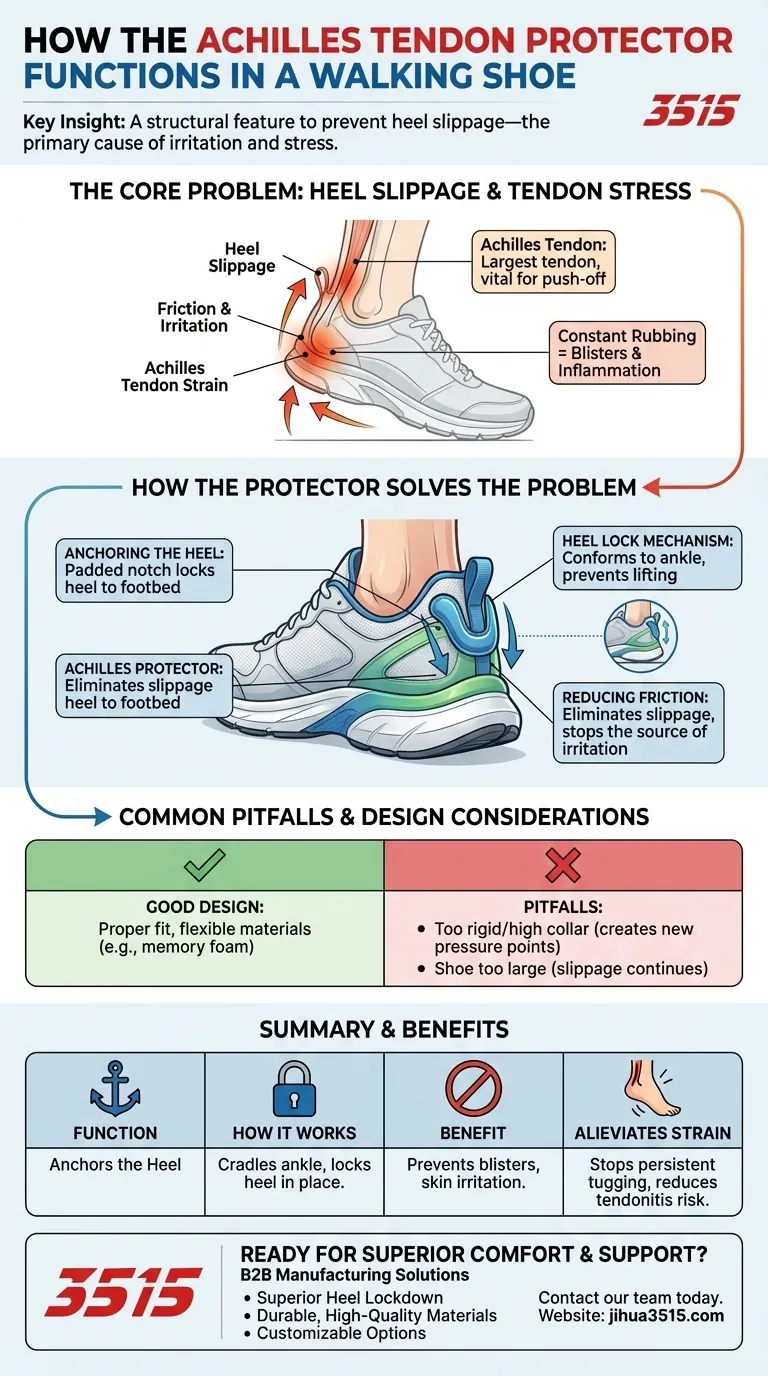
The Core Problem: Heel Slippage and Tendon Stress
To understand the protector's function, you must first understand the problem it solves. The repetitive motion of walking can place significant strain on the back of your heel if the fit is not precise.
The Achilles Tendon's Role in Walking
The Achilles tendon is the largest tendon in your body, connecting your calf muscles to your heel bone. It is essential for the "push-off" phase of every step you take, making it vulnerable to repetitive stress injuries.
The Mechanics of Irritation
When your shoe doesn't fit securely, your heel lifts slightly off the insole with each step. This movement, known as heel slippage, causes the back of your heel and the tendon to rub continuously against the inside of the shoe.
How Slippage Creates Unnecessary Strain
This constant rubbing generates friction, which can lead to blisters and skin irritation. More importantly, it creates a persistent, low-grade tugging on the tendon itself, which can lead to inflammation, discomfort, and conditions like tendonitis over time.
How the Achilles Protector Solves the Problem
A well-designed Achilles tendon protector directly counteracts the negative effects of heel slippage through its specific shape and construction.
Anchoring the Heel
The primary goal is to anchor your heel to the shoe's footbed. The protector is typically a padded notch or a deeply curved structure at the very top of the shoe's heel counter.
The "Heel Lock" Mechanism
This feature cradles the area around the Achilles tendon. By conforming to the natural shape of your ankle, it "locks" the heel down, preventing it from lifting up and out of the shoe as you roll through your stride.
Reducing Friction and Direct Pressure
By eliminating heel slippage, the protector stops the source of friction. A well-designed notch also ensures there is no direct, concentrated pressure on the tendon itself, allowing it to move freely and naturally without being pinched or chafed.
Common Pitfalls and Design Considerations
Not all Achilles protectors are created equal. An improperly designed or poorly fitting heel can create new problems instead of solving existing ones.
The Risk of a Rigid Collar
A protector that is too high, stiff, or aggressively shaped can dig into the tendon. This creates a different type of pressure point that can be just as irritating as the friction from slippage.
Fit is Paramount
The effectiveness of any Achilles protector is entirely dependent on the overall fit of the shoe. If the shoe is too large, your heel will slip regardless of the protector's design. A proper fit ensures your heel is positioned correctly within the protector from the start.
Materials Matter
Modern shoes often use memory foam or other soft, pliable materials in the heel collar. These materials can provide a secure lockdown with less risk of creating pressure points compared to older, more rigid designs.
Making the Right Choice for Your Goal
When selecting a walking shoe, pay close attention to the design and feel of the heel cup to ensure it aligns with your needs.
- If your primary focus is preventing future irritation: Look for a shoe with a deep, well-defined heel cup and a noticeable "Achilles notch" that secures your foot without rubbing.
- If you have existing Achilles sensitivity: Prioritize shoes with soft, flexible materials around the heel collar to minimize direct pressure on the tender area.
- If you are a high-mileage walker: Test the shoe thoroughly to confirm a complete heel lockdown; there should be virtually no vertical movement of your heel as you walk.
Ultimately, a good Achilles protector works by making the shoe feel like a seamless extension of your foot.
Summary Table:
| Function | How It Works | Benefit |
|---|---|---|
| Anchors the Heel | Cradles the ankle with a padded notch to lock the heel in place. | Prevents vertical movement and slippage inside the shoe. |
| Reduces Friction | Eliminates rubbing between the heel and the shoe's collar. | Prevents blisters and skin irritation. |
| Alleviates Tendon Strain | Stops the persistent tugging on the Achilles tendon during walking. | Reduces risk of inflammation and tendonitis. |
| Ensures Proper Fit | Works with the shoe's overall structure for a secure, anatomical fit. | Enhances comfort and walking efficiency. |
Ready to Experience Superior Comfort and Support?
As a large-scale manufacturer, 3515 produces a comprehensive range of high-performance footwear for distributors, brand owners, and bulk clients. Our production capabilities encompass all types of walking shoes and boots, engineered with anatomical features like advanced Achilles tendon protectors for optimal fit and injury prevention.
We can help you provide your customers with:
- Superior Heel Lockdown: Shoes designed to eliminate slippage and strain.
- Durable, High-Quality Materials: Built for comfort and long-lasting performance.
- Customizable Options: Tailored to meet your specific market needs and branding.
Let's discuss how we can support your business. Contact our team today to explore our manufacturing solutions and request a quote.
Visual Guide
Related Products
- Durable Rubber Sole Outdoor Shoes Wholesale & Custom Manufacturing
- Wholesale Durable Camouflage Canvas Shoes with High-Traction Cleated Rubber Sole
- Advanced KPU Athletic Safety Shoe with Steel Toe Cap Anti-Slip Rotary Lacing System
- Premium Suede Sport Safety Shoes for Wholesale & Bulk Orders
- Wholesale Comfortable Business Casual Shoes Custom Manufacturing
People Also Ask
- What is the function of the sole in outdoor shoes? Find the Perfect Grip and Support
- What role do outdoor shoes and sneakers play in navigating external terrains? Engineered Stability for Every Surface
- How is AI utilized in the design of outdoor and safety footwear? Harnessing Big Data for Market-Driven Shoe Innovation
- Why is durability important when selecting outdoor shoes? A Guide to Safety & Long-Term Value
- What are the key components of outdoor shoes that affect comfort and sturdiness? A Guide to Durable, High-Performance Footwear



















