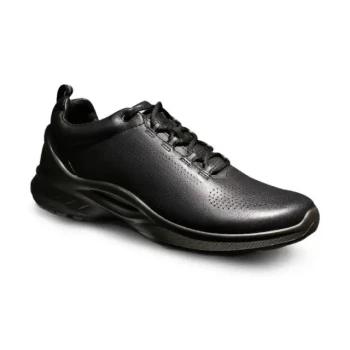
In short, the most important features for all-day walking are substantial cushioning, structural support, and long-term durability. These elements work together as a system, primarily in the shoe's midsole and outsole, to absorb impact, maintain stability, and prevent fatigue and pain over long distances.
The ideal shoe for extended walking isn't simply the softest one available. It's a carefully engineered balance of shock-absorbing cushion to protect your joints and firm structural support to keep your body properly aligned and stable with every step.
Deconstructing the Ideal Walking Shoe
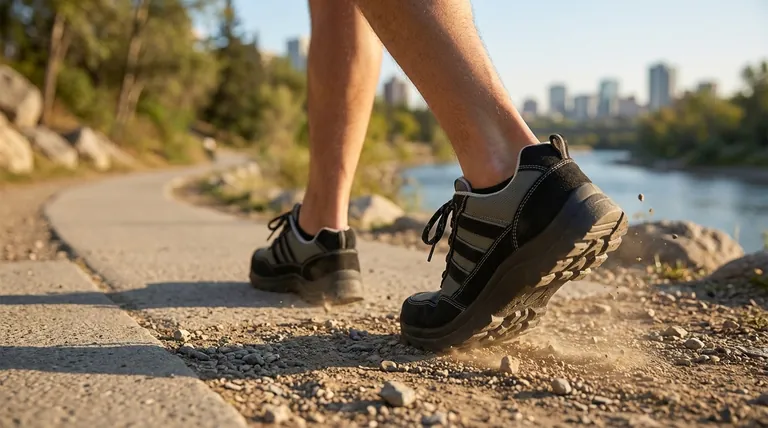
To make an informed decision, you must understand how each part of the shoe contributes to your comfort and health. The key is to see the shoe not as a single object, but as a system of components working together.
The Midsole: Your Engine for Shock Absorption
The midsole is the layer between the outsole (that touches the ground) and your foot. It does the most critical work.
Look for a thick midsole, often measured as "stack height." A stack height of 30mm or more provides significant material to compress and absorb the repetitive impact of walking on hard surfaces.
This cushioning is the shoe's first line of defense, reducing the stress that travels up through your feet, ankles, knees, and back.
The Outsole: Durability and Traction
The outsole is the rubber layer that makes contact with the ground. Its primary jobs are to resist wear and provide a secure grip.
For longevity, seek an outsole that is at least 3mm thick and made of a durable rubber compound. This ensures the shoe can withstand miles of abrasion without wearing down prematurely.
In certain work environments, features like slip-resistant patterns are also a critical safety consideration.
Internal Structure: The Foundation of Support
Support is different from cushioning. While cushioning absorbs impact, support controls foot motion and maintains alignment.
A shoe with good structure prevents your foot from rolling inward or outward excessively, which is a major cause of fatigue and can lead to injury. This is often achieved through a wider platform or base, providing greater stability.
Firmer materials in the midsole can also contribute to support, creating a more stable foundation than overly soft, squishy foams.
Fit and Upper: Comfort and Breathability
A shoe's features are useless if it doesn't fit correctly. Ensure there is enough room in the toe box for your toes to spread out naturally, as your feet will swell slightly over a long day.
The upper—the fabric part of the shoe—should be made of breathable materials like engineered mesh. This allows heat and moisture to escape, preventing blisters and discomfort during extended wear.
Understanding the Trade-offs
There is no single "perfect" shoe because every design choice involves a compromise. Understanding these balances is key to finding the right shoe for you.
Cushioning vs. Stability
This is the most important trade-off to consider. Softer foams provide a plush, comfortable feeling underfoot, which is excellent for shock absorption.
However, excessively soft shoes can feel unstable, forcing the small muscles in your feet and ankles to work harder to keep you balanced, leading to fatigue.
Firmer cushioning provides less of a "cloud-like" feeling but offers a more stable and responsive platform, which can be better for preventing fatigue over many hours.
Durability vs. Weight
Thicker midsoles and robust rubber outsoles add significant durability to a shoe, but they also add weight.
While this may not be noticeable on short walks, the extra ounces can contribute to leg fatigue over thousands of steps. The goal is to find a shoe that is durable enough for your needs without feeling heavy or cumbersome.
Making the Right Choice for Your Goal
Select your footwear by prioritizing the features that solve your specific challenge.
- If your primary focus is maximum comfort on hard surfaces (e.g., concrete floors): Prioritize a shoe with a thick, well-cushioned midsole (30mm+ stack height) to absorb the most impact.
- If your primary focus is stability and preventing fatigue (e.g., long walks on varied terrain): Look for a shoe with a firmer midsole, a wide base for support, and a secure fit.
- If your primary focus is durability for daily wear: Ensure the outsole is at least 3mm thick and constructed from a high-abrasion rubber compound.
Choosing the right shoe is a direct investment in your long-term health and daily comfort.
Summary Table:
| Feature | Key Attribute | Why It Matters |
|---|---|---|
| Midsole Cushioning | 30mm+ stack height | Absorbs repetitive impact, protects joints |
| Outsole Durability | 3mm+ thick rubber | Resists wear, provides long-lasting use |
| Internal Support | Firm midsole, wide base | Controls foot motion, prevents fatigue |
| Fit & Breathability | Roomy toe box, mesh upper | Accommodates swelling, prevents blisters |
Invest in footwear that supports your workforce. As a large-scale manufacturer, 3515 produces a comprehensive range of durable, comfortable walking shoes and boots designed for all-day wear. We provide OEM/ODM services for distributors, brand owners, and bulk clients, ensuring the perfect balance of cushioning, support, and longevity for your target market.
Contact 3515 today to discuss your production needs and elevate your footwear line.
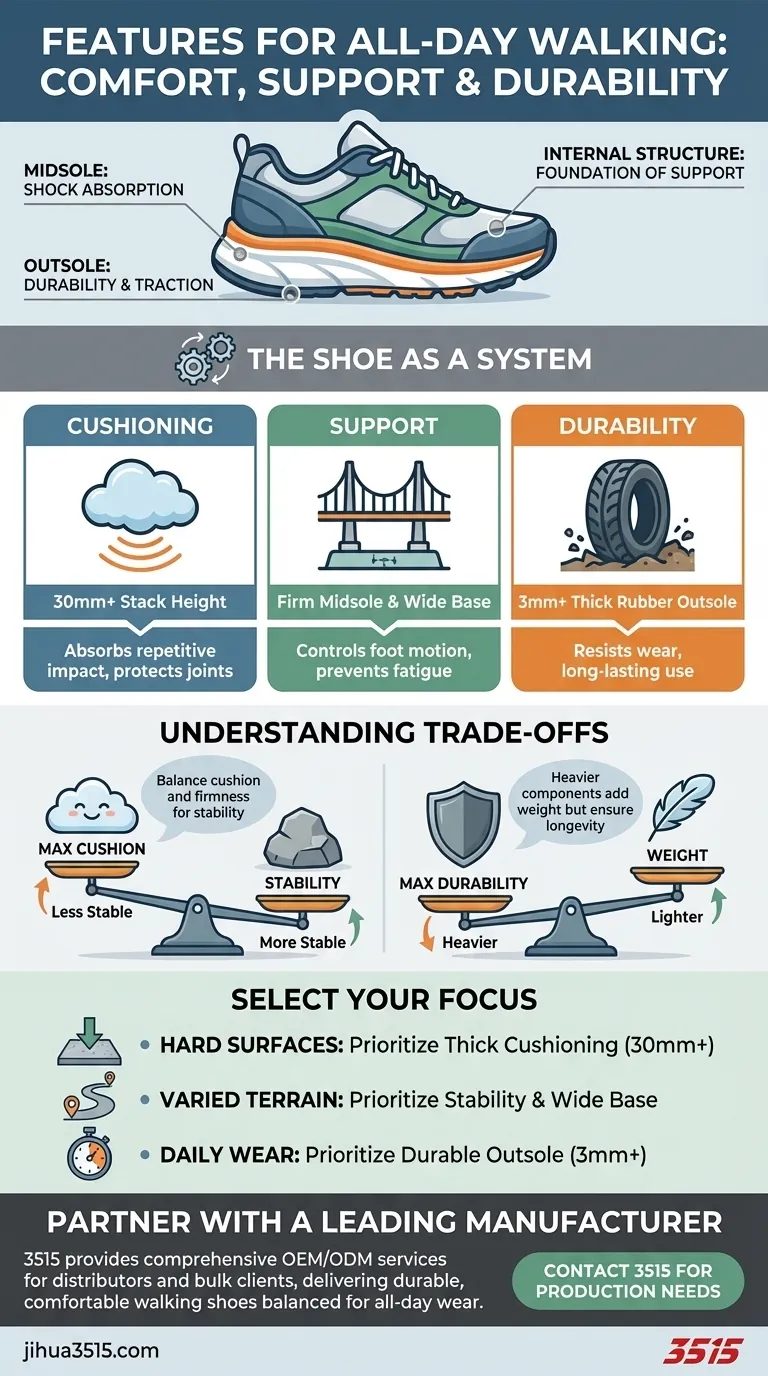
Visual Guide
Related Products
- Wholesale Durable Camouflage Canvas Shoes with High-Traction Cleated Rubber Sole
- Durable Rubber Sole Outdoor Shoes Wholesale & Custom Manufacturing
- Premium Suede Sport Safety Shoes for Wholesale & Bulk Orders
- Durable Goodyear Welt Leather Work Boots for Wholesale & Private Label
- Wholesale Comfortable Business Casual Shoes Custom Manufacturing
People Also Ask
- Why is the selection of high-strength fabric materials necessary in the production of canvas shoes and training shoes?
- What are the properties of canvas as a shoe material? A Guide to Lightweight Comfort & Style
- Can canvas shoes be worn in rainy conditions? The Truth About Water Resistance
- What are some examples of vulcanized shoes? Discover the Flexibility and Board Feel of Classic Sneakers
- What are the characteristics of canvas as a shoe material? A Guide to Lightweight, Breathable Footwear