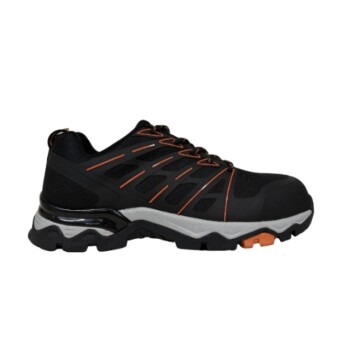
Implementing lifetime maintenance for high-strength footwear requires a dual focus on modular design and specialized re-manufacturing capabilities. Specifically, you must engineer boots with replaceable midsole and outsole components while utilizing industrial-grade sewing and refurbishing machinery to execute repairs without compromising safety standards.
The core challenge is not just repairing the footwear, but ensuring that the refurbished unit retains its original impact and puncture resistance certifications through a rigorous "design-for-repair" philosophy.
Designing for Disassembly and Repair
Modular Component Architecture
To make lifetime maintenance viable, the initial product design must move away from permanent, fused construction methods.
You must incorporate replaceable elements into the architecture of the boot.
This primarily focuses on separating the midsole and outsole from the upper, allowing them to be removed without destroying the footwear's structure.
Targeted Component Replacement
The design strategy should isolate high-wear areas for targeted replacement.
By focusing on the midsole and outsole, you can extend the operational life of the product significantly.
This approach preserves the broken-in upper, which is often the most valuable part of the boot to the user, while renewing the protective tread and cushioning.
Essential Technical Infrastructure
Professional Sewing Capabilities
Standard repair tools are insufficient for high-strength tactical or safety gear.
Manufacturers must utilize professional sewing equipment capable of handling heavy-duty materials.
This machinery ensures that stitching on refurbished units matches the tensile strength and durability of the original manufacturing specifications.
Specialized Refurbishing Equipment
Beyond sewing, the facility requires specialized equipment for bonding and finishing.
Refurbishing heavy-duty footwear involves complex adhesion and shaping processes to reintegrate new components.
This equipment allows for a factory-level finish that restores the boot to its functional baseline.
Maintaining Safety Certifications
Preserving Impact Resistance
The most critical technical requirement is the preservation of safety standards.
Any repair process must ensure the footwear maintains its original impact resistance certification.
The replacement of soles or stitching must not compromise the integrity of the steel or composite toe caps.
Ensuring Puncture Resistance
For tactical and safety boots, underfoot protection is non-negotiable.
Refurbishing processes must be calibrated to ensure puncture resistance remains intact after the outsole is replaced.
If the repair process weakens the midsole barrier, the footwear is no longer safe for industrial use.
Understanding the Trade-offs
Design Complexity vs. Manufacturing Speed
Designing for repairability often requires more complex assembly techniques than disposable footwear.
While this allows for lifetime maintenance, it may increase initial manufacturing costs and time.
Repair Rigor vs. Liability
Offering maintenance on safety gear introduces significant liability.
If a repaired boot fails to meet safety certifications, the manufacturer carries the risk.
This necessitates strict quality control protocols that mirror the original production line testing.
Making the Right Choice for Your Service Model
To successfully implement a maintenance program, align your technical resources with your service goals:
- If your primary focus is Operational Longevity: Prioritize the modularity of outsoles and midsoles in your initial design phase to facilitate easy replacement.
- If your primary focus is Safety Compliance: Invest heavily in professional refurbishing equipment that guarantees the retention of original impact and puncture certifications.
True lifetime maintenance is achieved when the quality of the repair matches the engineering of the original product.
Summary Table:
| Requirement Category | Key Technical Focus | Impact on Performance |
|---|---|---|
| Design Architecture | Modular components & detachable soles | Enables disassembly without structural damage |
| Material Handling | Professional heavy-duty sewing equipment | Restores original tensile strength & durability |
| Safety Integrity | Impact & puncture resistance testing | Ensures refurbished boots meet safety certifications |
| Component Strategy | Targeted midsole/outsole replacement | Preserves value of the broken-in upper |
| Quality Control | Factory-level finishing equipment | Restores footwear to original functional baseline |
Partner with 3515 for High-Performance Footwear Solutions
As a large-scale manufacturer serving global distributors and brand owners, 3515 offers comprehensive production capabilities for all footwear types. Our expertise is anchored by our flagship Safety Shoes series, complemented by an extensive portfolio of tactical boots, outdoor shoes, training sneakers, and formal dress shoes.
We provide the technical precision and "design-for-repair" engineering required to meet diverse bulk requirements while maintaining rigorous safety standards. Maximize your product's lifecycle and value—contact us today to discuss your manufacturing and maintenance service needs.
References
- Michael Saidani, Madeline Kim. THE RIGHT-TO-REPAIR MOVEMENT AND SUSTAINABLE DESIGN IMPLICATIONS: A FOCUS ON THREE INDUSTRIAL SECTORS. DOI: 10.1017/pds.2023.347
This article is also based on technical information from 3515 Knowledge Base .
Related Products
- Premium Suede Sport Safety Shoes for Wholesale & Bulk Orders
- Premium Lightweight Safety Shoes for Wholesale & Bulk Orders
- Wholesale Anti-Smash & Puncture-Proof Safety Shoes Custom Manufacturing for Brands
- Premium KPU Injection Athletic Style Safety Shoes
- Premium Safety Shoes with Rotating Buckle Safety Sneakers
People Also Ask
- What are the primary functions of professional safety shoes? Maximize Safety in Water Supply Confined Spaces
- What industries have specific OSHA footwear requirements? Ensure Compliance & Protect Your Workforce
- What role do specialized safety shoes play in preventing falls? Engineering Stability in Industrial Environments
- Why must safety training be synchronized with the provision of physical safety shoes? Achieve Optimal Workplace Protection
- How do complex outsole tread designs in safety shoes work with coated floors? Master Slip Resistance Engineering