
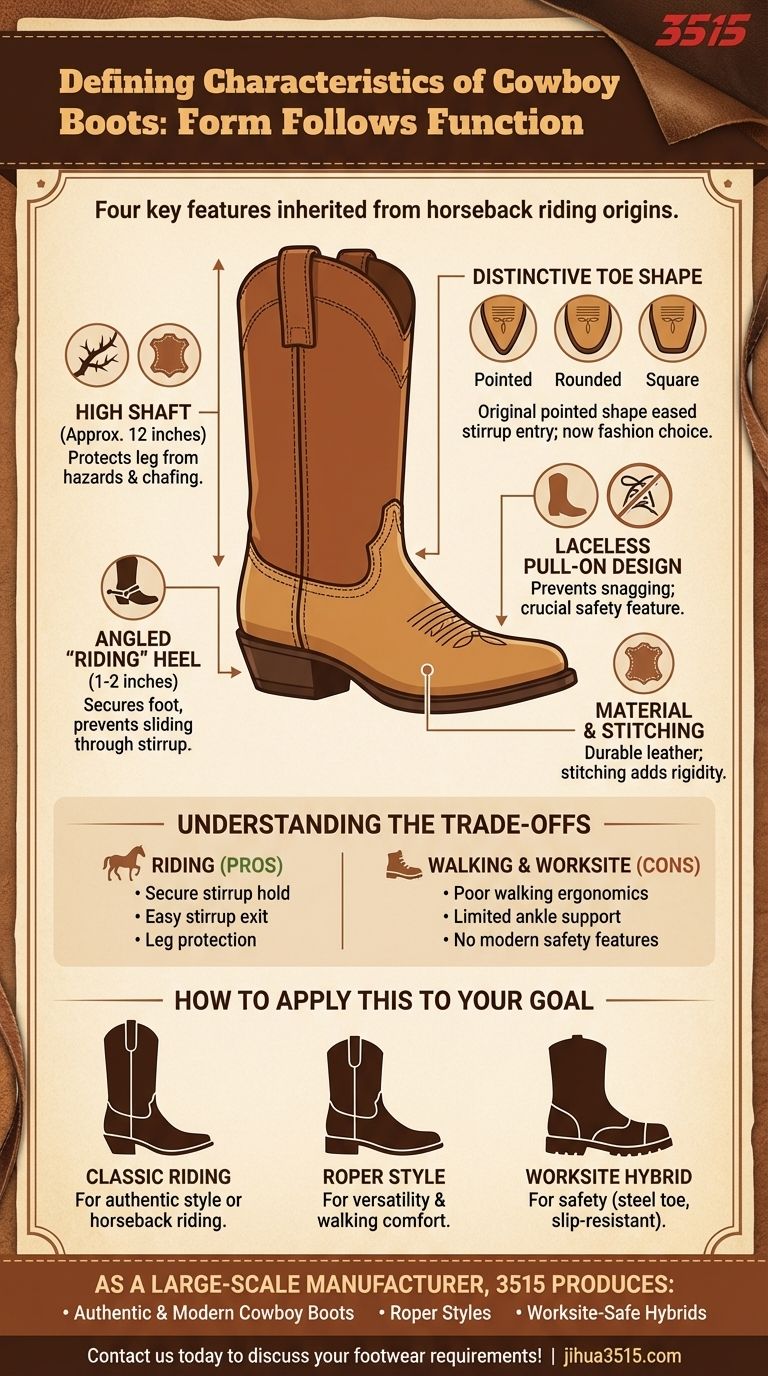
At their core, cowboy boots are defined by four key visual characteristics. These are a high shaft, typically around 12 inches tall; an angled heel between one and two inches high; a distinctive toe shape that can be pointed, rounded, or square; and a laceless, pull-on design.
The defining characteristics of a cowboy boot are not merely stylistic; they are a functional inheritance from its origin as a tool for horseback riders. Every element, from the shaft to the heel, was engineered for safety and efficiency in the saddle.
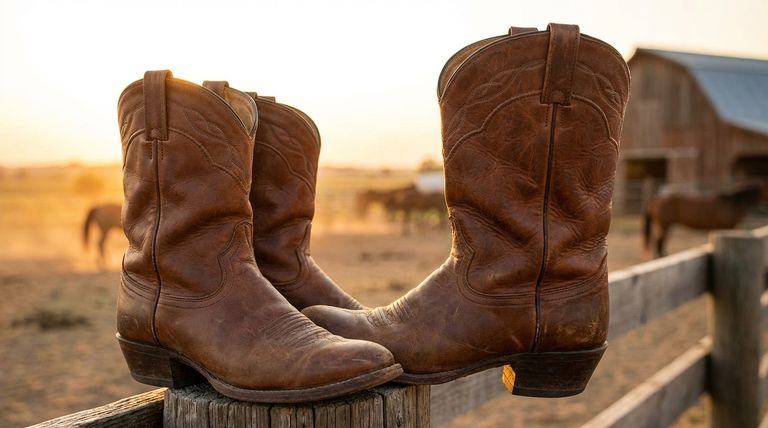
The Anatomy of a Cowboy Boot: Function Meets Form
To truly understand what makes a cowboy boot, you must look at how each component serves a specific, practical purpose inherited from its ranching and riding origins.
The High Shaft
The tall leather shaft is the boot's most prominent feature. Its primary job is to protect the rider's leg from trail hazards like brush, thorns, and snake bites, as well as to prevent chafing from the saddle and stirrup leathers.
The Angled "Riding" Heel
The heel is perhaps the most critical functional component for a rider. It is angled forward to securely catch the stirrup, preventing the rider's foot from accidentally sliding all the way through, which is a major safety risk. The typical height provides leverage and a secure hold.
The Distinctive Toe Shape
While toe shapes now vary widely for fashion, the original, more pointed toe was designed to make it easier for a rider to quickly guide their foot into the stirrup. Today, you will find pointed, rounded, and broad square toes, each offering a different fit and style.
Laceless Pull-On Design
The complete absence of laces is a crucial safety feature. Laces can snag on branches or equipment, posing a significant danger to someone working with livestock or on horseback. The smooth, laceless design ensures a clean profile.
Material and Stitching
Traditionally, cowboy boots are made from durable cowhide leather. The decorative stitching found on the shaft, while aesthetically pleasing, also served a functional purpose by adding rigidity and helping the leather shaft maintain its shape.
Understanding the Trade-offs
The features that make a cowboy boot excellent for riding create distinct disadvantages for other activities.
Not Designed for Walking
The angled heel and traditionally smooth leather sole, perfect for sliding in and out of a stirrup, offer poor ergonomics and traction for walking long distances. This design can lead to foot fatigue if you are on your feet all day on hard surfaces.
Limited Ankle Support
Unlike modern hiking or adventure boots, the cowboy boot is not designed to lock the ankle in place. The looser fit around the ankle is intentional, allowing the boot to slip off more easily if a rider falls and their foot is caught in the stirrup.
Lack of Modern Safety Features
A traditional cowboy boot offers none of the protections found in a certified safety boot. It lacks a reinforced safety toe, a penetration-resistant midsole, and a sole rated for slip resistance, making it unsuitable for many modern worksites.
How to Apply This to Your Goal
Understanding the core design principles empowers you to choose the right boot for your needs.
- If your primary focus is authentic style or horseback riding: Seek a classic design with a shaft of 12 inches or more, an angled heel of at least 1.5 inches, and a smooth leather sole.
- If your primary focus is versatility and walking comfort: Consider a "Roper" style boot, which features a shorter shaft and a lower, squared-off heel that is much better suited for groundwork.
- If your primary focus is worksite safety: Look for purpose-built hybrid boots that combine the cowboy boot silhouette with certified features like steel toes and slip-resistant outsoles.
Ultimately, recognizing these defining traits allows you to see the cowboy boot not just as footwear, but as a masterfully designed piece of equipment.
Summary Table:
| Characteristic | Function & Purpose | Common Variations |
|---|---|---|
| High Shaft | Protects legs from brush, saddle chafing, and snake bites | Typically 12+ inches tall |
| Angled Heel | Locks foot securely in stirrup for rider safety | 1-2 inches high; 'Roper' style has lower heel |
| Toe Shape | Eases entry into stirrup; now a style choice | Pointed, rounded, square |
| Pull-On Design | Prevents snagging on equipment; safety feature | Always laceless |
| Material | Durability and shape retention | Traditionally cowhide leather |
As a large-scale manufacturer, 3515 produces a comprehensive range of authentic and modern cowboy boots for distributors, brand owners, and bulk clients. Whether you need classic riding boots, versatile Roper styles, or worksite-safe hybrids with steel toes, our production capabilities cover all types of footwear. Let us help you source the perfect boots that blend tradition with your specific market needs. Contact us today to discuss your footwear requirements!
Visual Guide
Related Products
- Wholesale High-Traction Camo Boots - Custom Manufacturer for Brands
- High-Traction Suede Tactical Boots Wholesale & Custom Manufacturing
- Wholesale Lightweight Tactical Boots Custom Manufacturer for Desert & Combat Use
- Durable Leather Tactical Boots Wholesale & Custom Manufacturing for Brands
- Wholesale Durable Mid-Cut Tactical Boots for Custom & Private Label Brands
People Also Ask
- What are the key features of the new line of camo boots? Built for Extreme Cold & Rugged Terrain
- Are camo boots necessary for hunting success? Prioritize Performance Over Pattern
- What is the technical logic behind using closed-eye testing for tactical boots? Unlocking Peak Footwear Stability
- How does the Rank Score Test identify the primary causes of premature failure in tactical and work boots? Key Insights
- What shoes to wear for a security job? Durable, Protective Footwear for Long Shifts



















