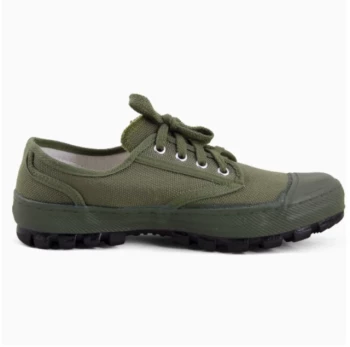
A boot's sole is an engineered system, not just a piece of rubber. Its primary characteristics are defined by its multi-layered construction, material composition, and tread design, all working together to provide a specific balance of durability, comfort, and traction for its intended purpose. Key features include oil and cut resistance, a dual-density structure for cushioning and wear, and a construction method that ensures longevity.
The most critical characteristic of a boot's sole is not a single feature, but its ability to successfully balance the conflicting demands of durability, traction, and flexibility. Understanding this balance is the key to selecting the right boot for your needs.
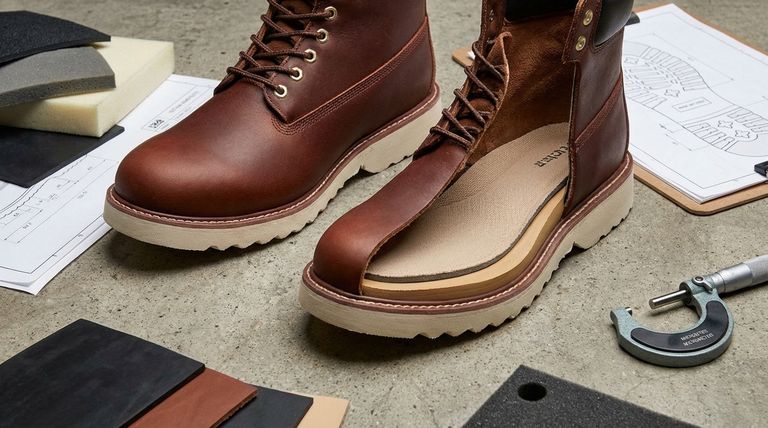
The Anatomy of a High-Performance Sole
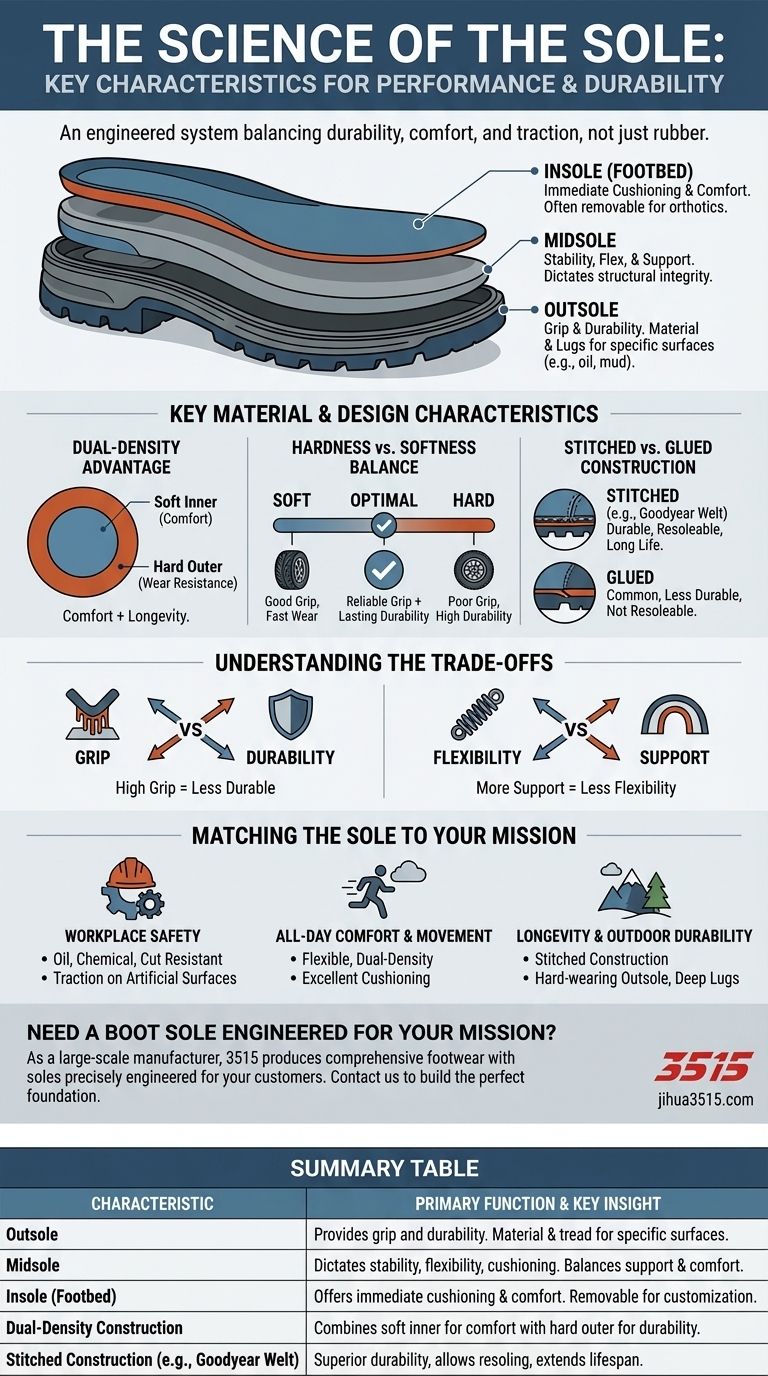
A sole unit is comprised of three distinct layers, each with a specialized function. Thinking of them as a system helps clarify why certain boots feel and perform differently.
The Outsole: Your Connection to the Ground
The outsole is the bottom-most layer that makes direct contact with the world. Its primary job is grip and durability.
The material composition dictates its performance against abrasion, cuts, and chemicals like oil. The pattern of its lugs, or tread, is designed to provide traction on specific surfaces like mud, sand, or slippery floors.
The Midsole: The Source of Stability and Flex
Sandwiched between the outsole and your foot, the midsole dictates the boot's structural integrity.
It can be engineered for rigidity to provide stability on rough terrain or for flexibility to allow a maximum range of movement. This layer is a major contributor to the boot's overall cushioning and support.
The Insole: The Foundation of Comfort
Also known as the footbed, the insole is the removable layer your foot rests on directly.
Its main function is to provide immediate cushioning and comfort. High-quality boots often feature removable insoles, allowing you to replace them with specialized orthotics for customized support.
Key Material and Design Characteristics
Beyond the three main layers, the specific materials and construction methods determine the sole's ultimate performance and lifespan.
The Dual-Density Advantage
Many high-performance soles use a dual-density construction.
This involves a softer inner layer of material (like urethane) for cushioning and comfort, combined with a harder, more durable outer layer that resists wear and tear. This design directly addresses the core trade-off between comfort and longevity.
The Hardness vs. Softness Dilemma
The ideal sole strikes a crucial balance between hardness and softness.
A sole that is too hard will offer poor traction, especially on smooth or wet surfaces. Conversely, a sole that is too soft will provide excellent grip but wear out very quickly. The right compound provides both reliable grip and lasting durability.
Stitched vs. Glued Construction
How the sole is attached to the rest of the boot is a critical indicator of quality.
Glued soles are common, but stitched soles (such as a Goodyear welt) are far more durable and allow the boot to be resoled. This significantly extends the footwear's life, making it a preferable choice for long-term use.
Understanding the Trade-offs
Choosing the right boot sole is always an exercise in managing competing priorities. There is no single "best" sole, only the best one for a specific application.
Grip vs. Durability
This is the most fundamental trade-off, directly related to the hardness of the sole's material. A sticky, high-traction sole will almost always be less durable than a harder, more abrasion-resistant one.
Flexibility vs. Support
A tactical boot requires flexibility for agility, while a mountaineering boot needs a rigid sole for support and stability on uneven ground. More support almost always means less flexibility.
A Note on Specific Features
Some features are non-negotiable for certain tasks. A motorcycle boot, for example, needs a distinct heel to rest securely on foot pegs and must be oil-resistant to prevent material degradation and maintain grip.
Matching the Sole to Your Mission
Your final choice should be guided by your primary activity. Evaluate the sole's characteristics based on what you will demand from it every day.
- If your primary focus is workplace safety: Prioritize a sole with certified oil, chemical, and cut resistance, along with a tread designed for traction on artificial surfaces.
- If your primary focus is all-day comfort and movement: Look for a flexible, dual-density sole that provides excellent cushioning without sacrificing essential durability.
- If your primary focus is longevity and outdoor durability: Emphasize a stitched construction with a hard-wearing outsole and deep lugs designed for grip on varied, natural terrain.
Ultimately, choosing the right boot begins by understanding that the sole is the critical foundation for your performance and comfort.
Summary Table:
| Characteristic | Primary Function & Key Insight |
|---|---|
| Outsole | Provides grip and durability. Material and tread pattern are designed for specific surfaces (e.g., mud, slippery floors). |
| Midsole | Dictates stability, flexibility, and cushioning. Balances support for terrain with comfort for movement. |
| Insole (Footbed) | Offers immediate cushioning and comfort. Often removable for customization with orthotics. |
| Dual-Density Construction | Combines a soft inner layer for comfort with a hard outer layer for durability, balancing two conflicting needs. |
| Stitched Construction (e.g., Goodyear Welt) | Superior durability and allows the boot to be resoled, significantly extending its lifespan. |
Need a boot sole engineered for your specific mission?
As a large-scale manufacturer, 3515 produces a comprehensive range of footwear for distributors, brand owners, and bulk clients. Our production capabilities encompass all types of safety, work, and outdoor boots, with soles precisely engineered for the balance of durability, traction, and comfort your customers demand.
Contact our experts today to discuss your sole requirements and discover how we can build the perfect foundation for your footwear line.
Visual Guide
Related Products
- Wholesale Leather Work Boots with Customizable Wedge Sole for Brands
- Premium Grain Leather Safety Boots for Bulk Supply
- Wholesale Leather Ankle Boots with Lug Soles for Custom Brand Manufacturing
- Wholesale Waterproof Tactical Boots Custom Suede & High-Traction Soles
- Durable Leather Moc Toe Work Boots for Wholesale & Custom Manufacturing
People Also Ask
- What is the difference between full-grain and top-grain leather? Premium Material Guide for Boot Manufacturers
- What are the advantages of leather as an upper material for work boots? Unmatched Durability & Custom Comfort
- How can leather work boots be protected from environmental elements? A 3-Step Guide to Lasting Durability
- What is the complete process for deep cleaning leather work boots? A Step-by-Step Guide to Preserve Your Investment
- What are the key qualities of leather for work boots? Superior Durability, Breathability & Custom Fit