True quality in boot materials is defined by a specific hierarchy of durability and protective capability. At the highest tier, full-grain waterproof leather stands as the benchmark for rugged environments, offering superior protection against rocky terrain and moisture. However, high-quality modern boots often utilize durable leather and synthetic combinations to strategically reduce weight and cost without compromising the boot's structural integrity.
While general footwear prioritizes immediate comfort and lightweight flexibility, true quality in performance boots is measured by longevity. The best materials are engineered to withstand multiple seasons of abuse in extreme conditions rather than offering the soft, short-lived comfort of a sneaker.
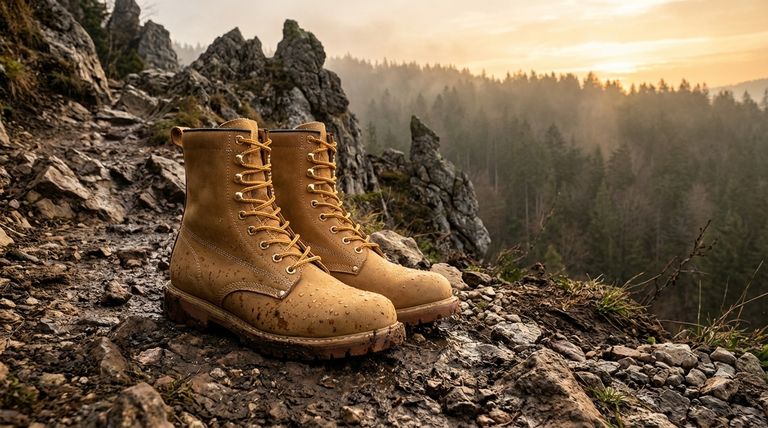
The Hierarchy of Boot Uppers
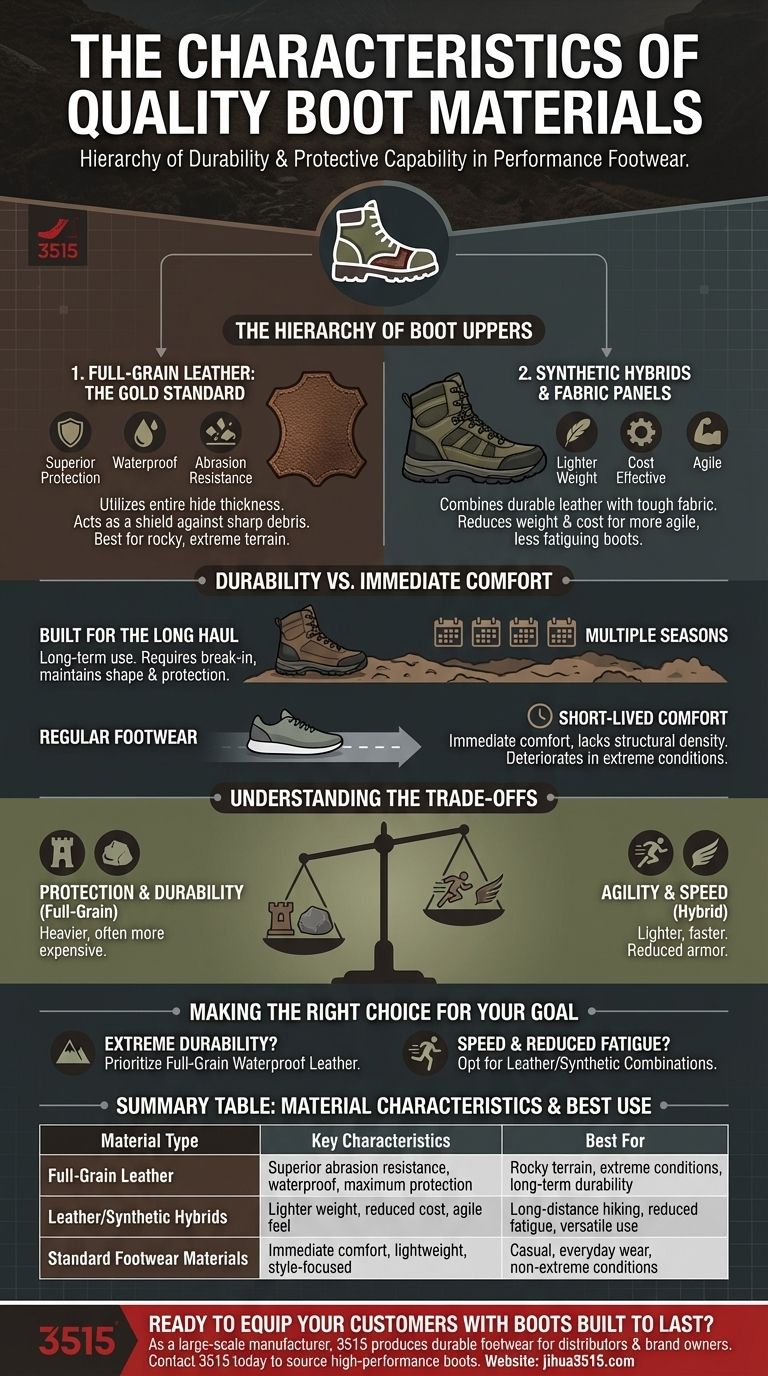
Full-Grain Leather: The Gold Standard
Full-grain waterproof leather is widely considered the top-tier choice for serious outdoor footwear. Because it utilizes the entire thickness of the hide, it offers the highest level of abrasion resistance and natural water repellency.
For users traversing rocky terrain, this material acts as a shield. It prevents sharp debris from bruising the foot or puncturing the boot, ensuring maximum protection.
Synthetic Hybrids and Fabric Panels
Many quality boots now feature leather/synthetic combinations. Designers incorporate tough fabric panels into the upper construction to achieve specific performance goals.
The primary advantage of these panels is a significant reduction in weight and cost. By replacing heavy leather in low-impact areas with fabric, manufacturers can create a more agile boot that is less fatiguing to wear over long distances.
Durability vs. Immediate Comfort
Built for the Long Haul
A defining characteristic of quality boot materials is their design horizon. Unlike standard shoes, these materials are built for long-term use, capable of surviving multiple hunting or hiking seasons.
High-quality leather and reinforced synthetics may require a break-in period. However, they maintain their shape and protective qualities long after softer materials would have failed.
The "Regular Footwear" Distinction
It is critical to distinguish performance boot materials from those used in regular footwear. Common shoes prioritize immediate comfort, style variety, and general versatility.
These standard shoes typically use lightweight, softer materials that feel good instantly but lack structural density. While excellent for casual use, they are not built for extreme conditions and will deteriorate rapidly under heavy load or rough abrasion.
Understanding the Trade-offs
Protection vs. Agility
There is an inherent compromise between material density and weight. Full-grain leather offers the best physical protection and durability, but it is heavier and often more expensive.
Conversely, boots relying heavily on fabric panels are lighter and faster. The trade-off is reduced armor against jagged rocks and a potentially shorter lifespan compared to an all-leather counterpart.
Making the Right Choice for Your Goal
Selecting the right material requires an honest assessment of your typical terrain and activity level.
- If your primary focus is extreme durability and protection: Prioritize full-grain waterproof leather to ensure your boots survive years of abuse in rocky, abrasive environments.
- If your primary focus is speed and reduced fatigue: Opt for leather/synthetic combinations to benefit from lighter weight and lower cost while maintaining acceptable durability.
Invest in materials that solve for your hardest day on the trail, not just your first step in the store.
Summary Table:
| Material Type | Key Characteristics | Best For |
|---|---|---|
| Full-Grain Leather | Superior abrasion resistance, waterproof, maximum protection | Rocky terrain, extreme conditions, long-term durability |
| Leather/Synthetic Hybrids | Lighter weight, reduced cost, agile feel | Long-distance hiking, reduced fatigue, versatile use |
| Standard Footwear Materials | Immediate comfort, lightweight, style-focused | Casual, everyday wear, non-extreme conditions |
Ready to equip your customers with boots built to last?
As a large-scale manufacturer, 3515 produces a comprehensive range of durable footwear for distributors, brand owners, and bulk clients. Our production capabilities encompass all types of boots, from rugged full-grain leather models to agile leather/synthetic hybrids, ensuring you get the right product for your market's needs.
Contact 3515 today to discuss your manufacturing requirements and source high-performance boots designed for the long haul.
Visual Guide
Related Products
- Wholesale Leather Work Boots with Customizable Wedge Sole for Brands
- Durable Leather Work Boots for Wholesale & Custom Manufacturing
- Durable Leather Work Boots for Wholesale & Custom OEM Manufacturing
- Wholesale Leather Ankle Boots with Lug Soles for Custom Brand Manufacturing
- Durable Leather High-Ankle Tactical Boots for Wholesale & Custom Manufacturing
People Also Ask
- What is the difference between full-grain and top-grain leather? Premium Material Guide for Boot Manufacturers
- What are the advantages of leather as an upper material for work boots? Unmatched Durability & Custom Comfort
- How can leather work boots be protected from environmental elements? A 3-Step Guide to Lasting Durability
- What is the complete process for deep cleaning leather work boots? A Step-by-Step Guide to Preserve Your Investment
- What are the key qualities of leather for work boots? Superior Durability, Breathability & Custom Fit