
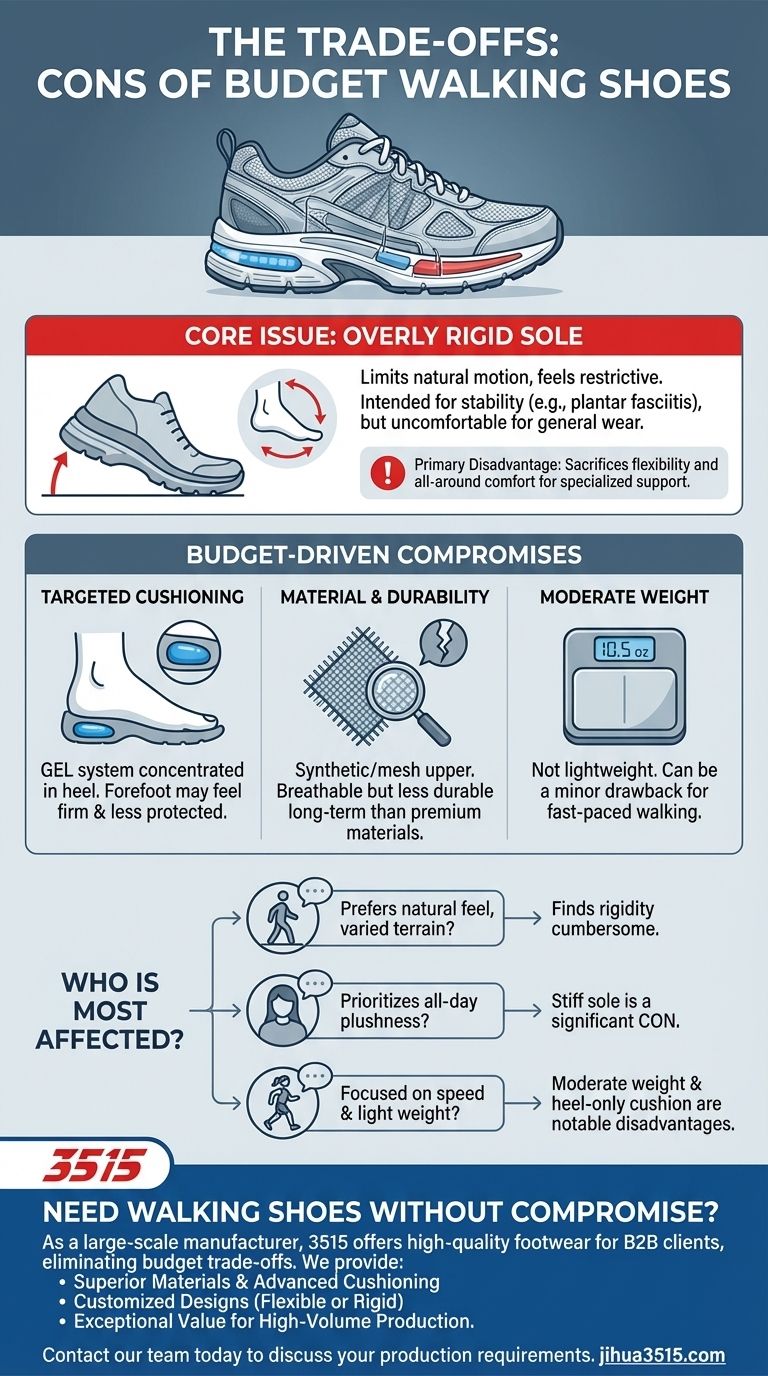
The primary disadvantage of the Best Budget walking shoe is its overly rigid sole. While this stiffness is intentionally designed for support, it can feel restrictive and uncomfortable for individuals who prefer a more flexible, natural-feeling shoe for all-day wear. This single characteristic is the most significant trade-off in its budget-friendly design.
This shoe is not a universally comfortable walker; it is a specialized, budget-friendly tool. Its core compromise is sacrificing flexibility and all-around comfort to provide the rigid support needed for specific conditions like plantar fasciitis.
The Core Issue: Rigidity vs. Flexibility
The most common point of contention with this shoe is its sole. What one person finds supportive, another will find uncomfortably stiff. Understanding this distinction is critical.
Why Rigidity Can Be a Problem
A stiff sole limits the natural flexing motion of your foot during a stride. For some wearers, this can feel clunky and lead to fatigue over longer walks, as the foot has to work against the shoe's structure.
Who Is Most Affected?
Walkers without specific foot pain or stability issues are most likely to find the rigidity to be a con. If you prioritize a "barely there" feel or enjoy walking on varied terrain that requires foot adaptability, this shoe may feel cumbersome.
The Purpose Behind the Stiffness
It's important to recognize this rigidity is a feature, not a flaw. The stiffness provides a stable platform that prevents the arch from collapsing, which is highly beneficial for relieving pain from conditions like plantar fasciitis.
Analyzing the Budget-Driven Compromises
Beyond the sole, the shoe's low price point necessitates other trade-offs in its design and materials, which may be considered cons depending on your priorities.
Targeted Cushioning
The shoe features a GEL cushioning system, but it is concentrated in the heel. This is a common cost-saving measure. While it provides excellent shock absorption on heel strike, the forefoot may feel firm and less protected.
Material and Durability
The upper is constructed from synthetic and mesh materials. While these make the shoe breathable and lightweight, they typically offer less long-term durability than the premium leathers or advanced textiles found in more expensive models.
A Moderate Weight Profile
At 10.5 ounces, this shoe is not excessively heavy, but it isn't a featherweight either. For individuals focused on fast-paced fitness walking or those who are sensitive to shoe weight, this could be a minor drawback.
Understanding the Trade-offs
The "cons" of this shoe are direct consequences of its primary goal: to provide maximum therapeutic support at a minimal price. It is not designed to be a jack-of-all-trades.
The central trade-off is specialized support over general comfort. The shoe excels for its target user—someone needing firm, inexpensive relief from foot pain. The potential downsides, like rigidity and basic materials, emerge when it's used outside of that specific context.
Making the Right Choice for Your Needs
To determine if these cons are deal-breakers, evaluate them against your primary walking goal.
- If your primary focus is relieving foot pain like plantar fasciitis: The shoe's rigidity is a key feature, making it an excellent and cost-effective choice.
- If your primary focus is all-day comfort and a natural feel: The stiff sole is a significant con, and you should seek a more flexible walking shoe.
- If your primary focus is a lightweight, cushioned shoe for fitness walking: The moderate weight and heel-only cushioning system may be notable disadvantages.
Ultimately, knowing that this shoe prioritizes stability over flexibility is the key to deciding if it's the right value for you.
Summary Table:
| Potential Disadvantage | Key Detail | Who Is Most Affected |
|---|---|---|
| Overly Rigid Sole | Limits natural foot flex; designed for stability. | Walkers without foot pain who prefer a natural feel. |
| Targeted Cushioning | GEL system concentrated in the heel; forefoot may feel firm. | Those seeking plush, all-over cushioning for fitness walking. |
| Material Durability | Synthetic & mesh upper; less durable than premium materials. | Users prioritizing long-term durability over low cost. |
| Moderate Weight | Weighs 10.5 oz; not a featherweight shoe. | Walkers sensitive to shoe weight or focused on speed. |
Need Walking Shoes Without the Compromises?
As a large-scale manufacturer, 3515 produces a comprehensive range of high-quality footwear for distributors, brand owners, and bulk clients. We eliminate the common trade-offs of budget shoes by offering:
- Superior Materials: Durable uppers and advanced cushioning systems.
- Customized Designs: Flexible or rigid soles tailored to your specific market needs.
- Exceptional Value: High-volume production ensures competitive pricing without sacrificing quality.
Let's create the perfect walking shoe for your customers. Contact our team today to discuss your production requirements.
Visual Guide
Related Products
- Wholesale Comfortable Business Casual Shoes Custom Manufacturing
- Premium Lightweight Safety Shoes for Wholesale & Bulk Orders
- Wholesale Lightweight Tactical Boots with Dial Closure OEM & Bulk Orders
- Lightweight Breathable Sneakers with Wet-Traction Grip for Wholesale & Private Label
- Lightweight Breathable Training Shoes for Wholesale & Custom OEM Manufacturing
People Also Ask
- What are the key characteristics of business casual shoes? Achieve Polished Versatility for Your Wardrobe
- What should be considered when selecting shoes for a casual business setting? Achieve the Perfect Balance of Style and Comfort
- Which types of shoes should be avoided with business casual attire? Maintain a Polished Professional Image
- What is the recommended approach to trying on business casual shoes? Ensure a Perfect Fit for Your Workday
- What are some types of business casual shoes? Build a Versatile & Professional Footwear Wardrobe











