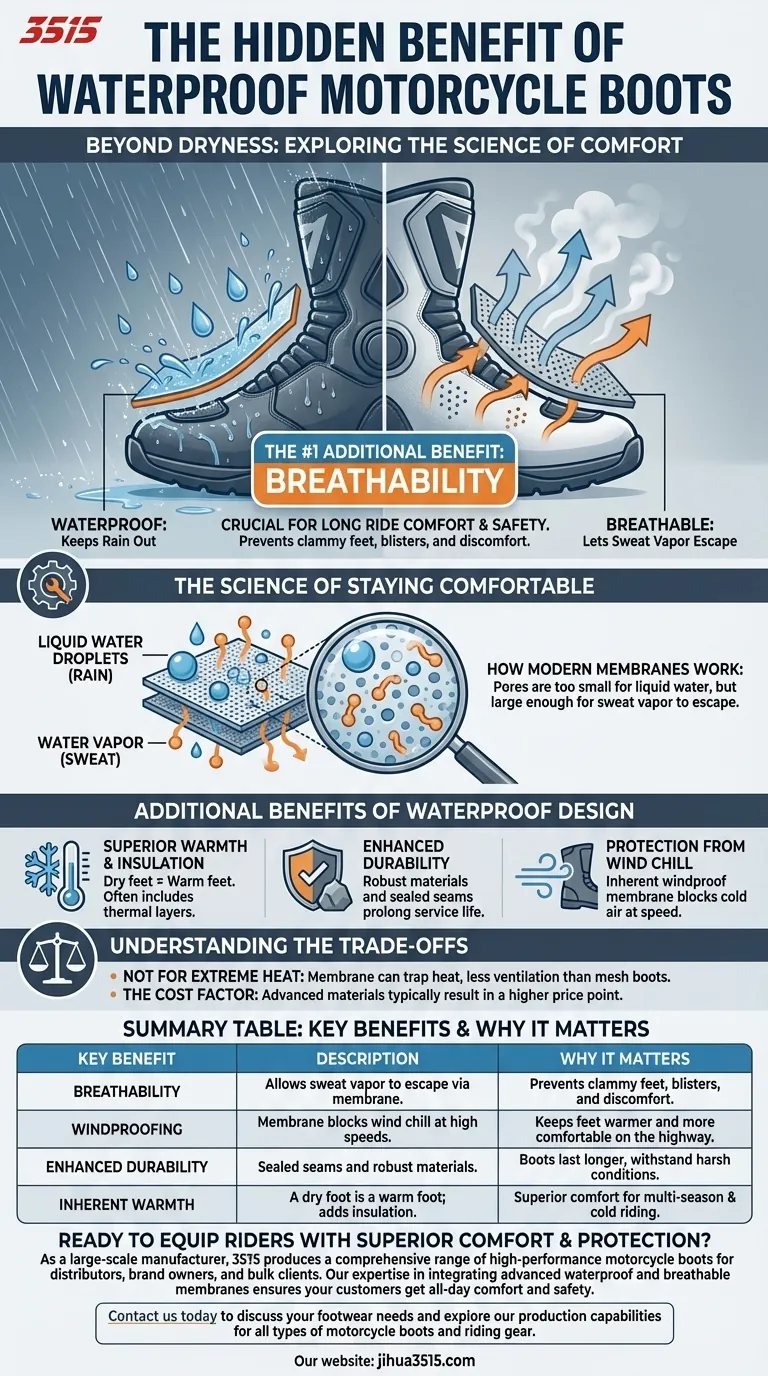
Beyond mere dryness, the most significant additional benefit of modern waterproof motorcycle boots is breathability. This crucial feature allows sweat vapor to escape, preventing your feet from becoming hot and clammy inside the boot, which is a key factor for both comfort and safety on long rides.
While keeping rain out is the obvious function, the true mark of a quality waterproof boot is its ability to manage moisture from the inside. This prevents the dangerous chilling effect of trapped sweat and maintains stable comfort across varying conditions.

The Science of Staying Comfortable
True riding comfort isn't just about blocking the elements; it's about creating a stable microclimate for your feet. Modern waterproof boots are engineered to manage both external and internal moisture.
What “Waterproof” Really Means
A boot is made waterproof by incorporating a specialized barrier that stops liquid water from penetrating. This is typically a waterproof/breathable membrane (like Gore-Tex or a proprietary equivalent) built into the boot's lining. This membrane ensures that rain, puddles, or road spray cannot reach your socks and skin.
The Critical Role of Breathability
Your feet produce a significant amount of sweat, especially when active or in warm conditions. Without a way for this moisture to escape, it would become trapped, soaking your socks. This leads to discomfort, blisters, and can make your feet feel cold and clammy, even in mild weather.
How Modern Membranes Achieve Both
The technology behind these membranes is remarkable. They are filled with microscopic pores that are too small for liquid water droplets to pass through, but large enough for individual water vapor (sweat) molecules to escape. This one-way-out system is what allows a boot to be completely waterproof from the outside while remaining breathable from the inside.
Additional Benefits of Waterproof Design
The engineering required to make a boot waterproof and breathable brings several other valuable benefits for a motorcyclist.
Superior Warmth and Insulation
A dry foot is a warm foot. By preventing both rain and sweat from making your socks damp, a waterproof boot is inherently warmer than a non-waterproof equivalent. Many models designed for multi-season use also include a dedicated thermal insulation layer for riding in genuinely cold weather.
Enhanced Durability
The materials and construction techniques needed to create a reliable waterproof seal—such as sealed seams and robust outer materials—naturally result in a more durable and long-lasting boot. They are built to withstand harsh conditions, which translates to a longer service life.
Protection from Wind Chill
A key benefit for riders is that a waterproof membrane is also inherently windproof. This provides a crucial barrier against wind chill at highway speeds, a factor that can dramatically reduce comfort and lead to dangerously cold feet on long journeys.
Understanding the Trade-offs
While highly beneficial, it's important to understand the limitations of waterproof boot technology to set realistic expectations.
The Breathability Spectrum
Not all waterproof boots are created equal. A heavy-duty touring boot with multiple layers will be less breathable than a lighter, more athletic-style waterproof boot. The level of breathability is always a balance with the level of protection and insulation.
Not a Solution for Extreme Heat
In very hot and dry climates, even the most breathable waterproof boot will feel warmer than a dedicated, non-waterproof summer boot with extensive mesh or perforated panels. The membrane, while breathable, is still an extra layer that traps some heat.
The Cost Factor
The advanced materials and complex construction required for a genuinely waterproof and breathable boot mean they typically come at a higher price point than their non-waterproof counterparts.
Choosing the Right Boot for Your Ride
Your ideal boot depends entirely on your most common riding conditions and priorities.
- If your primary focus is all-weather touring or commuting: A boot with a top-tier waterproof and breathable membrane is the most versatile and valuable choice.
- If your primary focus is cold-weather riding: Look for a waterproof boot that specifically advertises an additional thermal insulation layer for maximum warmth.
- If your primary focus is short rides in hot, dry weather: A non-waterproof, highly ventilated boot may provide superior cooling and comfort over any waterproof option.
Ultimately, selecting the right gear is about understanding this balance between blocking external threats and managing your internal comfort.
Summary Table:
| Key Benefit | Description | Why It Matters |
|---|---|---|
| Breathability | Allows sweat vapor to escape via a waterproof membrane. | Prevents clammy feet, blisters, and discomfort. |
| Windproofing | The membrane also blocks wind chill at high speeds. | Keeps feet warmer and more comfortable on the highway. |
| Enhanced Durability | Waterproof construction uses sealed seams and robust materials. | Boots last longer and withstand harsh riding conditions. |
| Inherent Warmth | A dry foot is a warm foot; many models add insulation. | Provides superior comfort for multi-season and cold-weather riding. |
Ready to equip riders with superior comfort and protection?
As a large-scale manufacturer, 3515 produces a comprehensive range of high-performance motorcycle boots for distributors, brand owners, and bulk clients. Our expertise in integrating advanced waterproof and breathable membranes ensures your customers get all-day comfort and safety.
Contact us today to discuss your footwear needs and explore our production capabilities for all types of motorcycle boots and riding gear.
Visual Guide
Related Products
- High Performance Fire-Retardant Waterproof Safety Boots
- Premium Flame-Retardant Waterproof Safety Boots and Shoes
- Premium High-Cut Waterproof Safety Boots Manufacturing & Wholesale Solutions
- Wholesale Premium Waterproof Nubuck Safety Shoes Boots
- Wholesale Waterproof Tactical Boots Custom Suede & High-Traction Soles
People Also Ask
- Why are waterproof safety boots recommended for certain work environments? Essential Protection for Wet & Hazardous Jobs
- What roles do 3D vision systems and industrial robots play in the manufacturing of fire safety boots? Smart Automation
- How should you maintain waterproof boots? A Simple 3-Step Guide to Long-Lasting Performance
- How can you ensure your feet stay dry during winter walks? A Two-Part Defense System for Total Comfort
- What is the difference between waterproof and water-resistant boots? Choose the Right Footwear for Any Condition