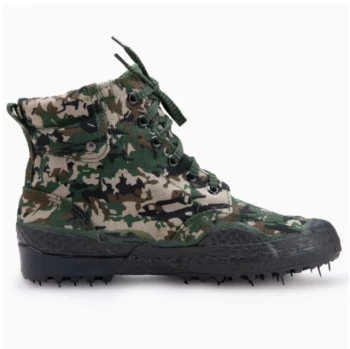
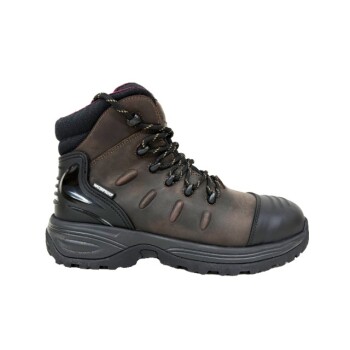
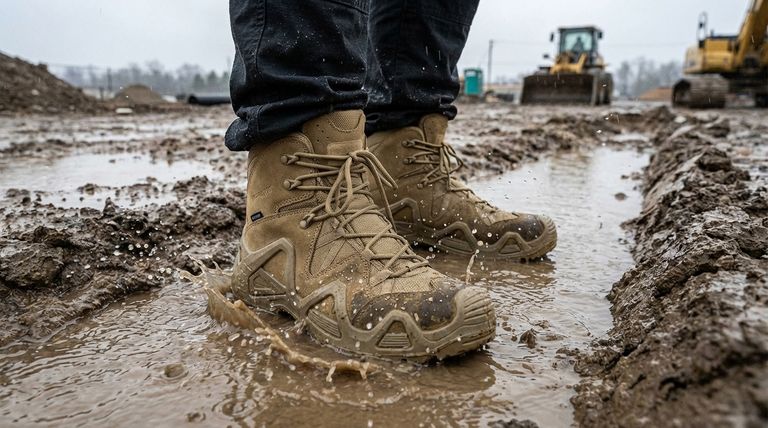
The primary benefit of waterproof PVC boots is their ability to create a completely impermeable barrier against moisture. This ensures your feet remain dry, comfortable, and protected when exposed to wet, muddy, or snowy conditions. This protection is fundamental not only for comfort but also for preventing significant foot health issues.
The value of a waterproof PVC boot extends beyond simple dryness. It is a critical feature for preventing moisture-related health problems like blisters and fungal infections, making it essential for anyone working or spending significant time in wet environments.
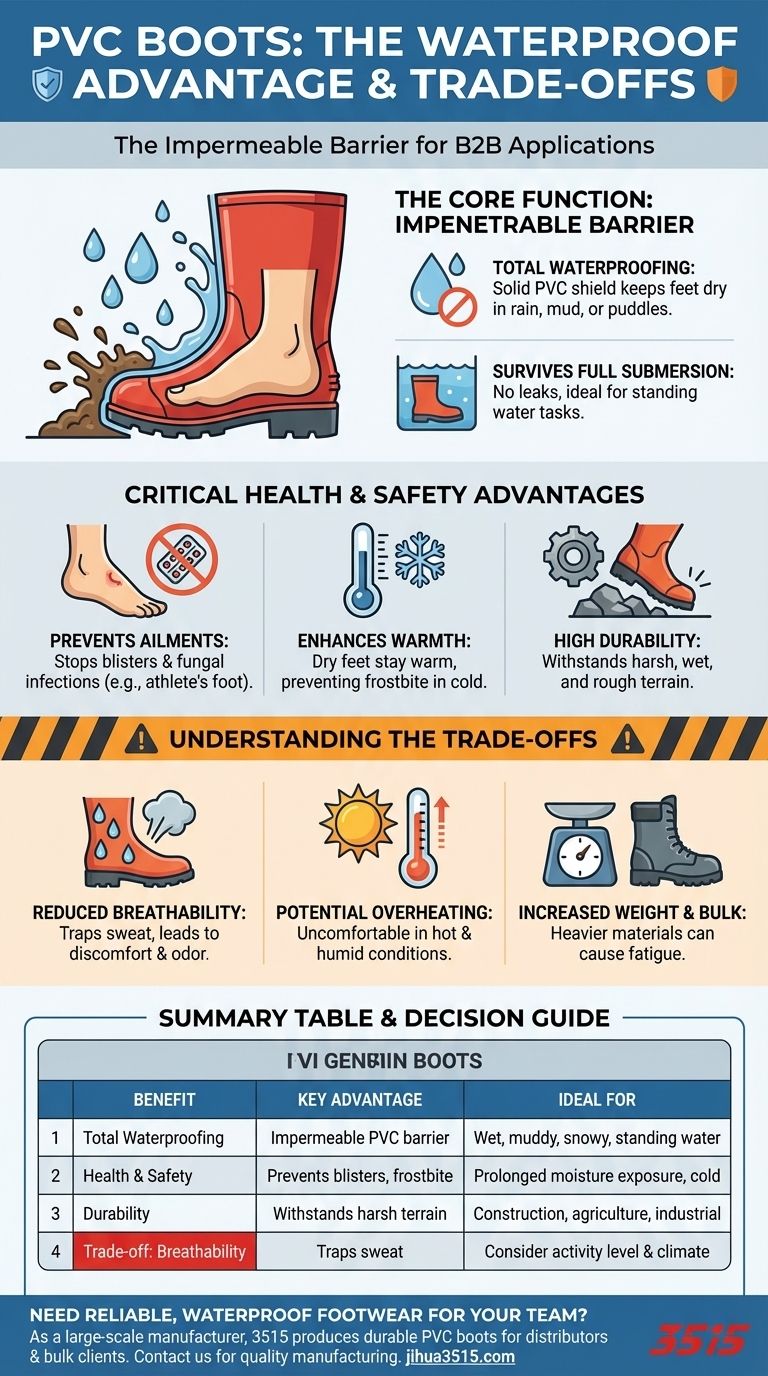
The Core Function: An Impenetrable Water Barrier
The construction of PVC boots offers a level of protection that water-resistant materials cannot match.
Keeping Feet Dry and Comfortable
PVC (Polyvinyl Chloride) is an inherently waterproof synthetic plastic. Unlike treated leather or fabrics, the material itself forms a solid shield that does not allow water to penetrate, keeping your feet completely dry in rain, puddles, or mud.
Surviving Full Submersion
These boots are designed to handle being submerged in water without leaking. This makes them ideal for tasks that involve standing in water, such as certain agricultural, construction, or cleaning jobs.
Critical Health and Safety Advantages
Keeping feet dry is paramount for avoiding a range of health complications, especially with prolonged exposure to wetness.
Preventing Moisture-Related Ailments
Chronically wet feet are a breeding ground for problems. The waterproof barrier helps prevent painful blisters, swelling, and fungal infections like athlete's foot.
Enhancing Warmth in Cold Conditions
Dry feet are warm feet. Moisture rapidly pulls heat away from the body, and a waterproof boot is the first line of defense against this. In snowy or icy conditions, this feature is crucial for preventing dangerous conditions like frostbite.
Durability in Harsh Environments
Waterproof boots are built to withstand challenging conditions. The materials used, such as PVC or rubber, are highly durable and can endure significant wear and tear from constant exposure to moisture and rough terrain.
Understanding the Trade-offs
While essential for wet conditions, the waterproof feature comes with inherent compromises that are important to consider.
Reduced Breathability
The same impermeable barrier that blocks water from getting in also traps sweat and moisture from getting out. This lack of breathability can lead to sweaty and smelly feet, particularly during strenuous activity or in warmer weather.
Potential for Overheating
In hot and humid environments, waterproof boots can become uncomfortably warm. The trapped heat and moisture can cause significant discomfort when the primary challenge isn't external wetness.
Increased Weight and Bulk
Materials like PVC and rubber are often heavier and less flexible than non-waterproof alternatives. This can lead to fatigue and discomfort if the boots are worn for long periods of walking or standing.
Making the Right Choice for Your Needs
Selecting the right boot depends entirely on the conditions you will face.
- If your primary focus is working in consistently wet or muddy environments: The total protection of a waterproof PVC boot is essential for your health and safety.
- If your primary focus is hiking or all-day wear in varied conditions: You must balance the need for waterproofing against the risk of sweaty, overheated feet in drier moments.
- If your primary focus is safety in cold and snowy weather: A waterproof boot, preferably with insulation, is non-negotiable to maintain warmth and prevent frostbite.
Ultimately, understanding these benefits and trade-offs allows you to choose footwear that truly serves your specific purpose.
Summary Table:
| Benefit | Key Advantage | Ideal For |
|---|---|---|
| Total Waterproofing | Impermeable PVC barrier keeps feet dry, even when submerged. | Wet, muddy, or snowy conditions; jobs with standing water. |
| Health & Safety | Prevents blisters, fungal infections, and frostbite. | Prolonged exposure to moisture; cold environments. |
| Durability | Built to withstand harsh, wet, and rough terrain. | Construction, agriculture, cleaning, and industrial work. |
| Trade-off: Breathability | Traps sweat; can lead to discomfort in warm weather. | Consider activity level and climate when choosing. |
Need reliable, waterproof footwear for your team or brand?
As a large-scale manufacturer, 3515 produces a comprehensive range of durable PVC boots and other footwear for distributors, brand owners, and bulk clients. Our production capabilities ensure you get high-quality, purpose-built footwear designed for performance and protection.
Contact us today to discuss your specific needs and discover how we can support your business with quality manufacturing.
Visual Guide
Related Products
- Premium Wholesale Waterproof Safety Boots High Performance Protection for Industrial Markets
- High Performance Fire-Retardant Waterproof Safety Boots
- Premium Flame-Retardant Waterproof Safety Boots and Shoes
- Premium Waterproof High-Cut Industrial Safety Boots for Wholesale and Bulk Orders
- Wholesale Waterproof Tactical Boots Custom Suede & High-Traction Soles
People Also Ask
- What weather and chemical protections do premium boots offer? Your Complete Guide to Safety & Performance
- Why are waterproof safety boots recommended for certain work environments? Essential Protection for Wet & Hazardous Jobs
- What are the primary protective functions of industrial safety boots in oil palm plantations? Master Rough Terrain Safety
- Why are oil-resistant and anti-slip properties critical for industrial safety boots? Expert Outsole Engineering Guide
- What are the best types of shoes for different gardening conditions? Find Your Perfect Match.