
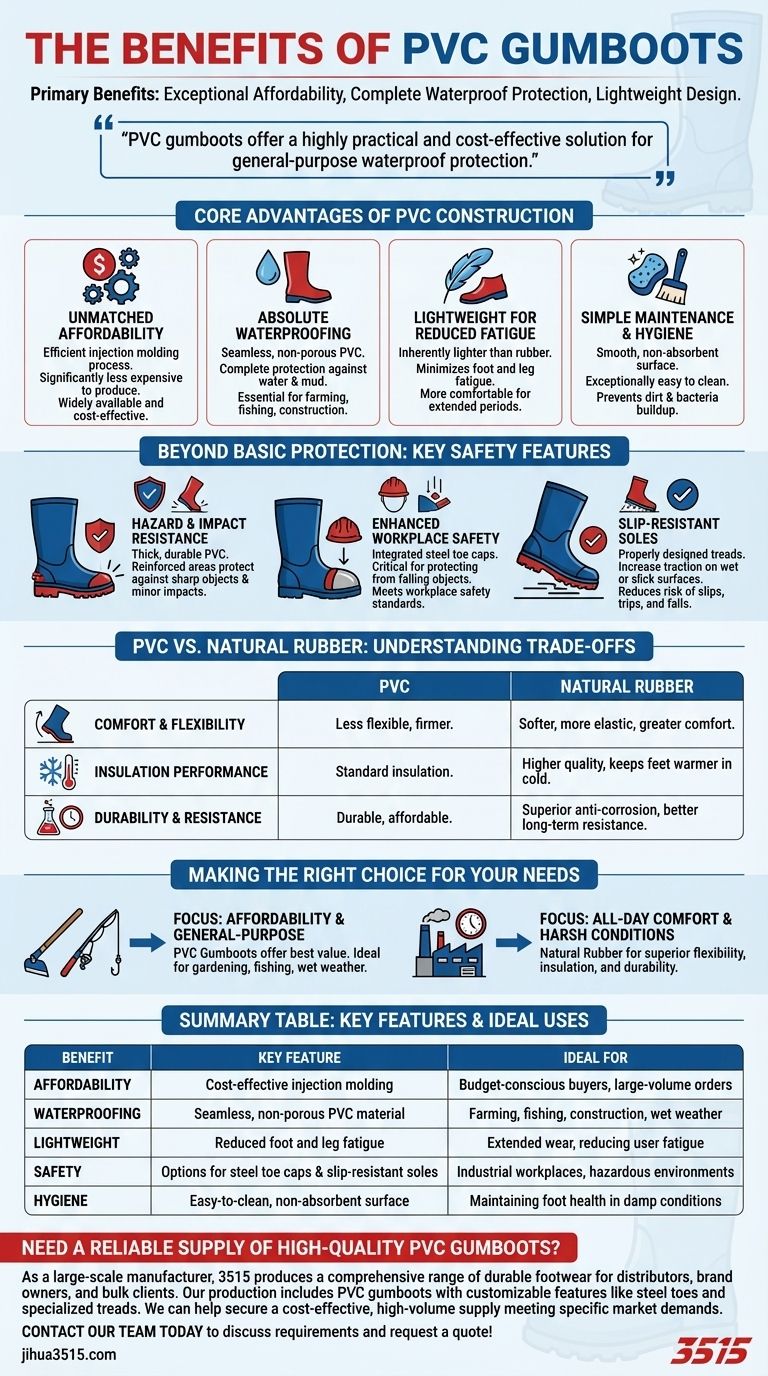
The primary benefits of PVC gumboots are their exceptional affordability, complete waterproof protection, and lightweight design. Produced through a cost-effective injection molding process, they provide a highly accessible and practical solution for keeping feet dry in wet or muddy conditions.
PVC gumboots offer a highly practical and cost-effective solution for general-purpose waterproof protection. While they excel in affordability and ease of maintenance, their primary trade-off is against the superior comfort, durability, and insulation found in natural rubber alternatives.
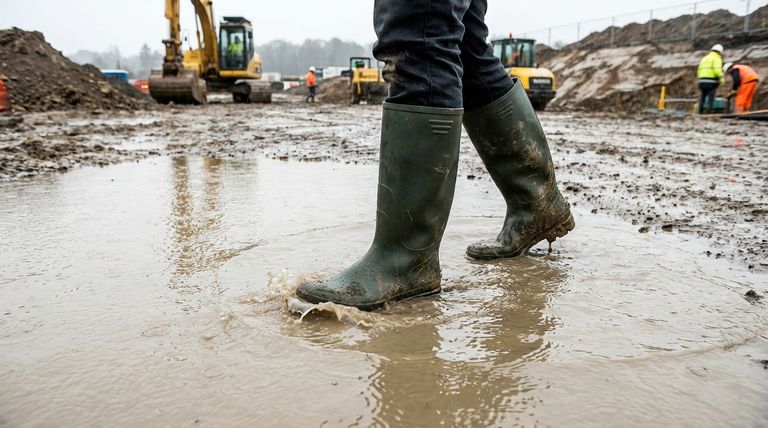
The Core Advantages of PVC Construction
The material and manufacturing process behind PVC gumboots are responsible for their most significant benefits. This makes them a dominant choice in many industries and for general consumer use.
Unmatched Affordability
Because PVC gumboots are made using an efficient injection molding process, they are significantly less expensive to produce than those made from other materials. This makes them widely available and highly cost-effective.
Absolute Waterproofing
The seamless, non-porous nature of PVC provides complete protection against water and mud. This barrier is essential for work in farming, fishing, and construction, as well as for general use in wet weather.
Lightweight for Reduced Fatigue
PVC is inherently lighter than materials like natural rubber. This reduction in weight minimizes foot and leg fatigue, making the boots more comfortable to wear over extended periods.
Simple Maintenance and Hygiene
The smooth, non-absorbent surface of PVC is exceptionally easy to clean. This helps prevent the buildup of dirt and bacteria, reducing the risk of foot infections caused by prolonged exposure to damp, unclean conditions.
Beyond Basic Protection: Key Safety Features
While all gumboots offer a baseline of protection, PVC models can be equipped with specific features that enhance safety in hazardous environments.
Hazard and Impact Resistance
A well-made gumboot should be constructed from thick, durable PVC material. Many designs also feature reinforced toes and heels to provide better protection against sharp objects and minor impacts.
Enhanced Workplace Safety
For industrial applications, PVC gumboots can be manufactured with integrated steel toe caps. This feature is critical for protecting feet from falling objects and compression hazards, meeting workplace safety standards.
Slip-Resistant Soles
A key safety benefit is the inclusion of slip-resistant soles. Properly designed treads increase traction on wet or slick surfaces, significantly reducing the risk of slips, trips, and falls that can lead to serious injury.
Understanding the Trade-offs: PVC vs. Natural Rubber
To make an informed decision, it's crucial to understand where PVC excels and where another common material, natural rubber, holds an advantage. Your choice depends entirely on your specific needs.
Comfort and Flexibility
Natural rubber is generally softer and more elastic than PVC. This can translate to greater comfort and flexibility, especially for users who wear their boots for many hours a day.
Insulation Performance
Natural rubber provides higher quality insulation against the cold. In low-temperature environments, rubber gumboots will keep feet warmer than their standard PVC counterparts.
Durability and Resistance
While both materials are durable, high-quality natural rubber often boasts superior anti-corrosion performance and can be more resistant to certain chemicals and daily wear and tear over the long term.
Making the Right Choice for Your Needs
Selecting the correct gumboot is a matter of matching the material's strengths to your intended use.
- If your primary focus is affordability and general-purpose use: PVC gumboots offer the best value for tasks like gardening, fishing, or occasional wet weather protection.
- If your primary focus is all-day comfort and harsh conditions: Consider investing in natural rubber for its superior flexibility, insulation, and long-term durability in demanding industrial or agricultural work.
Ultimately, understanding these material differences is the key to selecting footwear that truly serves its purpose.
Summary Table:
| Benefit | Key Feature | Ideal For |
|---|---|---|
| Affordability | Cost-effective injection molding | Budget-conscious buyers, large-volume orders |
| Waterproofing | Seamless, non-porous PVC material | Farming, fishing, construction, wet weather |
| Lightweight | Reduced foot and leg fatigue | Extended wear, reducing user fatigue |
| Safety | Options for steel toe caps & slip-resistant soles | Industrial workplaces, hazardous environments |
| Hygiene | Easy-to-clean, non-absorbent surface | Maintaining foot health in damp conditions |
Need a reliable supply of high-quality PVC gumboots?
As a large-scale manufacturer, 3515 produces a comprehensive range of durable footwear for distributors, brand owners, and bulk clients. Our production capabilities encompass all types of safety and work boots, including PVC gumboots with customizable features like steel toes and specialized treads.
We can help you secure a cost-effective, high-volume supply of footwear that meets your specific market demands and safety standards.
Contact our team today to discuss your requirements and request a quote!
Visual Guide
Related Products
- Premium Wholesale Waterproof Safety Boots High Performance Protection for Industrial Markets
- High-Traction Suede Tactical Boots Wholesale & Custom Manufacturing
- Heavy-Duty Waterproof Nubuck Safety Boots Safety Shoes for Bulk Supply
- High Performance Fire-Retardant Waterproof Safety Boots
- Lightweight Breathable Training Shoes for Wholesale & Custom OEM Manufacturing
People Also Ask
- What weather and chemical protections do premium boots offer? Your Complete Guide to Safety & Performance
- Why are waterproof safety boots recommended for certain work environments? Essential Protection for Wet & Hazardous Jobs
- What are the primary protective functions of industrial safety boots in oil palm plantations? Master Rough Terrain Safety
- Why are oil-resistant and anti-slip properties critical for industrial safety boots? Expert Outsole Engineering Guide
- What are the best types of shoes for different gardening conditions? Find Your Perfect Match.












