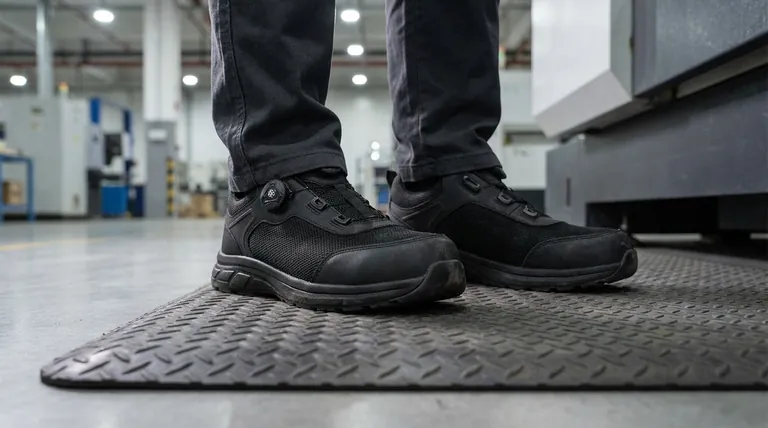
Yes, anti-fatigue mats can help steel toe boot wearers, but their effectiveness is limited. While the mats provide a softer standing surface that can reduce general sole pain and joint impact compared to hard concrete, their primary "anti-fatigue" benefit is blunted. The thick, rigid soles of safety boots prevent the foot from making the subtle micro-movements that these mats are designed to encourage, meaning the full effect on muscle fatigue and circulation is not realized.
The core issue is a conflict of purpose: an anti-fatigue mat works by engaging your leg muscles through a flexible surface, while a steel toe boot works by protecting your foot within a rigid, unyielding shell. The boot's rigidity dampens the mat's intended effect.
How Anti-Fatigue Mats Are Designed to Work
The Principle of Micro-Movements
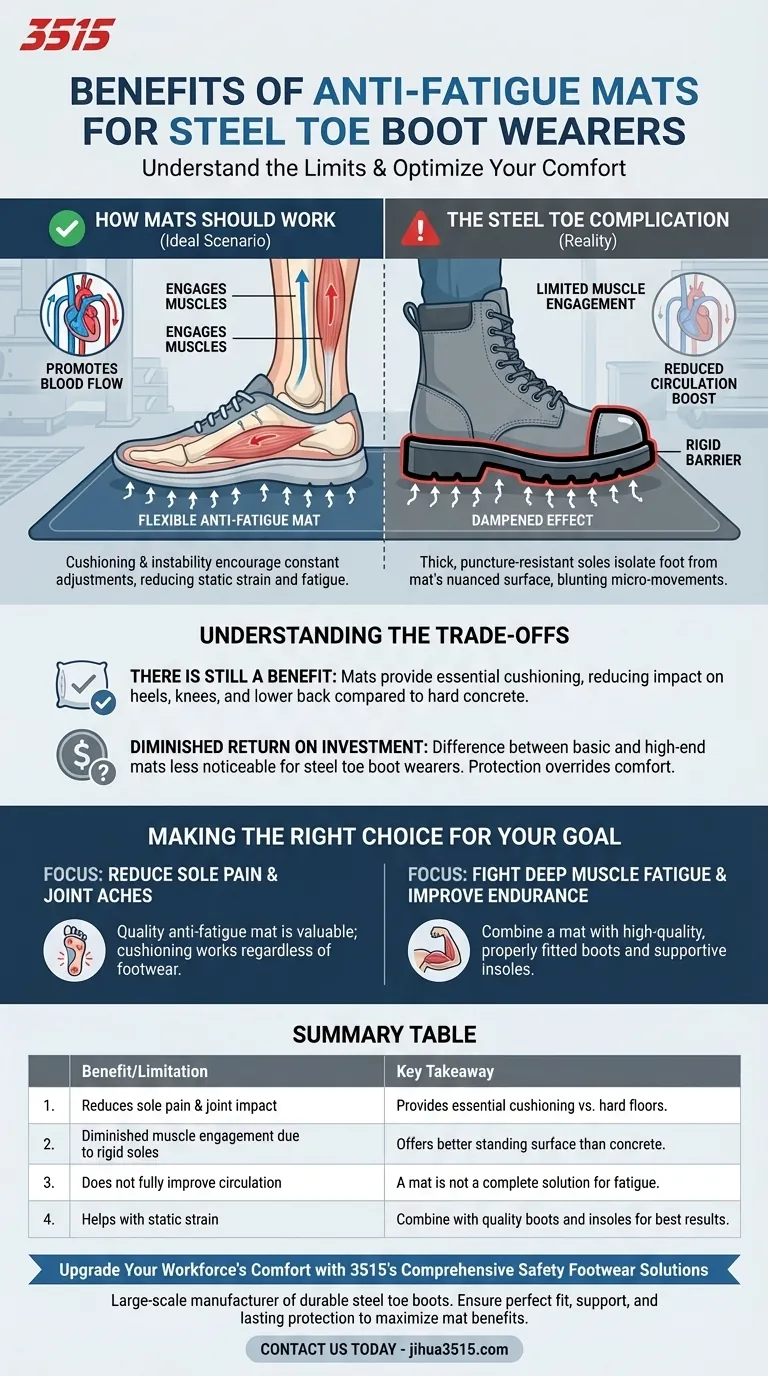
Anti-fatigue mats are engineered with a specific level of cushioning and instability. This surface forces the muscles in your feet, legs, and back to make continuous, almost imperceptible adjustments to maintain balance.
Promoting Blood Flow
These constant micro-movements are critical. They keep the leg muscles gently contracting and expanding, which helps pump blood back up towards the heart and prevents it from pooling in the lower extremities.
Reducing Static Strain
By preventing your muscles from being held in a single, static position for long periods, the mat helps reduce the pain, stiffness, and fatigue that come from prolonged standing.
The Steel Toe Boot Complication
The Barrier of Rigidity
A steel toe boot’s primary function is protection. This requires a thick, puncture-resistant, and often inflexible sole. This rigidity acts as a barrier, isolating your foot from the nuanced surface of the anti-fatigue mat.
Your foot simply cannot bend or conform to the mat's surface as it would in a softer shoe.
Dampening the Effect
Because the sole doesn't flex, the micro-movements the mat is trying to create are not effectively transferred to the muscles in your feet and lower legs. The main benefit of improved circulation and muscle engagement is significantly reduced.
There Is Still a Benefit
Despite the diminished "anti-fatigue" action, a mat is almost always better than a hard floor. It provides essential cushioning that reduces the direct impact and pressure on your joints, particularly your heels, knees, and lower back.
Understanding the Trade-offs
Diminished Return on Investment
For a worker in steel toe boots, the difference between a basic cushioned mat and a high-end, ergonomically engineered anti-fatigue mat may be less noticeable. The primary benefit you will receive is simple cushioning, not advanced muscle engagement.
Protection Overrides Comfort
The non-negotiable safety features of your boots are what create this issue. Modern designs have greatly improved comfort with lighter materials and better ergonomics, but the fundamental rigidity required for protection remains.
A Mat is Not a Complete Solution
An anti-fatigue mat can help manage sole pain, but it cannot solve all the problems of standing in heavy boots. It does not significantly improve circulation when boot soles are rigid and won't fix issues caused by poorly fitting footwear.
Making the Right Choice for Your Goal
To truly address workplace comfort, you must look at the entire system—the floor, the mat, your insoles, and your boots.
- If your primary focus is reducing sharp sole pain and joint aches: A quality anti-fatigue mat is a valuable investment, as its cushioning effect works regardless of footwear.
- If your primary focus is fighting deep muscle fatigue and improving endurance: Combine a mat with a focus on high-quality, properly fitted boots and consider adding supportive insoles to work directly against your foot.
Ultimately, a holistic approach that improves your entire standing environment will yield the best results.
Summary Table:
| Benefit for Steel Toe Boot Wearers | Limitation | Key Takeaway |
|---|---|---|
| Reduces sole pain & joint impact | Diminished muscle engagement due to rigid soles | Provides essential cushioning vs. hard floors |
| Offers better standing surface than concrete | Does not fully improve circulation | A mat is not a complete solution for fatigue |
| Helps with static strain | Less noticeable difference between basic and high-end mats | Combine with quality boots and insoles for best results |
Upgrade your workforce's comfort and endurance with 3515's comprehensive safety footwear solutions. As a large-scale manufacturer, we produce a full range of durable steel toe boots designed for distributors, brand owners, and bulk clients. Our expertise in footwear manufacturing ensures that your team gets the perfect fit, superior support, and lasting protection needed to maximize the benefits of anti-fatigue mats. Let’s enhance your entire standing environment—contact us today to discuss your bulk footwear needs!
Visual Guide
Related Products
- Lightweight Breathable Sneakers with Wet-Traction Grip for Wholesale & Private Label
- Wholesale Breathable Athletic Sneakers - Custom Lightweight Cushioned Footwear Manufacturer
- Wholesale Lightweight Cushioned Athletic Sneakers for Custom Bulk Production
- Wholesale Breathable & Cushioned Training Shoes Custom Factory Production
- Lightweight Breathable Training Shoes for Wholesale & Custom OEM Manufacturing
People Also Ask
- Why are breathable sneakers necessary for tropical commuting? Stay Cool and Dry in High Humidity
- What role do lightweight training shoes play in urban traffic? Boost Agility and Reaction for Safer City Navigation
- How do lightweight shoes provide support? The Science of Efficient Cushioning & Stability
- How do lightweight shoes improve breathability? Discover the Science of Cool, Dry Feet
- How do lightweight shoes contribute to healthier feet? Reduce Fatigue & Prevent Foot Problems