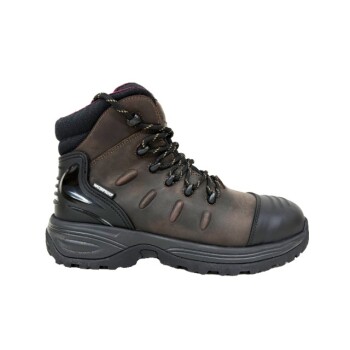
The primary advantages of leather for work boots are its unique combination of extreme durability, natural breathability, and its remarkable ability to mold to the wearer's foot over time. This creates a personalized, comfortable fit that synthetic materials cannot replicate, all while providing superior protection and a long service life.
While often chosen for its toughness, leather's true advantage lies in its dynamic nature. It starts as a protective shell and gradually becomes a custom-fitted tool for your feet, balancing resilience with long-term comfort.
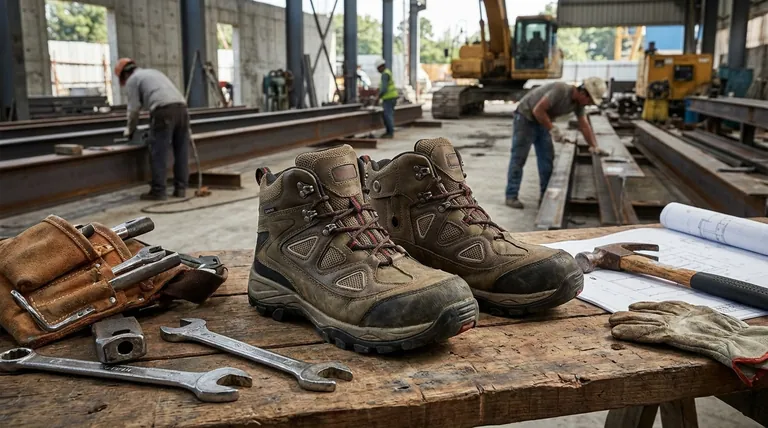
The Foundation of Performance: Unmatched Durability
Leather has been the benchmark material for protective footwear for centuries for one simple reason: it lasts. Its organic structure provides a level of resilience that is difficult to engineer.
Full-Grain Leather: The Gold Standard
Full-grain leather is the highest quality grade, retaining the tough, dense outer layer of the hide. This makes it exceptionally resistant to wear, tear, and abrasion in demanding work environments.
Natural Resistance to Wear
The fibrous nature of leather provides inherent strength and flexibility. It can withstand repeated flexing and stress without cracking or breaking down as quickly as many synthetic alternatives.
The Advantage of Repairability
High-quality leather boots, particularly those with welted construction, are designed to be repaired. They offer more options for resoling, which can dramatically extend the usable life of the boot far beyond the original sole.
A Superior Interface: Comfort and Custom Fit
A work boot's performance is not just about durability; it's about how it works with your body. This is where leather's unique properties provide a significant advantage.
Molding to Your Foot
Over time and with use, leather molds to the specific shape of your foot. This "break-in" process creates a customized fit, reducing pressure points and providing support tailored precisely to you.
Natural Breathability
Unlike solid synthetic materials, leather is a naturally breathable material. It allows water vapor (sweat) to escape, which is critical for managing moisture, preventing blisters, and maintaining foot health during long days.
Inherent Flexibility
Leather possesses a natural pliability that allows the boot to move with your foot. This flexibility reduces restriction and improves overall comfort without sacrificing the structural support needed for a work boot.
Understanding the Trade-offs
No material is perfect. Acknowledging the trade-offs of leather is key to making an informed decision and ensuring proper care.
The Break-in Period
The same process that creates a custom fit requires an initial break-in period. New leather boots can be stiff and may require some time to become comfortable.
The Importance of Maintenance
While durable, leather is susceptible to damage if neglected. It must be cleaned and conditioned, and untreated leather can be damaged by excessive water, requiring waterproofing treatments for wet environments.
Weight and Heat Considerations
Leather is typically heavier and can be hotter than modern synthetic fabrics. For workers who prioritize the absolute lightest weight, this can be a significant factor.
The Factor of Cost
High-quality leather is a premium material, and the craftsmanship required to build a durable boot often results in a higher initial cost compared to many synthetic options.
Making the Right Choice for Your Goal
Selecting the right boot material depends entirely on the demands of your job and your personal priorities.
- If your primary focus is maximum longevity and a personalized fit: A full-grain leather boot is the best investment, provided you commit to the break-in and maintenance.
- If your primary focus is working in consistently wet conditions: Choose a high-quality leather boot specifically marketed as waterproof and be diligent about reapplying treatments.
- If your primary focus is minimal weight and out-of-the-box comfort: A synthetic boot may be a better choice, but you will sacrifice the long-term custom fit and repairability of leather.
Ultimately, choosing leather is an investment in a durable, adaptable tool that becomes uniquely yours over time.
Summary Table:
| Advantage | Key Benefit |
|---|---|
| Unmatched Durability | Resists abrasion, tearing, and can be resoled for extended life. |
| Customized Fit | Molds to your foot's shape over time for personalized comfort. |
| Natural Breathability | Allows moisture vapor to escape, improving foot health. |
| Inherent Flexibility | Moves with your foot, reducing restriction while providing support. |
Ready to experience the superior quality of leather work boots?
As a large-scale manufacturer, 3515 produces a comprehensive range of durable footwear for distributors, brand owners, and bulk clients. Our production capabilities encompass all types of safety and work boots, ensuring you get the perfect combination of protection, comfort, and longevity.
Contact us today to discuss your work boot needs and benefit from our manufacturing expertise!
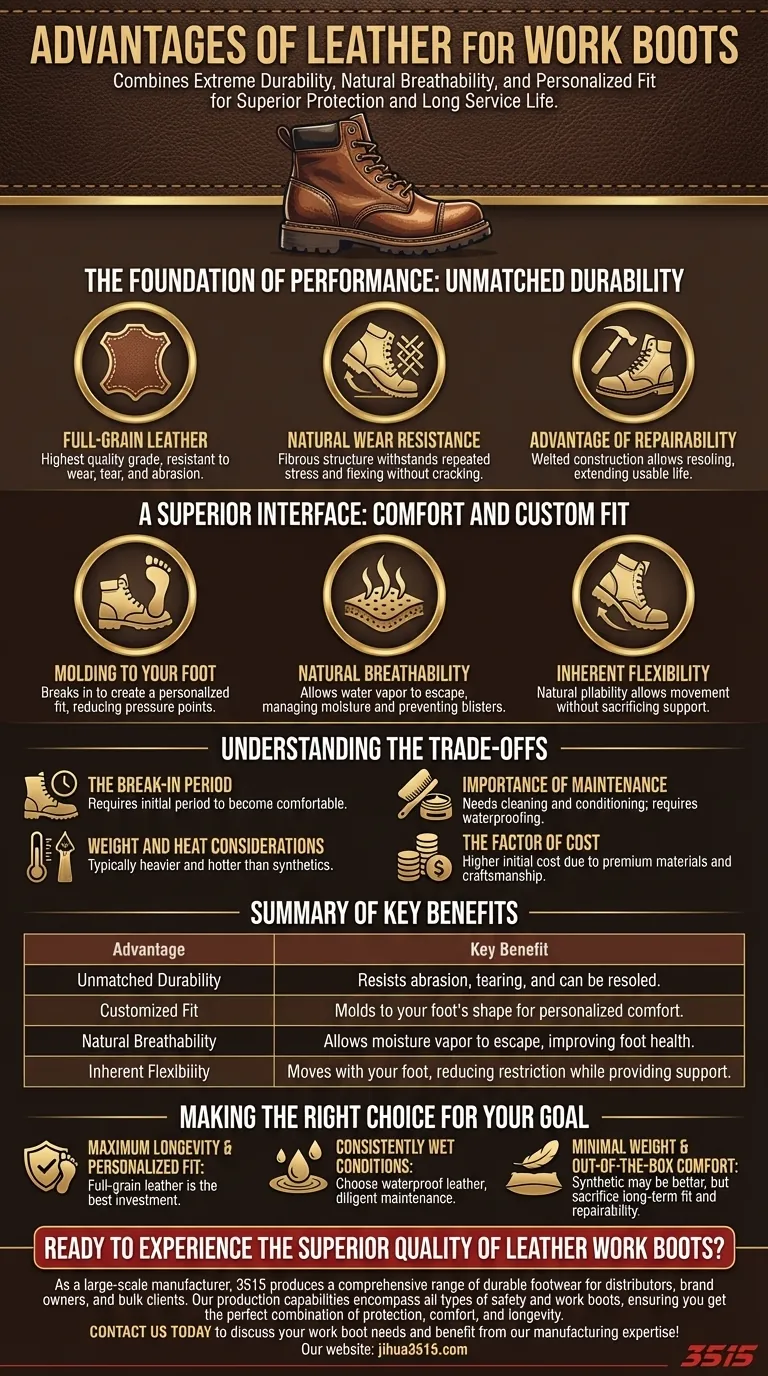
Visual Guide
Related Products
- Durable Leather Work Boots for Wholesale & Custom Manufacturing
- Wholesale Leather Work Boots with Customizable Wedge Sole for Brands
- Durable Leather Work Boots for Wholesale & Custom OEM Manufacturing
- Durable Leather Work Boots Wholesale Manufacturer & Custom Factory
- Durable Goodyear Welt Leather Work Boots for Wholesale & Private Label
People Also Ask
- What is the difference between full-grain and top-grain leather? Premium Material Guide for Boot Manufacturers
- What are the common workplace hazards that can be mitigated with the right work boots? Protect Your Workforce
- What are the common foot issues workers face due to uncomfortable work boots? Prevent Pain & Deformities
- What are the advantages of leather versus synthetic work boots? A Guide to Choosing the Right Material
- What are the key components of modern work boots? Engineered for Ultimate Durability and Comfort