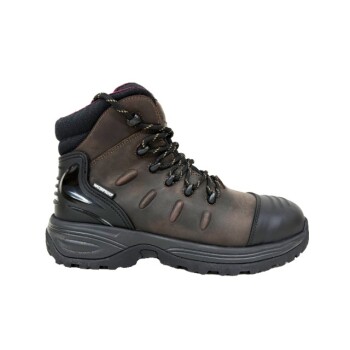
The primary advantages of leather work boots for farm work are their exceptional durability, comprehensive protection, and the long-term, customized comfort they provide after breaking in. They are built to withstand the abrasive conditions of a farm while shielding your feet from impacts, sharp objects, and uneven terrain.
While other materials excel in specific conditions, leather work boots remain the agricultural standard because they offer the most effective all-around balance of ruggedness, safety, and adaptive comfort required for the diverse and demanding tasks of farm life.
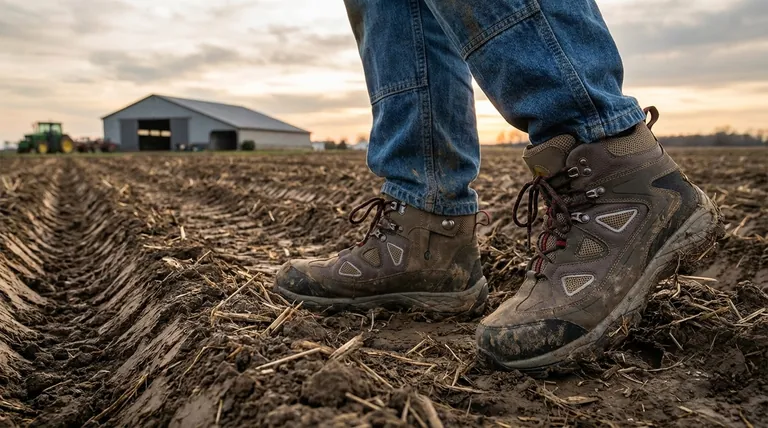
The Pillars of Protection and Durability
The farm environment is relentlessly demanding on footwear. Leather is a classic choice precisely because it is engineered by nature to withstand this abuse.
Unmatched Material Resilience
Leather, particularly full-grain leather, offers superior toughness and wear resistance. This makes it ideal for protecting against the constant abrasions from dirt, equipment, and rough surfaces.
Its dense fiber structure helps defend against punctures from sharp objects you might encounter in fields or barns.
Structural Safety Features
Many leather work boots are designed with reinforced toe and heel sections. This provides critical protection against impacts from heavy objects, tools, or livestock.
The inherent sturdiness of the material itself acts as a reliable shield for your entire foot.
Essential Ankle Support
Farm work often involves walking on unstable and uneven ground. Leather boots, including high-shaft styles like cowboy boots, provide crucial ankle support.
This rigid yet flexible structure helps prevent twists and sprains, reducing the risk of injury during long days on your feet.
Comfort and Performance in the Field
Protection is only half the battle; a boot must also be comfortable and functional for hours of continuous wear. Leather excels at adapting to the user.
The Benefit of a Custom Fit
One of leather's most significant advantages is its ability to mold to the shape of your foot over time. After an initial break-in period, this creates a personalized, comfortable fit that synthetic materials cannot replicate.
Breathability for Long Days
Leather is a naturally breathable material. This allows moisture and heat to escape, keeping your feet drier and more comfortable during hard work in various climates, unlike fully waterproof but non-breathable options like rubber.
Reliable Traction on Unpredictable Surfaces
Quality leather work boots feature slip-resistant outsoles. These are engineered to provide stable footing and excellent grip on the slippery or muddy surfaces common to any farm.
Understanding the Trade-offs
No single material is perfect for every situation. Being aware of leather's limitations is key to using it effectively.
The Break-in Period
New leather boots are often stiff and require a break-in period before they achieve their signature comfort. This initial discomfort is a trade-off for the eventual custom fit.
Water Resistance vs. Waterproof
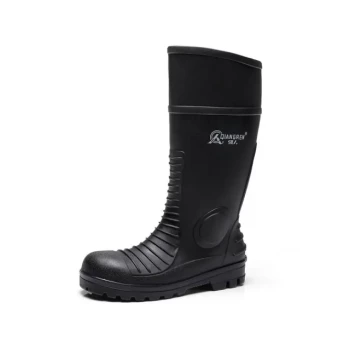
While full-grain leather offers excellent water resistance, it is not inherently waterproof like rubber. For tasks in extremely wet or muddy conditions, such as cleaning stalls, a seamless rubber boot is a better choice.
Leather boots can be treated to enhance their water repellency, but prolonged submersion will eventually lead to saturation.
The Necessity of Maintenance
To achieve its legendary longevity, leather requires regular care. This includes cleaning off mud and dirt and applying conditioners to keep the material supple and prevent it from drying out and cracking.
Making the Right Choice for Your Farm
Selecting the correct boot means matching its strengths to your specific daily tasks to ensure safety, comfort, and productivity.
- If your primary focus is all-around versatility: A classic full-grain leather work boot offers the best balance of durability, protection, and long-term comfort for the majority of daily farm chores.
- If your primary focus is working in wet and muddy conditions: Choose a dedicated rubber boot for its superior waterproof performance, as leather will eventually become saturated.
- If your primary focus is ranching or work with livestock: A leather cowboy boot provides excellent ankle support and a high shaft for protection against debris, along with a heel designed for stability.
Ultimately, choosing the right footwear is a critical investment in your personal safety and daily effectiveness on the farm.
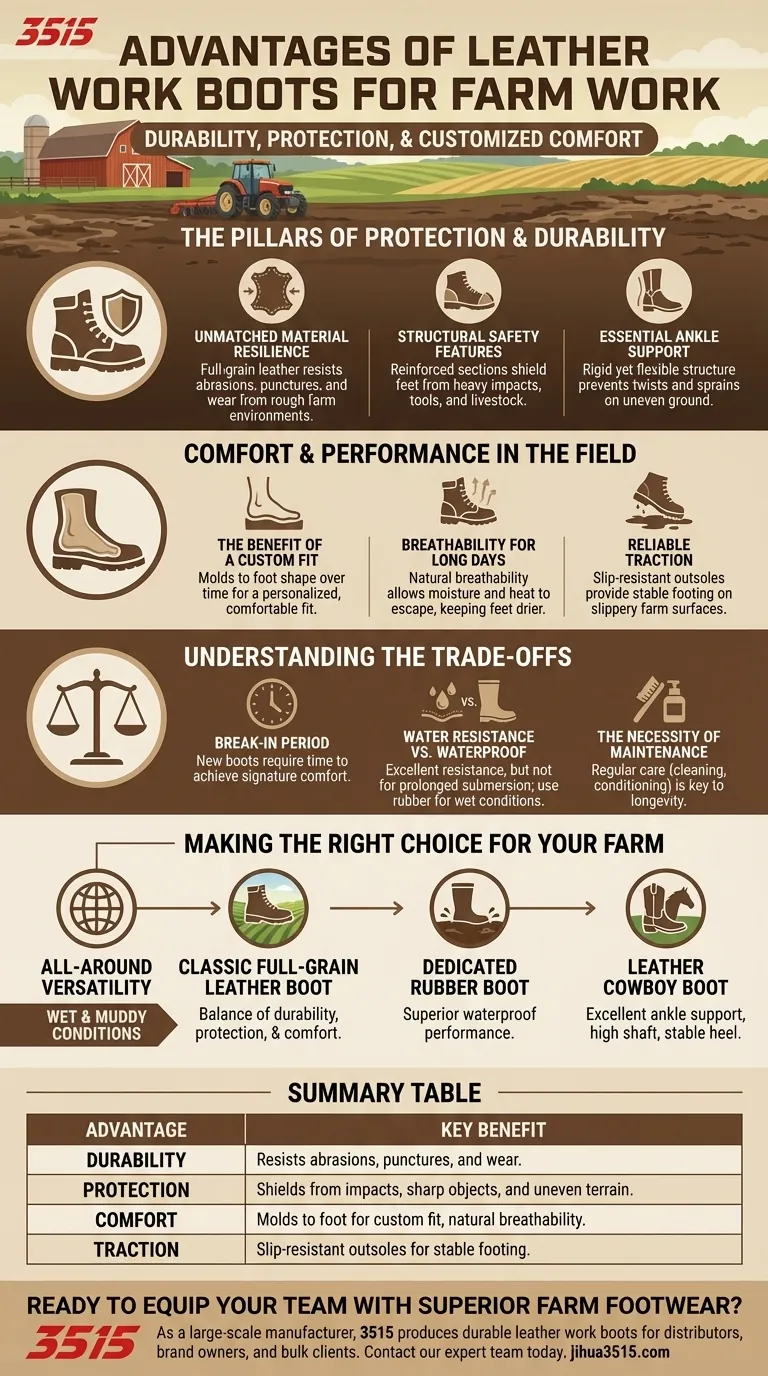
Summary Table:
| Advantage | Key Benefit |
|---|---|
| Durability | Resists abrasions, punctures, and wear from rough farm environments. |
| Protection | Reinforced toes/ankles shield from impacts, sharp objects, and uneven terrain. |
| Comfort | Molds to your foot for a custom fit and offers natural breathability. |
| Traction | Slip-resistant outsoles provide stable footing on muddy or slippery surfaces. |
Ready to Equip Your Team with Superior Farm Footwear?
As a large-scale manufacturer, 3515 produces a comprehensive range of durable leather work boots for distributors, brand owners, and bulk clients. Our production capabilities ensure you get the perfect balance of protection, comfort, and longevity for the demanding agricultural sector.
Let's discuss your specific needs: Contact our expert team today to learn how we can be your reliable manufacturing partner.
Visual Guide
Related Products
- Durable Leather Work Boots for Wholesale & Custom Manufacturing
- Wholesale Leather Work Boots with Customizable Wedge Sole for Brands
- Durable Leather Work Boots for Wholesale & Custom OEM Manufacturing
- Durable Leather Work Boots Wholesale Manufacturer & Custom Factory
- Durable Goodyear Welt Leather Work Boots for Wholesale & Private Label
People Also Ask
- What is the difference between full-grain and top-grain leather? Premium Material Guide for Boot Manufacturers
- What are the common workplace hazards that can be mitigated with the right work boots? Protect Your Workforce
- What are the common foot issues workers face due to uncomfortable work boots? Prevent Pain & Deformities
- What are the advantages of leather versus synthetic work boots? A Guide to Choosing the Right Material
- What are the key components of modern work boots? Engineered for Ultimate Durability and Comfort