For motorcycle touring, high boots are the superior choice for maximum protection and support on long, demanding rides, while low boots offer greater convenience and walking comfort for shorter trips with frequent stops. The decision hinges on prioritizing on-bike safety versus off-bike practicality.
The choice between high and low touring boots is not about which is "better," but which is the right tool for your specific journey. It's a direct trade-off between the comprehensive protection needed for long hours in the saddle and the practical mobility required for exploring your destinations on foot.
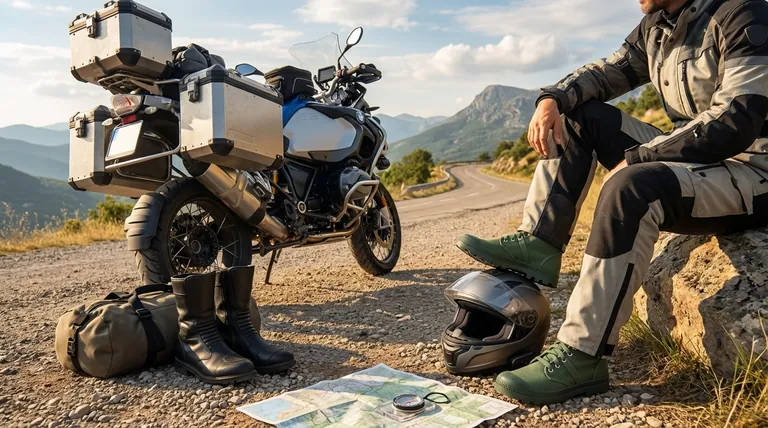
The Foundation: What Defines a Touring Boot?
Before comparing heights, it's critical to understand the non-negotiable features that qualify any boot for serious touring. These characteristics form the baseline for both high and low styles.
All-Day Riding Comfort
A touring boot is engineered for long-term wear. It typically uses durable materials like full-grain leather and features supportive footbeds designed for a neutral foot position on the pegs, minimizing fatigue over hundreds of miles.
Comprehensive Weather Protection
Touring exposes you to unpredictable conditions. A quality boot must have a waterproof and breathable membrane to keep your feet dry from rain while allowing perspiration to escape, ensuring comfort across various climates.
Essential Safety Features
Beyond simple abrasion resistance, touring boots incorporate protective inserts. These are typically placed at the shin, ankle, and heel to guard against impact and torsion in the event of an accident.
The Case for High Boots: Prioritizing Protection
Full-height or high-cut boots, which typically rise to the mid-calf, are the traditional choice for serious touring for several key reasons. They are designed for the "hardcore traveler" whose primary activity is riding.
Maximum Shin and Ankle Coverage
The most obvious advantage is increased coverage. A high boot provides a rigid structure that extends up the shin, offering superior support against twisting forces and shielding the ankle and lower leg from impacts.
Superior Weather Sealing
A taller boot creates a more effective overlap with your riding pants. This significantly reduces the chance of water or wind finding its way in during a downpour, keeping you warmer and drier for longer.
Enhanced Rider Support
The structural rigidity of a high boot reduces muscle fatigue on long rides. By supporting your ankle and lower leg, the boot does some of the work of keeping your foot in position, allowing you to stay comfortable in the saddle for extended periods.
The Case for Low Boots: Prioritizing Practicality
Low-cut or mid-cut boots are a modern answer to the needs of riders who blend riding with other activities. Their design prioritizes convenience and mobility.
Unmatched Off-Bike Mobility
This is the single biggest advantage of a low boot. They are lighter and more flexible, making them vastly more comfortable for walking around town, visiting sights, or navigating a campsite after a day's ride.
Ease of Use and Comfort
Low boots are quicker to put on and take off. Their reduced height also means less heat buildup in warm weather, which can be a significant comfort factor.
Increased Versatility
Because they often resemble hiking or work boots, low-cut riding boots blend in more easily off the bike. This makes them a practical choice for riders who want a single piece of footwear for both riding and casual activities at their destination.
Understanding the Trade-offs
Choosing your boot height is a conscious decision that involves accepting a set of compromises. Being aware of these is key to making an informed choice.
The High Boot Compromise: Weight and Clumsiness
The features that make high boots so protective—rigidity, extra material, and robust closures—also make them heavier and more cumbersome. Walking any significant distance in them can feel clumsy and tiring.
The Low Boot Compromise: Reduced Protection
Opting for a low boot means accepting less coverage. While they still offer crucial heel and ankle protection, your shin is more exposed, and the boot provides less resistance to the torsional forces that can injure an ankle in a crash.
Making the Right Choice for Your Tour
Your ideal boot is the one that best matches the demands of your specific trip. Use your itinerary and riding style as the primary guide for your decision.
- If your primary focus is a long-distance, multi-day journey with minimal walking: Choose high boots for their uncompromising protection, weather sealing, and on-bike support.
- If your primary focus is a weekend tour with frequent stops for sightseeing and walking: Choose low boots for their superior off-bike comfort, light weight, and practicality.
- If your primary focus is a mix of paved roads and occasional light-duty trails (adventure touring): Consider a dedicated high-cut adventure boot that balances the rigidity of a touring boot with the flexibility needed for standing on the pegs.
Ultimately, select the boot that provides the right level of protection for your riding without becoming a burden when you're off the bike.
Summary Table:
| Feature | High Boots | Low Boots |
|---|---|---|
| Primary Advantage | Maximum On-Bike Protection & Support | Superior Off-Bike Mobility & Comfort |
| Best For | Long-distance, multi-day tours | Tours with frequent stops & walking |
| Key Trade-off | Heavier, less comfortable for walking | Less shin/ankle coverage |
As a large-scale manufacturer, 3515 produces a comprehensive range of high-quality motorcycle boots for distributors, brand owners, and bulk clients. Whether your customers need the ultimate protection of high-cut touring boots or the versatile practicality of low-cut styles, we have the production capabilities and expertise to meet your demands.
Let us help you equip riders with the perfect footwear for their journey. Contact our team today to discuss your specific needs and explore our full catalog.
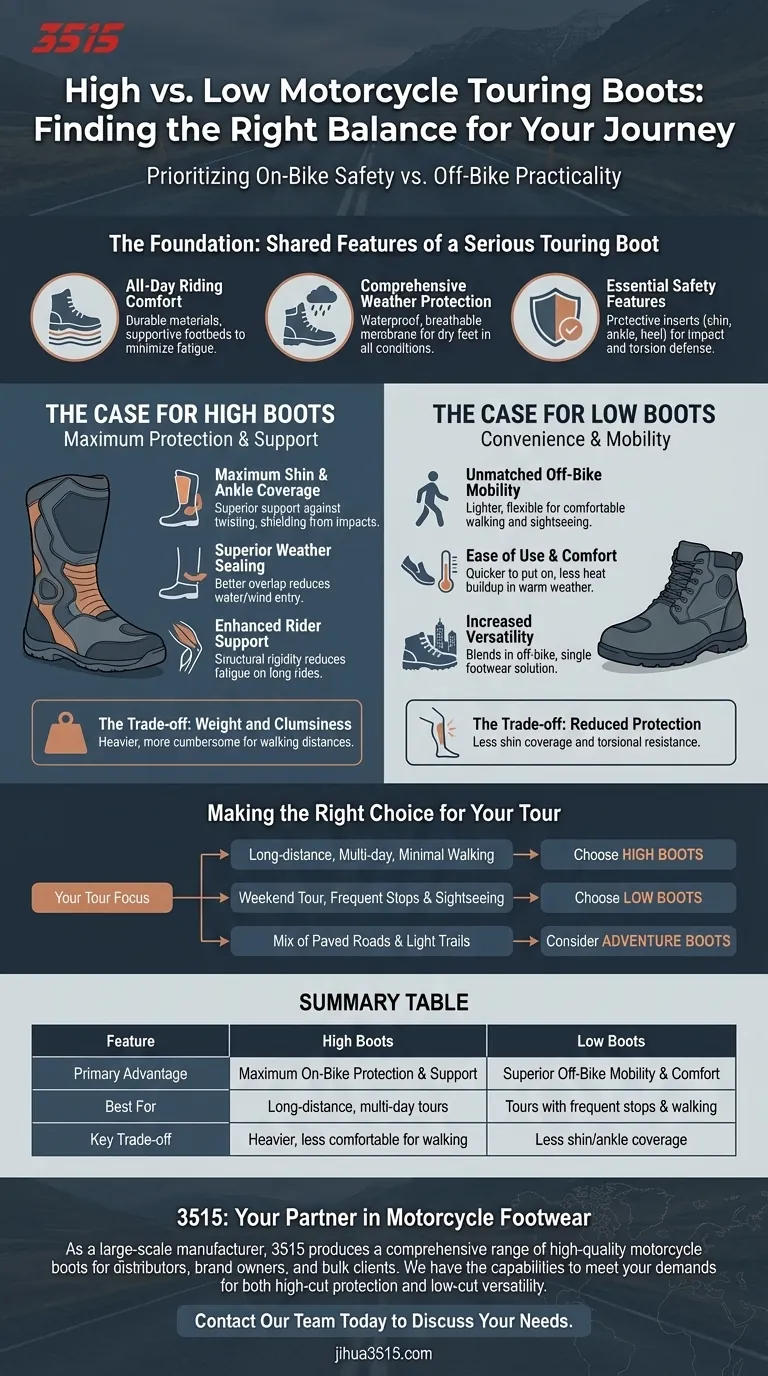
Visual Guide
Related Products
- Durable Spiked Camouflage Boots Wholesale & Factory Production
- Durable Goodyear Welt Leather Work Boots for Wholesale & Private Label
- Wholesale Tactical Boots High-Traction & Reflective for Bulk & Brand Orders
- Wholesale Waterproof Tactical Boots Custom Suede & High-Traction Soles
- Wholesale High-Traction Camo Boots - Custom Manufacturer for Brands
People Also Ask
- How does boot height affect waterproofing? Choose the Right Height for Ultimate Protection
- What are the best types of shoes for different gardening conditions? Find Your Perfect Match.
- What role does camouflage play in hunting boots? It's More Than Just a Pattern
- What should you look for to ensure boots are fully waterproof? The Essential 2-Part System
- How does boot construction affect waterproofing? The Science Behind Truly Dry Feet