
The primary advantages of full leather boots are their exceptional durability, superior water resistance, and the ability to be resoled, offering a much longer lifespan than synthetic alternatives. This construction provides robust protection and a custom fit that molds to your foot over time, making them a reliable long-term investment for demanding conditions.
Full leather boots represent a commitment to time-tested performance. While they require an initial investment in cost and break-in time, their unparalleled longevity and ability to withstand harsh environments provide a level of reliability that modern synthetic materials often cannot match.
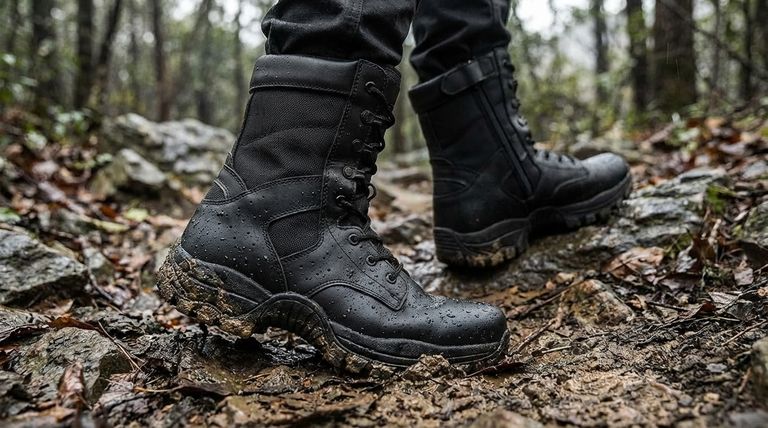
The Core Pillars of Full Leather Construction
The advantages of a full leather boot stem directly from the inherent properties of the material itself. Unlike multi-panel synthetic boots, a full leather upper offers a more holistic and robust system of protection and support.
Unmatched Durability
Full-grain leather is a naturally strong and resilient material. Its dense fiber structure makes it highly resistant to abrasion, scuffs, and tears from rocks, branches, and other environmental hazards.
Users often describe well-made leather boots as being "like iron" due to their sheer toughness and ability to endure years of heavy use.
Superior Water Resistance
A key advantage is that full-grain leather is naturally water-resistant. With proper care and conditioning, the leather itself repels water effectively.
This stands in contrast to many synthetic boots that rely entirely on a waterproof membrane (like Gore-Tex). If that thin liner fails, the boot's waterproofing is compromised, whereas a leather boot maintains a significant degree of inherent protection.
A Custom, Molded Fit
Over time, the warmth and pressure from your foot cause the leather to stretch and conform to its unique shape. This break-in process results in a truly custom fit that is difficult to replicate with synthetic materials.
This personalized fit can significantly enhance comfort and reduce the likelihood of hot spots or blisters during extended use.
Enhanced Protection and Stability
The tough, full-coverage nature of a leather upper provides excellent protection from the elements, sharp objects, and impacts.
Furthermore, the inherent stiffness and structure of leather offer superior ankle stability, which is critical when navigating uneven terrain or carrying a heavy load.
Understanding the Trade-offs
To make an informed decision, it is critical to weigh the benefits against the inherent compromises of full leather construction. Objectivity is key.
The Break-in Period
Unlike synthetic boots that are often comfortable out of the box, full leather boots require a significant break-in period. They can feel stiff and unforgiving at first.
The Weight Factor
Leather is a dense material, and as a result, full leather boots are almost always heavier than their synthetic or fabric-and-leather counterparts. This can be a factor in fatigue on long-mileage days.
Breathability Considerations
While leather does breathe naturally, it is generally less breathable than boots that incorporate mesh or fabric panels. In very hot and dry climates, this can lead to warmer, sweatier feet.
The Upfront Investment
High-quality, full-grain leather boots are often more expensive upfront. This cost reflects the quality of the materials and the craftsmanship required to build them.
Making the Right Choice for Your Goal
The choice between full leather and other materials depends entirely on your priorities and intended use.
- If your primary focus is maximum durability and protection: A full leather boot is the definitive choice for abrasive, off-trail terrain and demanding work environments.
- If your primary focus is long-term value: A resolable leather boot that is properly cared for will outlast several pairs of synthetic boots, offering superior value over its lifespan.
- If your primary focus is lightweight performance and out-of-the-box comfort: A modern synthetic boot is likely the more appropriate tool for the job.
Ultimately, choosing a full leather boot is an investment in time-tested reliability and a piece of gear that becomes uniquely yours.
Summary Table:
| Advantage | Key Takeaway |
|---|---|
| Durability | Full-grain leather offers superior resistance to abrasion, scuffs, and tears. |
| Water Resistance | Inherently water-resistant; relies on material, not just a membrane. |
| Custom Fit | Leather molds to your foot's shape over time for a personalized fit. |
| Protection & Stability | Provides excellent ankle support and protection from impacts and sharp objects. |
| Long-Term Value | Resolable construction means a much longer lifespan than synthetic boots. |
Ready to invest in superior footwear?
As a large-scale manufacturer, 3515 produces a comprehensive range of durable full leather boots for distributors, brand owners, and bulk clients. Our production capabilities ensure you get the toughness, protection, and long-term value your customers demand.
Contact our team today to discuss your footwear needs and discover the 3515 advantage.
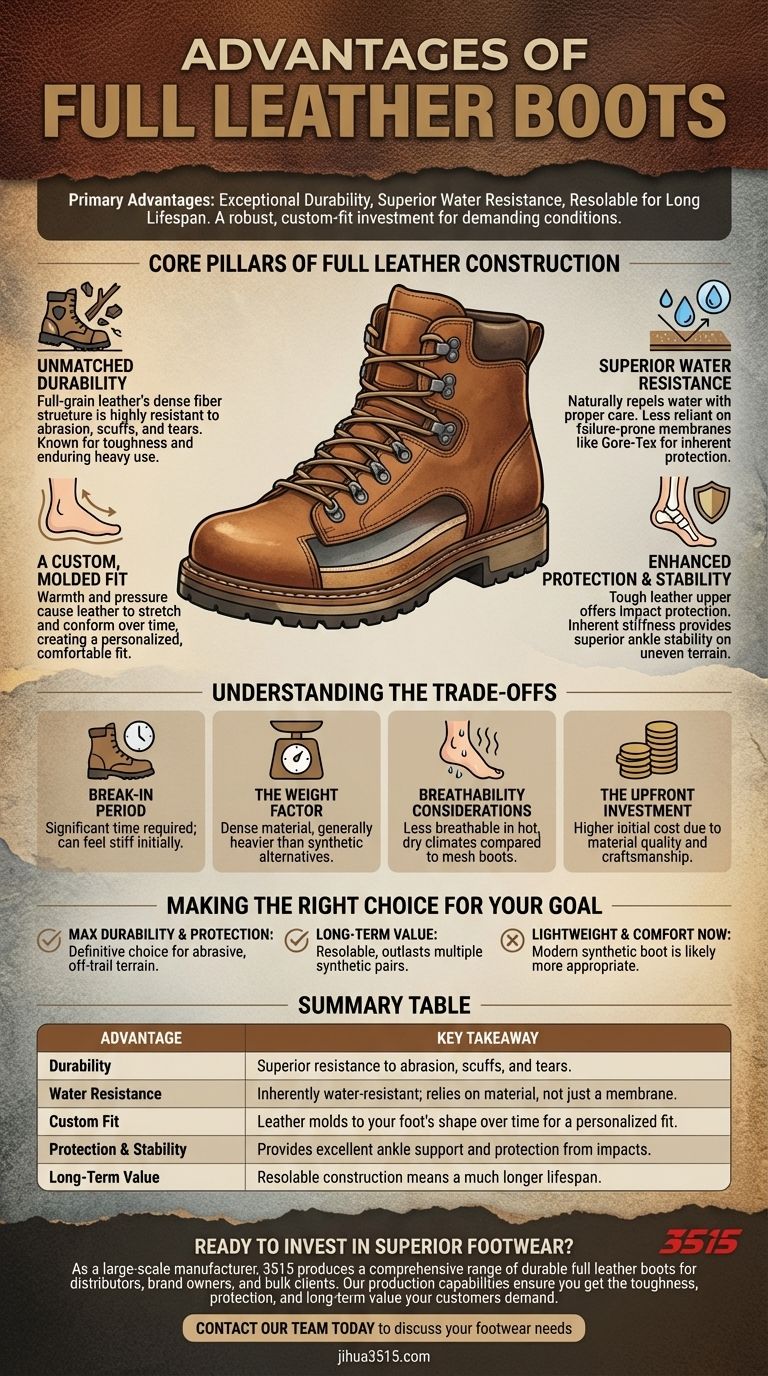
Visual Guide
Related Products
- Wholesale Leather Work Boots with Customizable Wedge Sole for Brands
- Wholesale Leather Ankle Boots with Lug Soles for Custom Brand Manufacturing
- Durable Leather Work Boots for Wholesale & Custom Manufacturing
- Durable Leather Work Boots for Wholesale & Custom OEM Manufacturing
- Durable Leather Work Boots Wholesale Manufacturer & Custom Factory
People Also Ask
- What is the difference between full-grain and top-grain leather? Premium Material Guide for Boot Manufacturers
- What are the advantages of leather as an upper material for work boots? Unmatched Durability & Custom Comfort
- How can leather work boots be protected from environmental elements? A 3-Step Guide to Lasting Durability
- What is the complete process for deep cleaning leather work boots? A Step-by-Step Guide to Preserve Your Investment
- What are the key qualities of leather for work boots? Superior Durability, Breathability & Custom Fit














