
Stable boots are the essential workhorse of equestrian footwear. They are versatile, multi-purpose boots designed specifically for the demanding environment of a stable. Their primary function is to provide durable, waterproof protection for tasks like cleaning stalls, walking horses, and performing general groundwork.
Stable boots are designed for durability and protection during daily chores, not for performance riding. Their practical, often rigid, construction makes them ideal for work on the ground but unsuitable for the specific requirements of competition or nuanced riding.
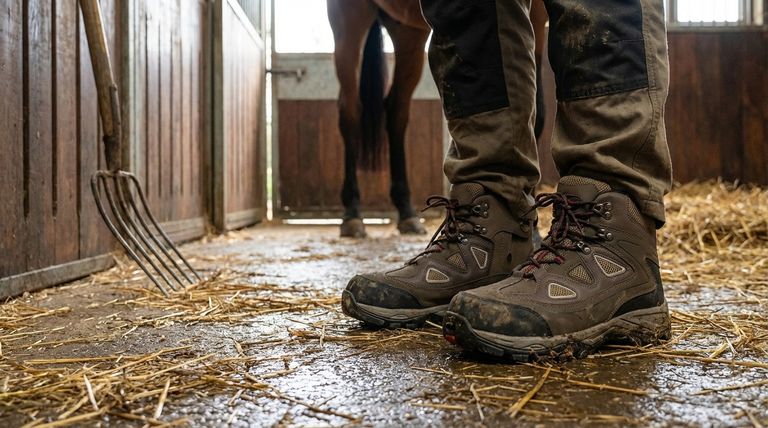
The Core Function of a Stable Boot
Stable boots fill a critical role by offering a practical solution for the everyday, non-riding activities that are central to horse care. Their design prioritizes function and protection above all else.
Built for a Demanding Environment
The primary characteristic of a stable boot is its durability. They are constructed from resilient materials designed to withstand mud, water, and the general wear and tear of a stable environment.
This robust construction ensures they are waterproof and resistant, protecting your feet and remaining easy to clean after messy jobs.
Versatility in Daily Tasks
Stable boots are the go-to choice for a wide range of groundwork. This includes everything from mucking out stalls and turning out horses to hand-walking and grooming.
Their all-purpose nature makes them a convenient and highly practical piece of equipment for any horse owner or stable hand.
Understanding the Trade-offs and Limitations
While incredibly useful, it is crucial to understand that the features that make stable boots excellent for groundwork also create their primary limitations. Their specialization for chores comes at the cost of riding performance.
Rigidity vs. Flexibility
Stable boots are generally more rigid than dedicated riding boots. This provides excellent support and protection when walking on uneven or muddy ground.
However, this same rigidity restricts the fine ankle flexion required for delivering precise leg aids to the horse while riding. It creates a barrier to the sensitive communication needed for effective equitation.
Not for the Competition Arena
For clear reasons of both function and tradition, stable boots are prohibited in competitions. Equestrian disciplines have specific dress codes that require formal, close-contact riding boots.
More importantly, the bulky and inflexible nature of a stable boot hinders rider performance and does not meet the standards for safety and style expected in the show ring.
Making the Right Choice for Your Task
Selecting the correct footwear is a matter of matching the tool to the specific goal. Understanding the distinct purpose of each boot type is key to ensuring safety, comfort, and effectiveness.
- If your primary focus is daily stable chores and groundwork: Stable boots are your ideal choice for their unmatched durability and protective features.
- If your primary focus is training or competitive riding: You must use dedicated riding boots, typically made of leather, which offer the necessary flexibility and close contact for performance.
Choosing the right boot for the job protects both you and your equipment while enabling you to perform every task to the best of your ability.
Summary Table:
| Feature | Use Case | Limitation |
|---|---|---|
| Durable Construction | Withstands mud, water, and stable wear & tear | Generally too rigid for sensitive riding |
| Waterproof & Protective | Ideal for mucking out stalls and messy jobs | Not permitted in competition arenas |
| Versatile for Groundwork | Perfect for grooming, hand-walking, and daily chores | Lacks the flexibility needed for precise leg aids |
Need Durable, Purpose-Built Equestrian Footwear?
As a large-scale manufacturer, 3515 produces a comprehensive range of footwear for distributors, brand owners, and bulk clients. Our production capabilities encompass all types of shoes and boots, including specialized stable boots designed for maximum durability and protection.
Let us help you equip your customers with the right footwear for every task. Contact our team today to discuss your manufacturing needs and how we can bring value to your supply chain.
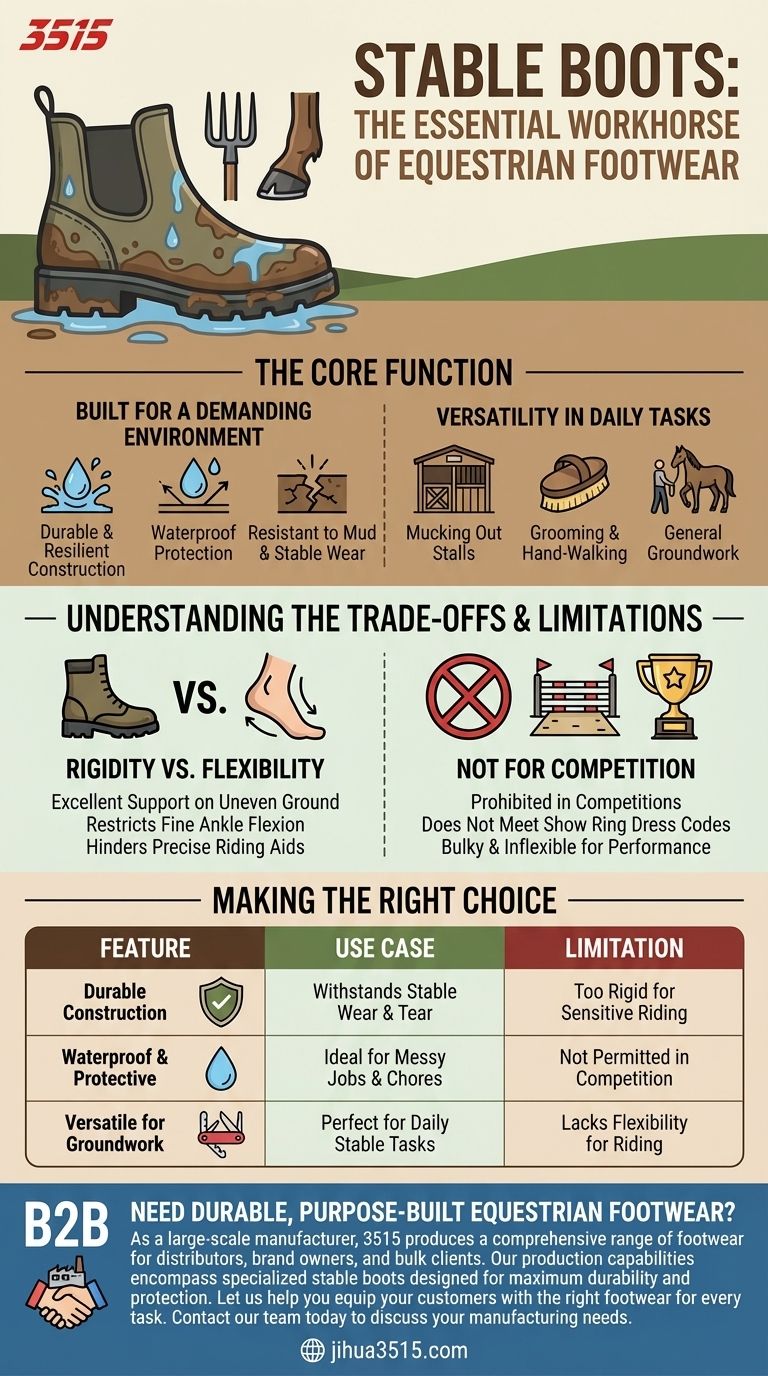
Visual Guide
Related Products
- Puncture-Resistant Velcro Safety Boots for Wholesale & Custom Manufacturing
- Durable Steel Toe Safety Boots Wholesale & Custom Manufacturing
- Durable Leather Work Boots Wholesale Manufacturer & Custom Factory
- Wholesale Customizable Safety Boots Durable & Protective Footwear Manufacturing
- Durable Goodyear Welt Leather Work Boots for Wholesale & Private Label
People Also Ask
- Why are industrial safety boots with steel toes necessary for machine operators? Essential Foot Protection for Safety
- What are the characteristics of steel toe safety boots? Maximum Protection, Key Trade-offs
- Is it true that steel toes can cause toes to get cut off? Debunking the Dangerous Myth
- What are the primary safety functions of safety boots with steel-toe designs? Essential Protection for Industry
- What do the symbols M, F, I, and C represent on safety toe boots? Decode ASTM F2413 for Maximum Protection
















