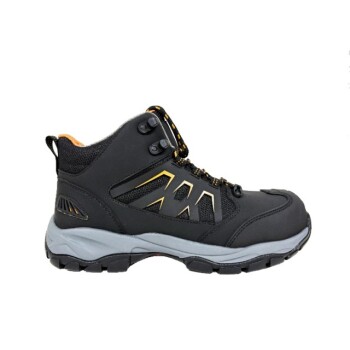
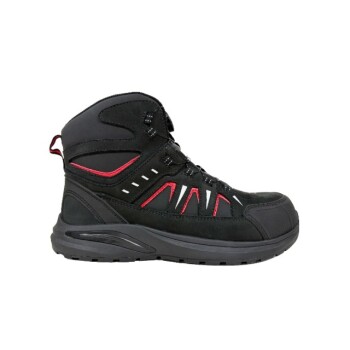
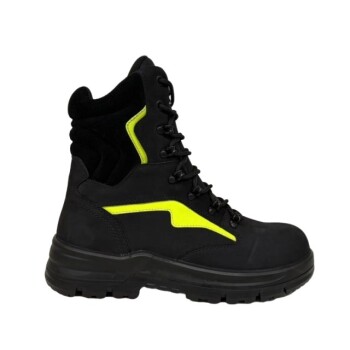
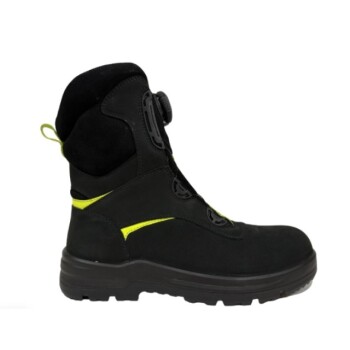
The primary safety function of steel-toe boots is to provide a rigid structural barrier against crushing injuries. In environments like logistics and heavy industrial assembly, these boots are specifically engineered to withstand high instantaneous pressure, protecting foot bones from the impact of falling materials and the compression of heavy equipment. Beyond skeletal protection, they perform a critical stability function by utilizing slip-resistant outsoles to prevent accidents on oily or wet surfaces.
Safety boots serve a dual purpose: the rigid toe cap prevents skeletal crushing from heavy impacts and compression, while the specialized outsole prevents soft tissue injuries and secondary accidents caused by slipping on hazardous industrial floors.
The Mechanics of Skeletal Protection
Deflecting Impact Forces
In warehousing and logistics, the risk of heavy objects falling from shelving or transport vehicles is constant.
The core function of the safety boot is to absorb this shock. The rigid toe cap acts as a shield, preventing the force of the impact from transferring directly to the metatarsals and toes.
Resisting Compression and Crushing
Heavy industrial assembly often involves moving massive machinery or vehicles.
If heavy equipment rolls over a worker's foot, the toe cap is designed to maintain its structural integrity. This resistance to high pressure prevents the bones of the foot from being crushed under the weight.
Stability and Accident Prevention
Traction on Hazardous Surfaces
Industrial floors are rarely clean; they are often compromised by oil, water, or other lubricants.
Safety boots address this by incorporating slip-resistant outsoles. These soles provide necessary traction to ensure stability, directly reducing the risk of slips.
Preventing Secondary Injuries
A slip in a heavy industrial setting can be just as dangerous as a falling object.
By securing the worker's footing, the boots prevent soft tissue injuries associated with falls. Furthermore, they prevent "secondary accidents," where a slip might cause a worker to fall into dangerous machinery or the path of a vehicle.
Understanding the Material Options
Steel vs. Composite Materials
While "steel-toe" is the colloquial term, the rigid protective cap can be manufactured from different materials.
As noted in the supplementary data, composite-toe boots are a valid alternative. These feature protective caps made of carbon fiber, plastic, or tough synthetic materials.
Material Performance
Both steel and composite designs share the same goal: structural rigidity.
Whether utilizing steel or carbon fiber, the engineering focus remains on creating a toe cap capable of withstanding the intense pressures of industrial environments without collapsing.
Making the Right Choice for Your Goal
When selecting safety footwear for logistics or assembly, the decision often comes down to the specific hazards of your floor.
- If your primary focus is preventing crush injuries: Ensure the boot features a rated rigid toe cap—either steel or composite—capable of withstanding the specific weight of equipment in your facility.
- If your primary focus is environmental stability: Prioritize boots with high-grade slip-resistant outsoles to mitigate the risks posed by wet or oily flooring.
True safety is achieved when footwear is treated not just as clothing, but as a piece of personal protective equipment engineered for your specific environment.
Summary Table:
| Safety Feature | Primary Function | Industrial Benefit |
|---|---|---|
| Rigid Toe Cap | Deflects impact & resists compression | Prevents skeletal crushing from falling objects or heavy machinery |
| Slip-Resistant Outsole | Provides high-grade traction | Prevents falls and secondary accidents on oily or wet surfaces |
| Material Integrity | Steel or Composite structural barrier | Maintains footwear shape under high instantaneous pressure |
| Stability Design | Secures worker footing | Reduces soft tissue injuries associated with slips in hazardous zones |
Partner with 3515 for Professional-Grade Industrial Footwear
As a large-scale manufacturer serving distributors and brand owners, 3515 offers comprehensive production capabilities for all footwear types, anchored by our flagship Safety Shoes series. Whether you need steel-toe boots for heavy industrial assembly or high-traction footwear for logistics warehousing, our extensive portfolio covers work and tactical boots, outdoor shoes, training shoes, and sneakers, as well as Dress & Formal shoes to meet your diverse bulk requirements.
Enhance your product line with footwear engineered for maximum safety and durability. Contact us today to discuss your manufacturing needs!
References
- Veena Priyanka, Fransisca Tiur Basaria. Minimizing Work Risks in Indonesia: A Case Study Analysis of Hazard Identification, Risk Assessment, and Risk Control Implementation. DOI: 10.1051/e3sconf/202342601017
This article is also based on technical information from 3515 Knowledge Base .
Related Products
- Puncture-Resistant Velcro Safety Boots for Wholesale & Custom Manufacturing
- Wholesale Durable Breathable Safety Boots Custom OEM Manufacturer
- Durable Steel Toe Safety Boots Wholesale & Custom Manufacturing
- Premium Sport Style Safety Boots for Bulk Orders
- Wholesale Mesh Steel Toe Safety Shoes with Dial Closure Factory Production
People Also Ask
- Why are industrial safety boots with steel toes necessary for machine operators? Essential Foot Protection for Safety
- What are the characteristics of steel toe safety boots? Maximum Protection, Key Trade-offs
- Is it true that steel toes can cause toes to get cut off? Debunking the Dangerous Myth
- What are the different types of safety toe boots available? Choose the Right Protection for Your Job
- What do the symbols M, F, I, and C represent on safety toe boots? Decode ASTM F2413 for Maximum Protection