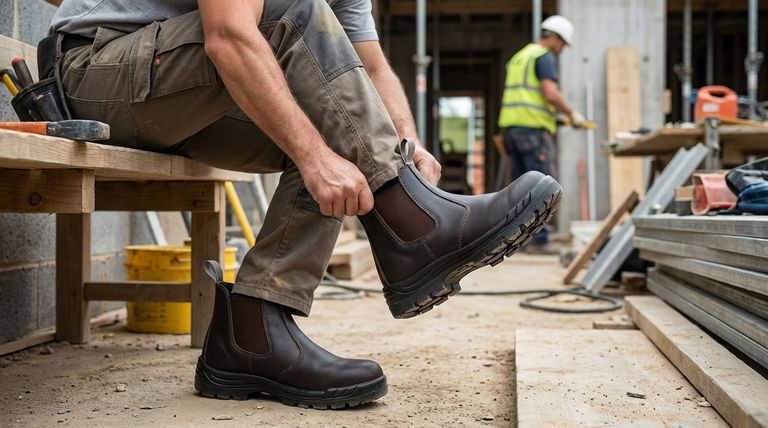
Putting on pull-on work boots correctly is a straightforward process, but ensuring the proper fit is what truly matters. The correct method involves using a shoehorn to protect the boot's heel, sliding your foot in, pulling up firmly on the boot's shaft or pull-tabs to seat your ankle, and then checking the alignment and feel on both feet. This ensures the boot performs as designed for both safety and comfort.
The simplicity of pull-on boots is their greatest strength, but it places all the importance on a perfect initial fit. Unlike lace-up boots, there are no adjustments, making the selection process the most critical step you'll take.
The Foundation: Why Fit is Non-Negotiable
The entire performance of a pull-on boot hinges on getting the size and fit right from the very beginning. Without laces, you cannot compensate for a boot that is too loose or too tight.
The "No Adjustments" Reality
Unlike lace-up boots that can be tightened for more support, the fit of a pull-on boot is standardized. The size you buy is the fit you will have for the life of the boot.
Sizing Can Be Deceptive
Pull-on boots may fit differently than your standard laced work boots or casual shoes. It's often necessary to try different sizes to find the one that offers a snug, secure feeling without being restrictive.
What a Proper Fit Feels Like
A correct fit should be snug around the instep of your foot. It's normal to experience a small amount of "heel slip" when the boots are new, but your foot should not be sliding around excessively.
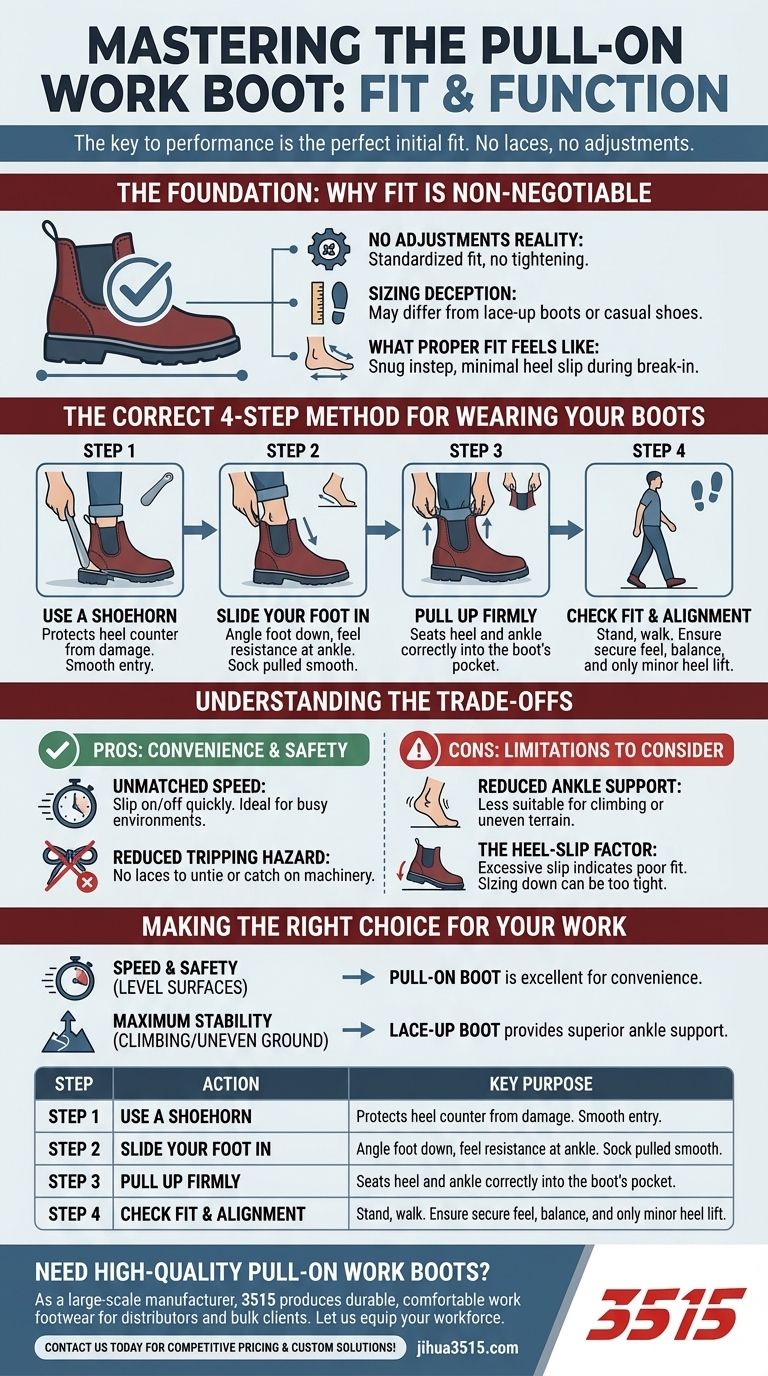
The Correct 4-Step Method for Wearing Your Boots
Following these steps ensures you put your boots on correctly without damaging them, allowing for a proper assessment of the fit each time.
Step 1: Use a Shoehorn
Sliding your foot in can crush the supportive heel counter over time. A shoehorn guides your foot in smoothly, preserving the boot's structural integrity.
Step 2: Slide Your Foot In
With your sock pulled smooth, angle your foot downwards and slide it into the boot shaft. You should feel some resistance as your foot passes through the ankle area.
Step 3: Pull Up Firmly
Use the boot's shaft or pull-tabs to pull the boot up decisively. This action helps seat your heel and ankle correctly into the pocket of the boot.
Step 4: Check the Fit and Alignment
Stand up and walk around. Your foot should feel secure, with only minor heel lift. Ensure the boot feels balanced and isn't causing uncomfortable pressure points.
Understanding the Trade-offs
Pull-on boots offer distinct advantages but also come with specific limitations that are crucial to understand for your work environment.
Pro: Unmatched Convenience and Speed
Their primary benefit is ease of use. They slip on and off quickly, eliminating the time and hassle of lacing, which is ideal for those in a hurry or who change footwear often.
Pro: Reduced Tripping Hazard
The absence of laces completely removes the risk of them coming untied and causing a trip or getting caught in machinery, which is a significant safety benefit in certain jobs.
Con: Reduced Ankle Support
By design, pull-on boots generally offer less ankle support than a tightly laced boot. This can make them less suitable for tasks requiring climbing or navigating uneven terrain.
Con: The Heel-Slip Factor
While a small amount of slip is normal during the break-in period, excessive heel movement indicates a poor fit. Sizing down to fix this can often make the boot too tight and uncomfortable elsewhere.
Making the Right Choice for Your Work
Choosing between pull-on and lace-up boots depends entirely on the demands of your job.
- If your primary focus is speed and safety on mostly level surfaces: A pull-on boot is an excellent choice for its convenience and lack of tripping hazards.
- If your primary focus is maximum stability for climbing or uneven ground: A traditional lace-up boot will provide superior ankle support and a more customizable, secure fit.
Ultimately, selecting the right boot is about choosing the right tool for your specific task.
Summary Table:
| Step | Action | Key Purpose |
|---|---|---|
| 1 | Use a Shoehorn | Protects the boot's heel counter from damage. |
| 2 | Slide Your Foot In | Ensures smooth entry with sock pulled smooth. |
| 3 | Pull Up Firmly | Seats your heel and ankle correctly in the boot. |
| 4 | Check Fit & Alignment | Confirms secure feel and proper balance while walking. |
Need a reliable source for high-quality pull-on work boots?
As a large-scale manufacturer, 3515 produces a comprehensive range of durable and comfortable work footwear for distributors, brand owners, and bulk clients. Our production capabilities encompass all types of safety boots, including pull-on styles designed for superior fit and performance.
Let us help you equip your workforce with the right footwear for the job. Contact us today for competitive pricing and custom solutions!
Visual Guide
Related Products
- Wholesale Leather Work Boots with Customizable Wedge Sole for Brands
- Durable Leather Moc Toe Work Boots for Wholesale & Custom Manufacturing
- Durable Leather Work Boots for Wholesale & Custom Manufacturing
- Durable Moc-Toe Wedge Work Boots | Wholesale Manufacturing for Brands
- Durable Goodyear Welt Leather Work Boots for Wholesale & Private Label
People Also Ask
- What is the difference between full-grain and top-grain leather? Premium Material Guide for Boot Manufacturers
- What are the advantages of leather as an upper material for work boots? Unmatched Durability & Custom Comfort
- How can leather work boots be protected from environmental elements? A 3-Step Guide to Lasting Durability
- What is the complete process for deep cleaning leather work boots? A Step-by-Step Guide to Preserve Your Investment
- What are the key qualities of leather for work boots? Superior Durability, Breathability & Custom Fit