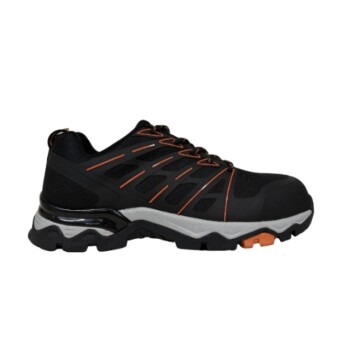
At its core, a work boot is a piece of engineered personal protective equipment. It protects feet from common construction hazards by creating a system of physical barriers against impact, puncture, electricity, and slips, using specialized materials and purpose-driven designs.
A work boot is far more than just a reinforced shoe. It is a critical safety system where each component—from the safety toe and sole plate to the outsole material—is designed to mitigate a specific, predictable worksite hazard. Understanding these features is key to ensuring your safety.
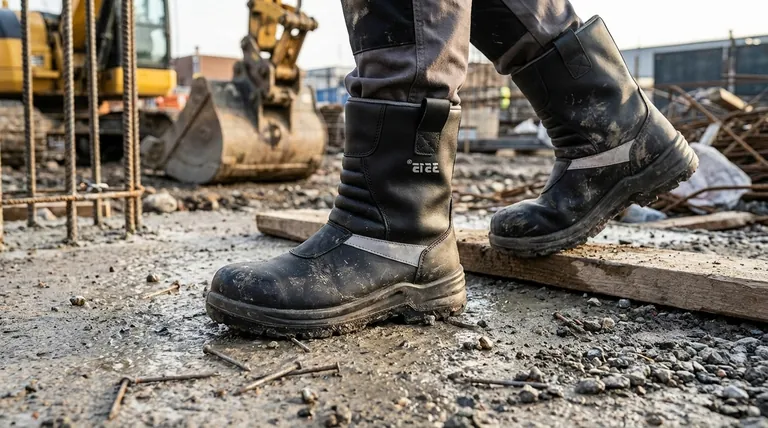
A System of Defense: Deconstructing the Work Boot
A high-quality work boot functions as an integrated system. Each part is designed to counter a distinct threat common on construction sites, from heavy machinery to unseen sharp objects.
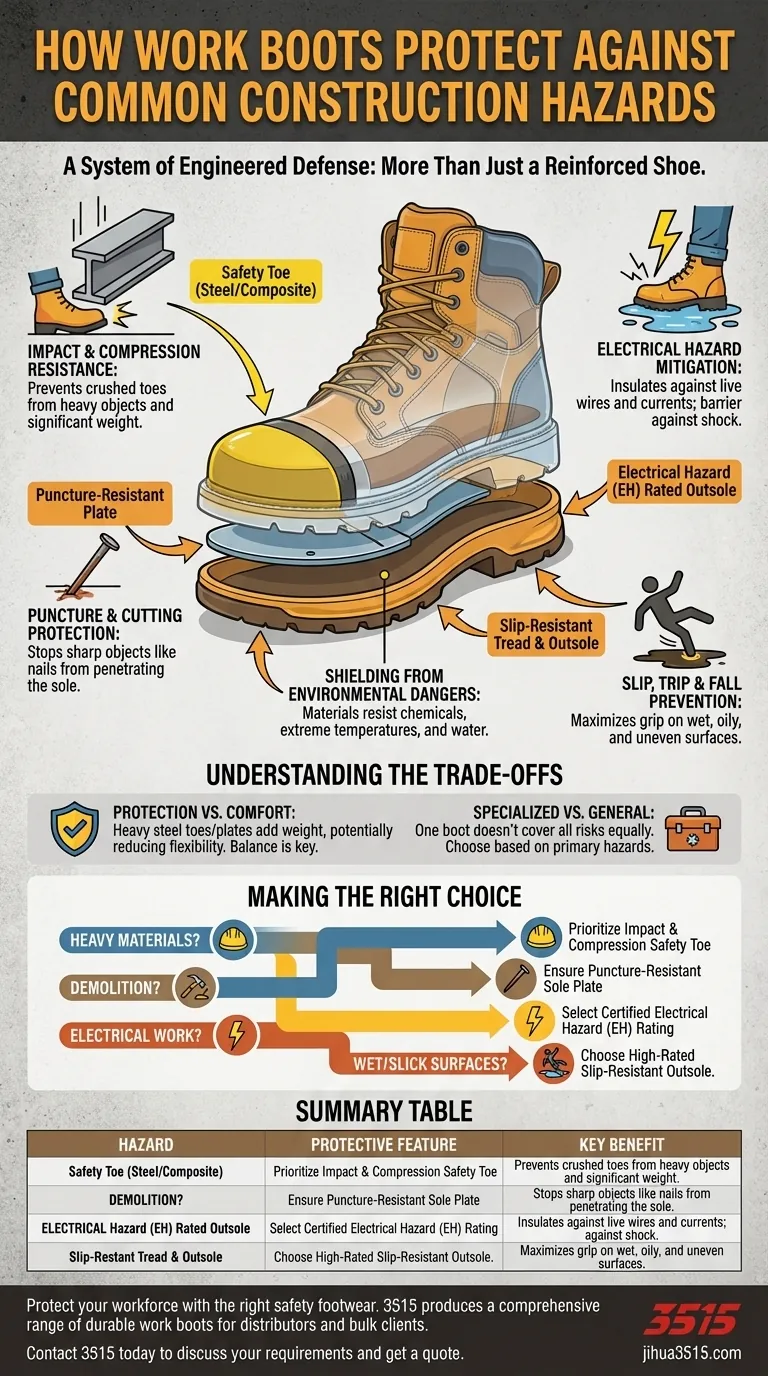
Impact and Compression Resistance
The most recognized feature of a safety boot is its reinforced toe. This is the primary defense against falling objects and the immense pressure from heavy equipment.
These safety toes, typically made of steel or lighter composite materials, are engineered to prevent your toes from being crushed by significant weight or impact.
Puncture and Cutting Protection
Construction sites are littered with sharp hazards like nails, screws, and discarded waste. Many boots incorporate puncture-resistant plates into the sole.
These plates, often made of steel or flexible composite fabrics, prevent sharp objects from penetrating the bottom of the boot and injuring your foot. Some boots also offer materials resistant to cuts from tools like chainsaws.
Electrical Hazard Mitigation
Contact with live wires or malfunctioning equipment is a severe risk. Work boots rated for Electrical Hazard (EH) protection are a critical line of defense.
They are built with non-conductive materials and heavily insulated outsoles that act as a barrier, stopping electrical currents from passing through your body to the ground.
Slip, Trip, and Fall Prevention
Slips and falls are among the most common jobsite injuries. Safety boots address this with specially designed slip-resistant outsoles.
These soles use specific rubber compounds and tread patterns to maximize grip on wet, oily, or uneven surfaces. Additionally, boot styles like pull-on boots eliminate laces, which can become an entanglement or tripping hazard around machinery.
Shielding from Environmental Dangers
Work boots also protect you from the surrounding environment. This includes resistance to water, corrosive chemicals, and extreme temperatures.
Materials are selected to shield your feet from contact with acids or hot surfaces, while proper construction provides insulation against both summer heat and winter cold.
Understanding the Trade-offs and Common Pitfalls
Selecting the right boot requires balancing protection with practical needs. The most protective boot is not always the best choice for every task.
Protection vs. Comfort
There is often a direct trade-off between the level of protection and all-day comfort. Heavy-duty steel toes and thick, puncture-proof soles add weight and can reduce flexibility, leading to fatigue.
Specialized vs. General-Purpose
A boot with a top-tier Electrical Hazard rating may not have the most aggressive tread for preventing slips. A boot designed for welders will have different features than one for concrete workers.
It is a common mistake to assume one high-end boot covers all risks equally. You must identify the primary hazards of your specific role.
The Myth of the "Indestructible" Boot
No work boot is invincible. They are designed to sacrifice themselves to protect you from an incident. After a significant impact or exposure, the boot's protective capabilities may be compromised and it should be replaced.
Making the Right Choice for Your Goal
Assess the most common risks you face daily to determine which protective features are non-negotiable for your work.
- If your primary focus is working around heavy materials or machinery: Prioritize a boot with a certified impact and compression safety toe.
- If your primary focus is demolition or renovation: Ensure your boot has a puncture-resistant sole plate to protect against nails and debris.
- If your primary focus is electrical work: You must select a boot with a certified Electrical Hazard (EH) rating.
- If your primary focus is navigating wet, oily, or slick surfaces: Choose a boot specifically for its high-rated, slip-resistant outsole.
Ultimately, choosing the right work boot is an active safety decision, not just a gear requirement.
Summary Table:
| Hazard | Protective Feature | Key Benefit |
|---|---|---|
| Impact/Compression | Safety Toe (Steel/Composite) | Prevents crushed toes from heavy objects |
| Puncture/Cutting | Puncture-Resistant Plate | Stops nails and sharp debris from penetrating the sole |
| Electrical Shock | Electrical Hazard (EH) Rating | Insulates against live wires and electrical currents |
| Slips & Falls | Slip-Resistant Outsole | Provides superior grip on wet, oily, and uneven surfaces |
Protect your workforce with the right safety footwear. As a large-scale manufacturer, 3515 produces a comprehensive range of durable work boots and shoes for distributors, brand owners, and bulk clients. Our production capabilities encompass all types of safety footwear, ensuring you get the precise protection, comfort, and durability your team needs. Contact 3515 today to discuss your requirements and get a quote.
Visual Guide
Related Products
- Premium Suede Sport Safety Shoes for Wholesale & Bulk Orders
- Premium Lightweight Safety Shoes for Wholesale & Bulk Orders
- Wholesale Anti-Smash & Puncture-Proof Safety Shoes Custom Manufacturing for Brands
- Premium KPU Injection Athletic Style Safety Shoes
- Premium Safety Shoes with Rotating Buckle Safety Sneakers
People Also Ask
- What industries have specific OSHA footwear requirements? Ensure Compliance & Protect Your Workforce
- What are the primary functions of professional safety shoes? Maximize Safety in Water Supply Confined Spaces
- What role do specialized safety shoes play in preventing falls? Engineering Stability in Industrial Environments
- How do the 3R principles influence green footwear design? Master Sustainable Safety Shoe Manufacturing
- What are the main components of safety shoes? A Guide to Protective Footwear Design