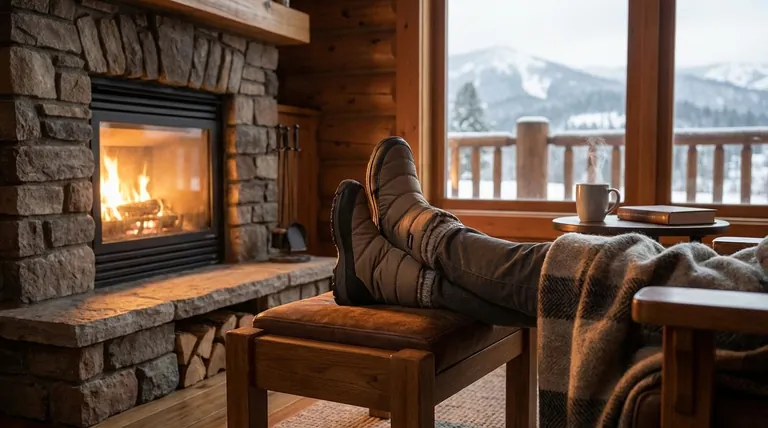
In short, insulated booties are designed almost exclusively for indoor use. They function as exceptionally warm slippers, perfect for keeping your feet comfortable in cold houses, cabins, or even inside a tent after a long day.
The core purpose of an insulated bootie is to provide maximum warmth and comfort in a dry, indoor environment. While some have durable soles, their uppers lack water resistance, making them unsuitable for outdoor winter conditions.
The Primary Role of Insulated Booties
Insulated booties are best understood as a piece of specialized comfort gear, not a type of outdoor footwear. Their design prioritizes warmth and low weight over durability and weather protection.
Unmatched Indoor Warmth
The primary benefit comes from their construction. Materials like sheepskin, down, or synthetic fills are exceptional at trapping air, which creates a powerful barrier against the cold and keeps your feet warm.
Post-Activity Comfort
They are an excellent choice for recovery after outdoor activities. Slipping into a pair of warm booties after taking off rigid ski boots or cold, damp hiking boots provides immediate relief and comfort.
Lightweight and Packable
Many insulated booties are lightweight and compressible, making them easy to pack for travel, camping, or ski trips. They provide a comfortable "at-rest" footwear option without adding significant weight to your luggage.
The Critical Limitation: Outdoor Use
The most common point of confusion is whether these booties can be worn outside. The answer is almost always no, for one critical reason.
The Problem with Moisture
The soft, fabric uppers of insulated booties are not water-resistant. Contact with snow, slush, or even heavy dew will allow moisture to seep through, soaking the insulation.
Once the insulation is wet, it loses its ability to trap heat, leaving your feet damp and cold. This completely negates the bootie's primary function.
What About the Rubber Soles?
Many booties feature a rubber outsole, which can suggest outdoor capability. However, this sole is primarily for durability and traction indoors on surfaces like hardwood or tile.
It allows for brief, dry trips outside—like stepping out to your car or grabbing the mail—but it does not make the bootie waterproof or suitable for walking in the elements.
Making the Right Choice for Your Goal
To decide if insulated booties are right for you, consider your primary need.
- If your primary focus is maximum indoor warmth and comfort: An insulated bootie is an excellent investment for cold floors, drafty homes, or relaxing in a ski lodge.
- If you need footwear for walking outdoors in winter: You must choose a dedicated, waterproof, and insulated winter boot that is designed to handle snow and moisture.
Ultimately, think of an insulated bootie as the "puffy jacket" for your feet—perfect for staying warm when you're at rest, but not the right tool for facing the storm.
Summary Table:
| Best Use Case | Key Benefit | Primary Limitation |
|---|---|---|
| Indoor Warmth | Superior heat retention from sheepskin, down, or synthetic fills | Not water-resistant; uppers absorb moisture |
| Post-Activity Recovery | Immediate comfort after skiing, hiking, or cold exposure | Unsuitable for walking in snow, slush, or wet conditions |
| Travel & Camping | Lightweight, packable for cabins, tents, or lodges | Rubber soles are for indoor traction only, not outdoor elements |
Need Reliable Footwear for Your Customers?
As a large-scale manufacturer, 3515 produces a comprehensive range of insulated and outdoor footwear for distributors, brand owners, and bulk clients. Whether you need cozy indoor booties or durable winter boots, we have the production capabilities to meet your demand.
Contact us today to discuss your footwear needs and get a customized solution!
Visual Guide

Related Products
- Premium Insulated Safety Boots and Shoes for Wholesale & Bulk Orders
- High Performance Fire-Retardant Waterproof Safety Boots
- Premium Wholesale Waterproof Safety Boots High Performance Protection for Industrial Markets
- Wholesale Waterproof Tactical Boots Custom Suede & High-Traction Soles
- Premium Waterproof High-Cut Industrial Safety Boots for Wholesale and Bulk Orders
People Also Ask
- What are the recommended insulation ratings for mild winter conditions? A Guide for Active & Stationary Workers
- How does insulation thickness correlate with temperature ranges? A Guide to Choosing the Right Warmth
- What insulation level is needed for severe cold and stationary work? 1200g or Higher is Essential
- What safety advantages do insulated boots offer beyond warmth? Dielectric Protection & Superior Grip
- How does fleece lining contribute to the warmth of insulated boots? Trapping Air for Superior Cold Protection