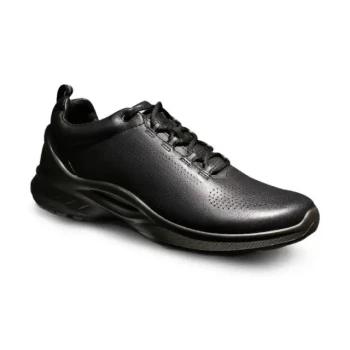
At their core, composite-toed shoes are a modern category of safety footwear designed to protect your feet from impact and compression. They achieve this protection using a toe cap made from a blend of strong, non-metallic materials like carbon fiber, Kevlar, fiberglass, or specialized plastics.
The central advantage of composite-toed shoes is their ability to deliver certified safety protection without the weight and conductivity of traditional steel, making them a superior choice for specific work environments and all-day comfort.
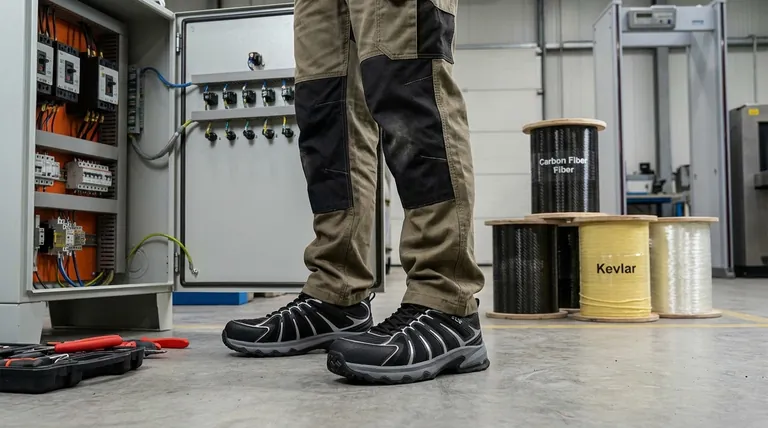
The Core Advantage: Protection Without Metal
The "composite" in the name refers to the combination of materials used in the protective toe cap. This approach moves away from the single-material design of steel or aluminum toes.
Key Materials Used
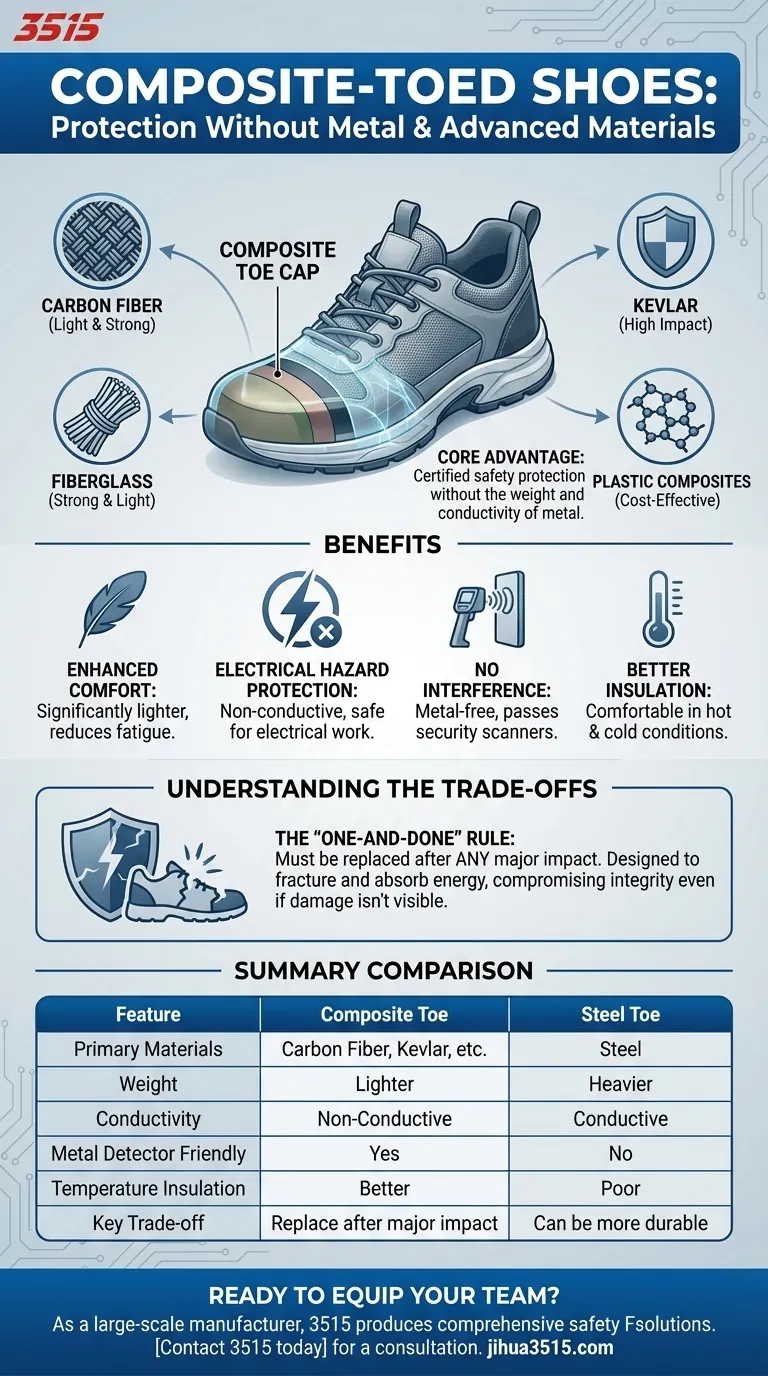
- Carbon Fiber: This material is known for its exceptional strength-to-weight ratio. It offers robust protection in an extremely lightweight and thin profile.
- Kevlar: A high-strength synthetic fiber famous for its use in ballistic vests, Kevlar provides excellent impact resistance and durability.
- Fiberglass: By weaving fine strands of glass into a resin matrix, manufacturers create a strong yet lightweight protective cap.
- Plastic Composites: Advanced plastics are often blended with other reinforcing materials to create a cost-effective and reliable safety toe.
Why Are These Materials Chosen?
The goal is to create a toe cap that meets or exceeds the safety standards set by organizations like ASTM International. These non-metallic materials can be engineered to absorb and distribute the force from a heavy impact or crushing load, preventing injury to the toes.
Key Benefits of Going Metal-Free
Choosing composite-toed footwear offers distinct advantages that are critical in certain occupations and environments.
Enhanced All-Day Comfort
Because composite materials are significantly lighter than steel, they reduce the overall weight of the shoe. This seemingly small difference minimizes foot fatigue over a long workday, improving comfort and reducing strain.
Superior Electrical Hazard Protection
Perhaps the most critical benefit is that these materials are non-conductive. They do not conduct electricity, making them an essential piece of personal protective equipment (PPE) for electricians and anyone working near live circuits or potential electrical hazards.
No Interference with Metal Detectors
For professionals in aviation, law enforcement, or high-security facilities, passing through metal detectors is a daily routine. Composite toes are metal-free, eliminating the hassle and time lost from setting off security scanners.
Better Temperature Insulation
Unlike steel, which readily conducts heat and cold, composite materials provide better insulation. This makes the footwear more comfortable in extremely hot or cold working conditions, keeping your feet warmer in the winter and cooler in the summer.
Understanding the Trade-offs
While highly effective, composite-toed shoes are not universally superior to steel toes. The choice depends entirely on your specific work environment and risk profile.
Impact Resistance After Damage
The primary trade-off involves performance after a major impact. If a steel toe cap is hit with extreme force, it may bend but can often retain some protective structure. A composite toe, however, is designed to fracture or break apart upon a catastrophic impact to absorb the energy.
The "One-and-Done" Rule
Because of this design, a composite-toed shoe must be replaced immediately after experiencing a significant impact. Even if the damage isn't visible, its structural integrity may be compromised, rendering it unsafe for future use.
Bulkier Profile
To achieve the same level of impact resistance as steel, a composite toe cap often needs to be slightly thicker or bulkier. While modern designs have minimized this difference, it can sometimes result in a slightly larger toe box area compared to a steel-toed equivalent.
Making the Right Choice for Your Goal
Selecting the right safety shoe is a critical decision based on your daily tasks and potential hazards.
- If your primary focus is working with electricity or passing through metal detectors: Composite-toed shoes are the definitive choice due to their non-conductive and non-metallic properties.
- If your primary focus is all-day comfort and reducing fatigue: The lighter weight of composite-toed footwear makes it the superior option for long shifts on your feet.
- If your primary focus is maximum protection in an environment with frequent, heavy drop risks: While composite is fully certified, some professionals in heavy industrial settings may still prefer the known durability of steel.
Ultimately, understanding the material science behind your safety gear empowers you to choose the right tool for the job.
Summary Table:
| Feature | Composite Toe | Steel Toe |
|---|---|---|
| Primary Materials | Carbon Fiber, Kevlar, Fiberglass, Plastics | Steel |
| Weight | Lighter | Heavier |
| Conductivity | Non-Conductive (Electrical Hazard Rated) | Conductive |
| Metal Detector Friendly | Yes | No |
| Temperature Insulation | Better | Poor |
| Key Trade-off | Must be replaced after a major impact | Can be more durable after an impact |
Ready to equip your team with superior safety footwear?
As a large-scale manufacturer, 3515 produces a comprehensive range of composite-toed and other safety shoes for distributors, brand owners, and bulk clients. Our production capabilities encompass all types of shoes and boots, ensuring you get the perfect combination of certified protection, comfort, and durability for your specific work environment.
Contact 3515 today for a consultation and discover how our footwear solutions can enhance safety and productivity.
Visual Guide
Related Products
- Safety Footwear Wholesale Manufacturer for Custom OEM/ODM Production
- Wholesale Durable Safety Boots Manufacturer Customizable Steel Toe Work Boots
- Wholesale Mesh Steel Toe Safety Shoes with Dial Closure Factory Production
- Durable Leather Moc Toe Work Boots for Wholesale & Custom Manufacturing
- Advanced KPU Athletic Safety Shoe with Steel Toe Cap Anti-Slip Rotary Lacing System
People Also Ask
- What are the key OSHA regulations for safety footwear? Ensure Compliance & Protect Your Workforce
- Why is high-load mechanical testing equipment necessary for safety footwear? Ensure Life-Saving Compression Resistance
- What does a red rectangle with a white C letter on safety footwear mean? Essential Guide to Conductive Footwear
- What is the difference between oil resistance and slip resistance in footwear? Protect Your Boots and Your Safety
- What are the basic requirements of the ASTM F2413-05 standard? Mandatory Impact & Compression Protection