
Selecting the right boots is a critical decision that hinges on a methodical assessment of your specific needs. The most effective advice involves defining your environment, matching boot features to those conditions, prioritizing a proper fit, and investing in quality construction to ensure comfort, safety, and durability.
The process of choosing the right boot is not about finding a single "best" product, but about conducting a personal needs assessment. The ideal boot is one whose features directly solve the challenges posed by your specific environment and activity.
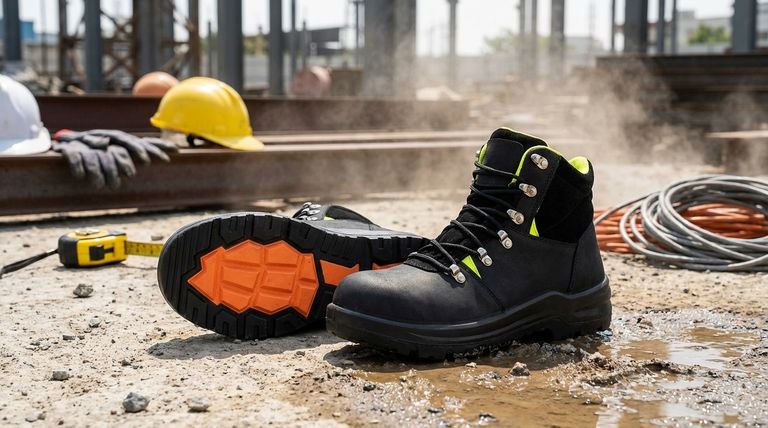
Step 1: Define Your Operational Environment
Before looking at any specific boot, you must first analyze the conditions where you will be wearing it. This context dictates everything that follows.
Assess Potential Hazards
For work environments, identifying specific dangers is the top priority. This includes the risk of heavy impacts, punctures from below, or exposure to high-voltage electrical currents.
Analyze Terrain and Surfaces
Consider the ground you will be covering. Will you be on slick, oily floors requiring maximum slip resistance, or uneven, rugged trails where ankle support is critical for preventing injury, especially when carrying heavy loads?
Consider Climate and Weather
Your environment's climate determines the need for specialized features. Operations in wet, cold, or snowy conditions demand effective waterproofing and insulation to prevent discomfort and foot injuries.
Step 2: Deconstruct Key Boot Features
Once you understand your environment, you can evaluate boots based on the features that directly address your needs.
Protective Elements
Safety toe caps are the first line of defense against impact. Steel toes offer maximum protection, while aluminum is lighter, and composite toes provide good protection without conducting heat, cold, or electricity.
Performance and Durability
The boot's outsole determines its grip. Look for tread patterns and materials designed for your specific surfaces to ensure reliable traction. The upper materials, like full-grain leather or durable leather/Cordura mixes, dictate the boot's long-term resilience.
Comfort and Ergonomics
Comfort is not a luxury; it is a critical performance feature. A proper fit is non-negotiable. Key ergonomic features include internal cushioning, proper arch support, and an appropriate boot height to provide the right balance of support and flexibility for your activity.
Understanding the Trade-offs
No single boot is perfect for every situation. Being aware of the inherent compromises is key to making an intelligent choice.
Protection vs. Weight
Heavy-duty protective features, especially steel toes, add significant weight. While essential for hazardous environments, this extra weight can lead to fatigue over a long day. Lighter composite materials are an alternative but may be bulkier.
Waterproofing vs. Breathability
A fully waterproof membrane is excellent at keeping water out, but it can also trap sweat and moisture inside. For hot climates or high-exertion activities, a more breathable, non-waterproof boot might provide more overall comfort.
Durability vs. Flexibility
The stiffest, most durable boots offer incredible ankle support for carrying heavy packs on rough terrain. However, that same rigidity makes them less comfortable and agile for faster-paced activities on level ground.
Making the Right Choice for Your Goal
Your primary objective should guide your final decision. Use your environmental analysis to filter your options.
- If your primary focus is maximum safety in a work environment: Prioritize certified toe caps, electrical hazard protection, and a sole with proven slip resistance.
- If your primary focus is performance in varied outdoor conditions: Prioritize a combination of waterproofing, appropriate insulation for the season, and ankle support suited to the terrain.
- If your primary focus is long-term comfort for daily wear: Prioritize a precise fit, excellent cushioning and arch support, and materials that offer a good balance of durability and flexibility.
A methodical approach ensures your boots become a trusted and reliable tool for the task at hand.
Summary Table:
| Selection Criteria | Key Considerations |
|---|---|
| Operational Environment | Hazards (impact, puncture), Terrain (slip resistance, support), Climate (waterproofing, insulation) |
| Key Boot Features | Toe Caps (steel, composite), Outsole (traction), Upper Material (leather), Ergonomics (fit, cushioning) |
| Primary Goal | Maximum Safety (certified toes), Outdoor Performance (waterproofing), Daily Comfort (fit & support) |
Need a reliable supplier for your next boot order?
As a large-scale manufacturer, 3515 produces a comprehensive range of footwear for distributors, brand owners, and bulk clients. Our production capabilities encompass all types of shoes and boots, ensuring you get the perfect combination of safety, durability, and comfort for your market.
Contact us today to discuss your specific requirements and get a quote!
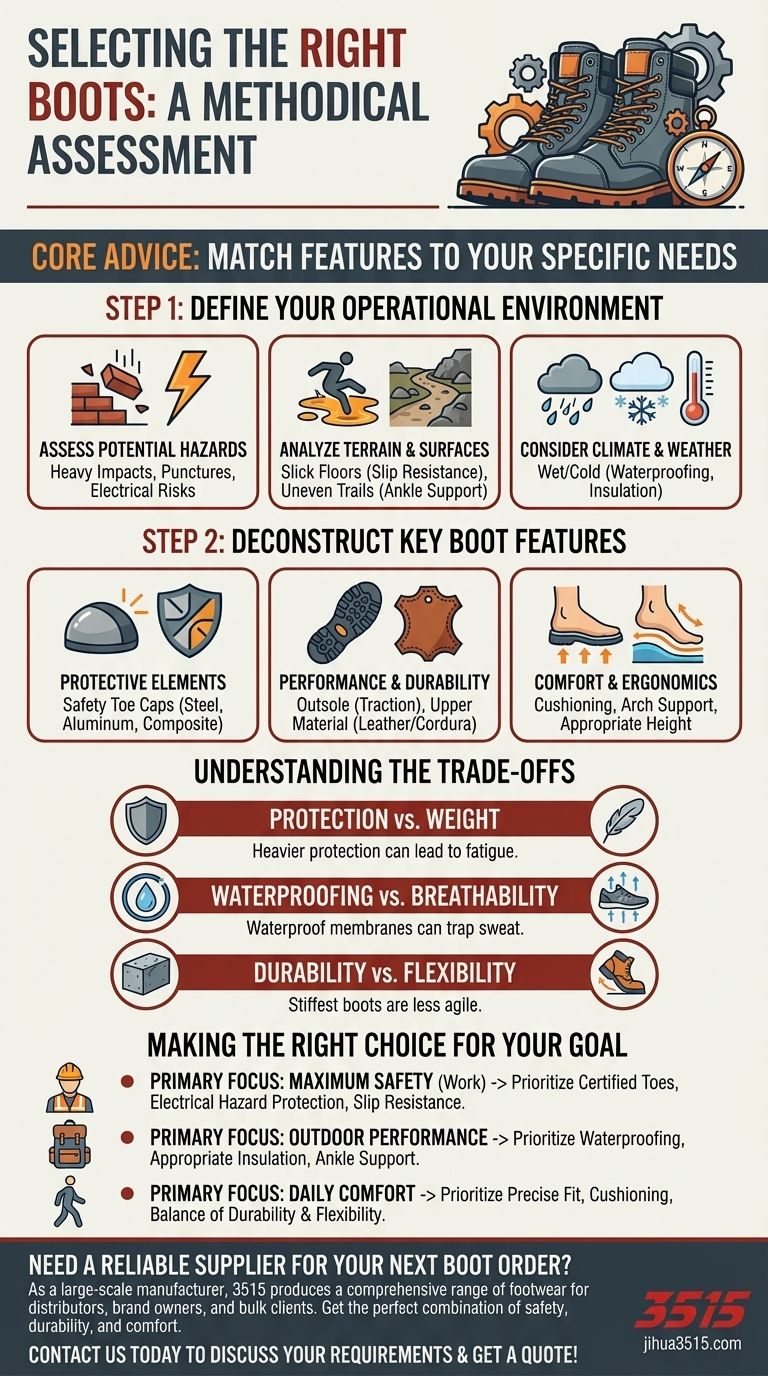
Visual Guide
Related Products
- Wholesale Durable Safety Boots | Custom Steel Toe & Puncture-Resistant Manufacturing
- Premium Wholesale Tactical Style Safety Shoes Boots with Quick Lacing
- Durable Goodyear Welt Leather Work Boots for Wholesale & Private Label
- Durable Leather Work Boots for Wholesale & Custom Manufacturing
- Premium Wholesale Waterproof Safety Boots High Performance Protection for Industrial Markets
People Also Ask
- How should safety boots be cleaned to avoid damage? A Gentle Guide to Preserve Your Boots
- Why is proper storage important for safety boots? Preserve Protection and Extend Lifespan
- What are the consequences of not wearing safety boots? Protect Your Finances and Career
- What are the key features of safety boots? Essential Protection for Hazardous Workplaces
- What materials are commonly used for outsoles in safety boots? A Guide to Durability, Grip, and Comfort



















