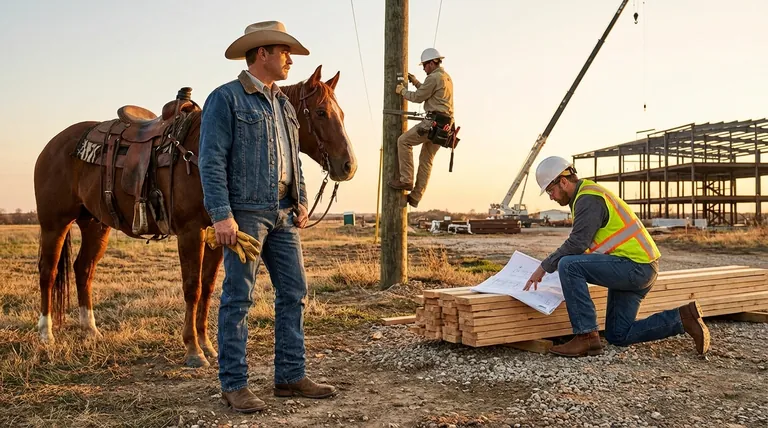
At its core, a western work boot is a specialized tool designed for durability and protection in demanding environments. Professions that commonly use them range from traditional roles like ranchers, farmers, and equestrians to modern trades such as construction workers, electricians, and even some firefighters, who all benefit from their unique blend of ruggedness, comfort, and slip-on convenience.
The modern western work boot has evolved far beyond its agricultural roots. While its design is ideal for ranching and riding, the integration of certified safety features has made it a viable and popular choice for a wide array of industrial and skilled trade professions.
The Anatomy of a Western Work Boot
The term "western work boot" signifies a specific set of features engineered for performance, not just appearance. Understanding these components clarifies why it's a staple in certain fields.
More Than Just a Style
A true work boot in this style is fundamentally different from a purely fashion-oriented "cowboy boot." It prioritizes durable construction, protective elements, and long-term comfort over aesthetics alone.
Built for Durability and Function
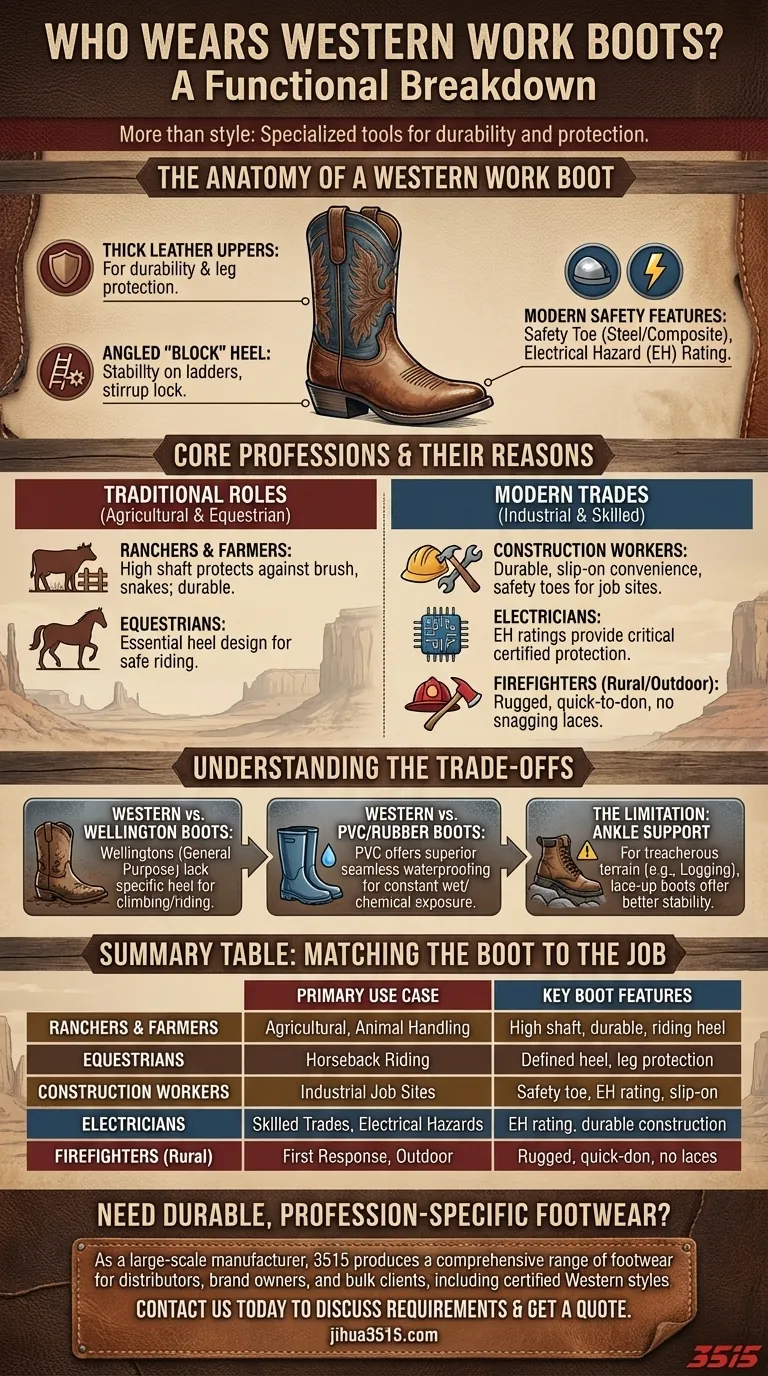
Western work boots are defined by their use of thick, resilient leather uppers. They feature a distinct angled heel (often called a "block" or "walking" heel) designed to lock into stirrups or securely catch on ladder rungs, providing critical stability.
The Role of Modern Safety Features
To meet the demands of industrial job sites, many western work boots now incorporate safety toes (steel or composite) and Electrical Hazard (EH) ratings. This evolution is what allows them to be used by electricians and construction workers who require certified protection.
Core Professions and Their Reasons
Different industries leverage the specific advantages that the western boot design offers. The choice is always functional.
Traditional Agricultural & Equestrian Roles
Ranchers, farmers, and horse riders were the original users. The high leather shaft protects the leg from brush, fences, and snakebites, while the heel design is essential for safe and effective horse riding.
Modern Industrial & Trade Professions
Construction workers and skilled tradespeople value the boot's durability and slip-on design for convenience. The sturdy platform provides all-day support, and versions with safety features meet job site compliance requirements.
First Responders and Outdoor Workers
Some firefighters, particularly in rural areas, and other outdoor professionals choose them for their ruggedness and quick-to-don nature. The lack of laces prevents snagging on equipment or undergrowth.
Understanding the Trade-offs: Western vs. Other Slip-on Boots
The western work boot is not a universal solution. Its effectiveness depends on the environment, and it's crucial to distinguish it from other slip-on styles.
Western vs. Wellington Boots
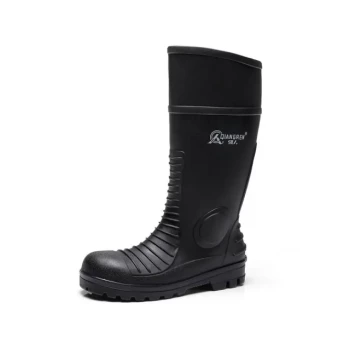
Wellington boots (or "Wellies") typically feature a rounder toe and a lower, less-defined heel. They are excellent for general-purpose work in mud or wet conditions, such as landscaping or farm chores, but lack the specific heel design optimized for riding or climbing.
Western vs. PVC/Rubber Boots
PVC and rubber boots offer superior, seamless waterproofing for environments with constant water or chemical exposure. They are essential in food processing, fishing, and on oil rigs, but they do not provide the breathability or long-term molded comfort of a quality leather boot.
The Inherent Limitation of a Slip-on
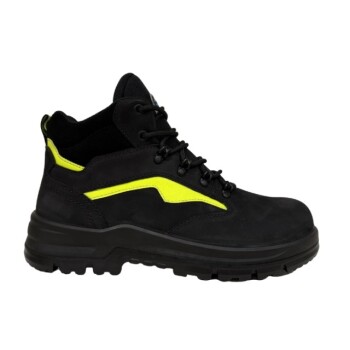
The primary trade-off for any slip-on boot is ankle support. For professions that involve navigating highly uneven or steep terrain, such as logging or certain military operations, a traditional lace-up boot provides superior stability and is often the safer choice.
Making the Right Choice for Your Goal
Selecting the right boot requires matching its features to your primary work environment.
- If your primary focus is agricultural work or riding: A classic leather western work boot offers the ideal heel design and durable protection.
- If your primary focus is construction or a skilled trade: Seek a western work boot with a certified safety toe and an Electrical Hazard (EH) rating.
- If your primary focus is constant exposure to water or chemicals: A seamless PVC or rubber Wellington boot is the more appropriate and protective tool.
- If your primary focus is maximum ankle support on treacherous terrain: A traditional lace-up work boot is the superior and safer option.
Ultimately, the right boot is the one that provides the specific protection your daily tasks demand.
Summary Table:
| Profession | Primary Use Case | Key Boot Features |
|---|---|---|
| Ranchers & Farmers | Agricultural work, animal handling | High shaft, durable leather, riding heel |
| Equestrians | Horseback riding | Defined heel for stirrups, leg protection |
| Construction Workers | Industrial job sites | Safety toe, EH rating, slip-on convenience |
| Electricians | Skilled trades with electrical hazards | EH rating, durable construction |
| Firefighters (Rural) | First response, outdoor emergencies | Ruggedness, quick-don design, no snagging laces |
Need Durable, Profession-Specific Footwear for Your Team?
As a large-scale manufacturer, 3515 produces a comprehensive range of footwear for distributors, brand owners, and bulk clients. Our production capabilities encompass all types of safety and work boots, including western styles with certified safety features.
We can provide the durable, protective footwear your workforce needs.
Contact us today to discuss your requirements and get a quote.
Visual Guide
Related Products
- Durable Leather Work Boots for Wholesale & Custom Manufacturing
- Durable Goodyear Welt Leather Work Boots for Wholesale & Private Label
- Durable Leather Work Boots for Wholesale & Custom OEM Manufacturing
- Durable Leather Work Boots Wholesale Manufacturer & Custom Factory
- Wholesale Leather Work Boots with Customizable Wedge Sole for Brands
People Also Ask
- What is the difference between full-grain and top-grain leather? Premium Material Guide for Boot Manufacturers
- What are the common workplace hazards that can be mitigated with the right work boots? Protect Your Workforce
- What are the common foot issues workers face due to uncomfortable work boots? Prevent Pain & Deformities
- What are the advantages of leather versus synthetic work boots? A Guide to Choosing the Right Material
- What are the key components of modern work boots? Engineered for Ultimate Durability and Comfort