
At their core, engineer boots are a classic American style of laceless work boot. They are defined by their heavy-duty, full-grain leather construction, a tall, unstructured "stovepipe" shaft, and a signature system of adjustable buckles at the ankle and top of the shaft instead of laces.
Engineer boots represent a masterclass in functional design, where every feature—from the laceless front to the rugged buckles—was originally engineered for the protection and durability required by motorcyclists and industrial workers.
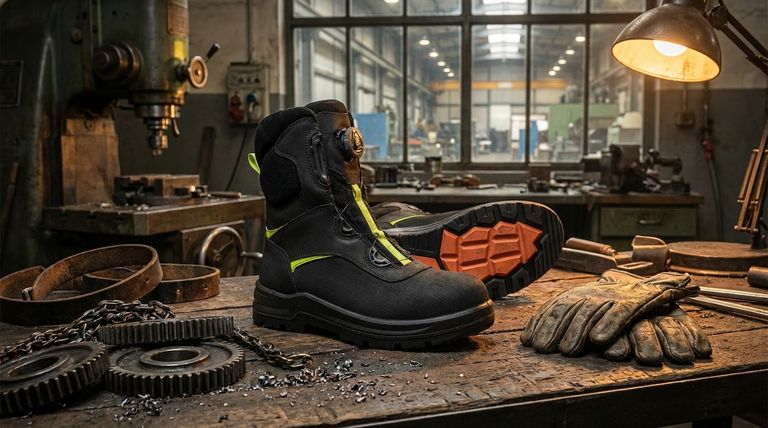
The Anatomy of an Engineer Boot
Understanding the key components of an engineer boot reveals the purpose behind its iconic design. Each element contributes to its unique blend of durability and timeless style.
The Laceless, Stovepipe Shaft
The most striking feature is the tall, laceless shaft, which can range from 7 to 17 inches. This "stovepipe" design was intentional.
Without laces, there is nothing to snag on machinery or a motorcycle's moving parts, making them safer in hazardous environments. The tall shaft provides crucial protection for the leg.
The Signature Buckle System
In place of laces, engineer boots use a system of leather straps and metal buckles for fit adjustment.
Typically, one strap is positioned across the instep (or ankle) to secure the foot, while a second buckle is located at the top of the shaft to cinch it closer to the leg.
Rugged Materials and Construction
Engineer boots are built to last from the ground up, using only the most durable materials.
They are almost always crafted from full-grain leather, which is often oiled for added flexibility and weather resistance. Quality boots feature a Goodyear welt or stitch-down construction, a traditional method that makes them exceptionally durable and allows the soles to be replaced multiple times.
The Distinctive Toe and Heel
The classic engineer boot features a plain, rounded toe, providing ample room without unnecessary seams. The heel counter is a separate piece of reinforced leather that cradles the back of the foot.
While the plain toe is traditional, variations with steel-reinforced safety toes exist for heavy-duty work environments.
Understanding the Trade-offs
While exceptionally durable, the unique design of engineer boots comes with specific considerations that set them apart from other footwear.
Adjustability vs. Precision Fit
The buckle system is robust and snag-free, but it offers less fine-tuned adjustment compared to a boot with laces and multiple eyelets. The fit is more general and relies on the leather molding to your foot over time.
The Break-in Period
The use of thick, full-grain leather and rugged construction methods means that engineer boots often have a significant break-in period. They can feel stiff at first but will eventually conform perfectly to the shape of your foot.
Inherent Weight and Bulk
These are not lightweight boots. Their heavy-duty nature, thick soles, and leather construction result in a substantial, chunky profile. This provides excellent protection but may not be suitable for activities requiring agility or all-day walking on hard surfaces until they are fully broken in.
Making the Right Choice for Your Goal
Selecting the right engineer boot depends entirely on your intended use, whether for protection, style, or long-term value.
- If your primary focus is motorcycle protection: Prioritize a tall shaft, oil-resistant soles, and a sturdy Goodyear welt construction for maximum durability.
- If your primary focus is timeless style: Concentrate on the quality and finish of the full-grain leather and a classic silhouette that suits your personal aesthetic.
- If your primary focus is long-term value: Insist on a resoleable construction like a Goodyear welt, as this is the single most important feature for a boot that can last decades.
Ultimately, choosing an engineer boot is an investment in a piece of functional history designed to protect you and endure for years to come.
Summary Table:
| Characteristic | Description | Key Benefit |
|---|---|---|
| Laceless Shaft | Tall, smooth 'stovepipe' design (7-17 inches) | Prevents snagging, provides leg protection |
| Buckle System | Adjustable leather straps at ankle and shaft top | Secure fit without laces |
| Rugged Construction | Full-grain leather, often Goodyear welted | Exceptional durability and resoleability |
| Classic Profile | Plain rounded toe, reinforced heel counter | Timeless style, functional design |
| Considerations | Less precise fit, significant break-in period, inherent weight | Built for long-term durability, not immediate comfort |
Ready to Invest in High-Quality Engineer Boots?
As a large-scale manufacturer, 3515 produces a comprehensive range of durable footwear for distributors, brand owners, and bulk clients. Our production capabilities encompass all types of work and lifestyle boots, including the classic engineer boot. We ensure superior craftsmanship, durable materials like full-grain leather, and construction methods like Goodyear welts for long-lasting performance.
Let us help you source or create the perfect boot for your customers. Contact our team today to discuss your specific needs and get a quote.
Visual Guide

Related Products
- Durable Leather Work Boots Wholesale Manufacturer & Custom Factory
- Durable Leather Work Boots for Wholesale & Custom OEM Manufacturing
- Durable Leather Work Boots for Wholesale & Custom Manufacturing
- Premium Waterproof High-Cut Industrial Safety Boots for Wholesale and Bulk Orders
- Wholesale Customizable Safety Boots Durable & Protective Footwear Manufacturing
People Also Ask
- What are the common workplace hazards that can be mitigated with the right work boots? Protect Your Workforce
- How can you ensure consistent comfort in work boots? Focus on Fit, Materials & Ergonomics
- How do PVC, neoprene, and rubber work boots compare in weight? Choose the Right Boot for All-Day Comfort
- What are the main differences between 6 inch and 8 inch boots? Support vs. Mobility Explained
- What options are available for restoring worn-out work boots? Expert Strategies for Longevity


















