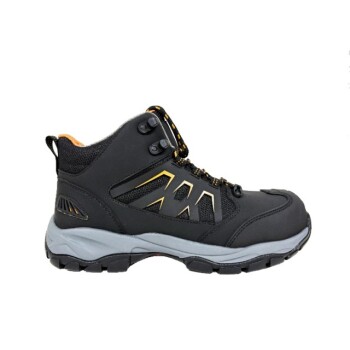
In short, soft-toe boots are most suitable for work environments where your feet are not at risk from falling objects or heavy compression. They are the standard choice for jobs in retail, light manufacturing, warehousing, and other indoor roles that require long hours of standing or walking but are free from significant impact hazards.
The decision to wear soft-toe boots is a deliberate choice to prioritize all-day comfort, flexibility, and reduced weight over protection from specific, high-impact workplace dangers. It's about matching the tool to the task, not compromising on necessary safety.

The Core Principle: Hazard Assessment
The fundamental question is not what job title you have, but what hazards you face daily. Soft-toe boots are appropriate when the answer to "Could something heavy fall on or crush my foot?" is a definitive no.
When Impact Risk is Low
The primary defining factor for choosing a soft-toe boot is the absence of impact and compression threats. This includes workplaces without heavy machinery, rolling equipment like forklifts, or the risk of falling tools and materials.
When Comfort and Agility are Paramount
Without a reinforced steel or composite cap, soft-toe boots are significantly lighter and more flexible. This translates directly to reduced fatigue and greater agility over a long shift, making them ideal for jobs that involve constant movement, walking, or climbing.
Durability Does Not Equal Protection
Many high-quality soft-toe boots are built with durable leather, thick rubber soles, and rugged construction. However, this durability is for withstanding wear and tear—not for protecting your toes from a critical impact.
Common Environments for Soft-Toe Boots
While a personal hazard assessment is key, several work environments consistently align with the strengths of a soft-toe boot.
Indoor and Light-Duty Roles
Jobs in sectors like retail, logistics (in areas without heavy machinery), light assembly, and general warehousing often benefit from soft-toe boots. They provide the necessary support and traction for concrete floors without the extra weight of a safety toe.
Specialized Boots for Specific Conditions
Even within the soft-toe category, designs are optimized for unique challenges. PVC boots are built for wet environments or work with chemicals, while Moc toe boots often feature thick, shock-absorbing soles ideal for long hours on hard factory floors.
Outdoor Work with Minimal Risk
Certain outdoor jobs, such as landscaping, site supervision, or general maintenance, may not present impact hazards. In these cases, a durable, weather-resistant soft-toe boot offers the right balance of comfort and ruggedness.
Understanding the Trade-offs
Choosing footwear is a critical safety decision. Understanding the limitations of a soft-toe boot is as important as knowing its benefits.
The Clear Limitation: No Impact Protection
This cannot be overstated. A soft-toe boot offers no meaningful protection from a falling object of significant weight or from being crushed by rolling equipment. The leather and other materials will not prevent a serious injury in these scenarios.
When a Safety Toe is Non-Negotiable
If your work environment includes any of the following, a soft-toe boot is the wrong choice:
- Heavy construction or demolition sites
- Operating or working near heavy machinery (forklifts, pallet jacks)
- Manufacturing or industrial zones with overhead hazards
- Handling heavy, bulky materials that could be dropped
A Common Point of Confusion
Some work boots are marketed for "construction" or "industrial" use due to their durable build. Always verify if the specific model has a certified safety toe if you work in a hazardous environment.
Making the Right Choice for Your Job
Your daily tasks and environment should be the ultimate guide for your footwear.
- If your primary focus is all-day comfort for standing or walking with no risk from falling objects: A lightweight soft-toe boot is your best choice for minimizing fatigue.
- If you work in wet, muddy, or chemical-exposed areas without impact hazards: A specialized soft-toe boot made from PVC or rubber is the correct tool.
- If your job involves any potential for impact or compression from tools, materials, or machinery: A certified safety-toe boot is the only acceptable and safe option.
Choosing the right boot begins with an honest assessment of your daily risks.
Summary Table:
| Feature | Soft-Toe Boots | Safety-Toe Boots |
|---|---|---|
| Primary Use | Light-duty, low-impact environments | High-risk, industrial environments |
| Key Benefit | Lightweight, flexible, all-day comfort | Certified protection from impact/compression |
| Ideal For | Retail, warehousing, light assembly | Construction, heavy machinery, manufacturing |
| Limitation | No protection from falling objects or crushing | Heavier and less flexible than soft-toe boots |
Find the Perfect Boot for Your Workforce
As a large-scale manufacturer, 3515 produces a comprehensive range of durable footwear for distributors, brand owners, and bulk clients. Whether your team needs comfortable soft-toe boots for retail or certified safety-toe boots for industrial sites, we have the production capabilities and expertise to meet your needs.
Let us help you equip your team with the right footwear for safety and comfort.
Contact us today for a quote to discuss your specific requirements.
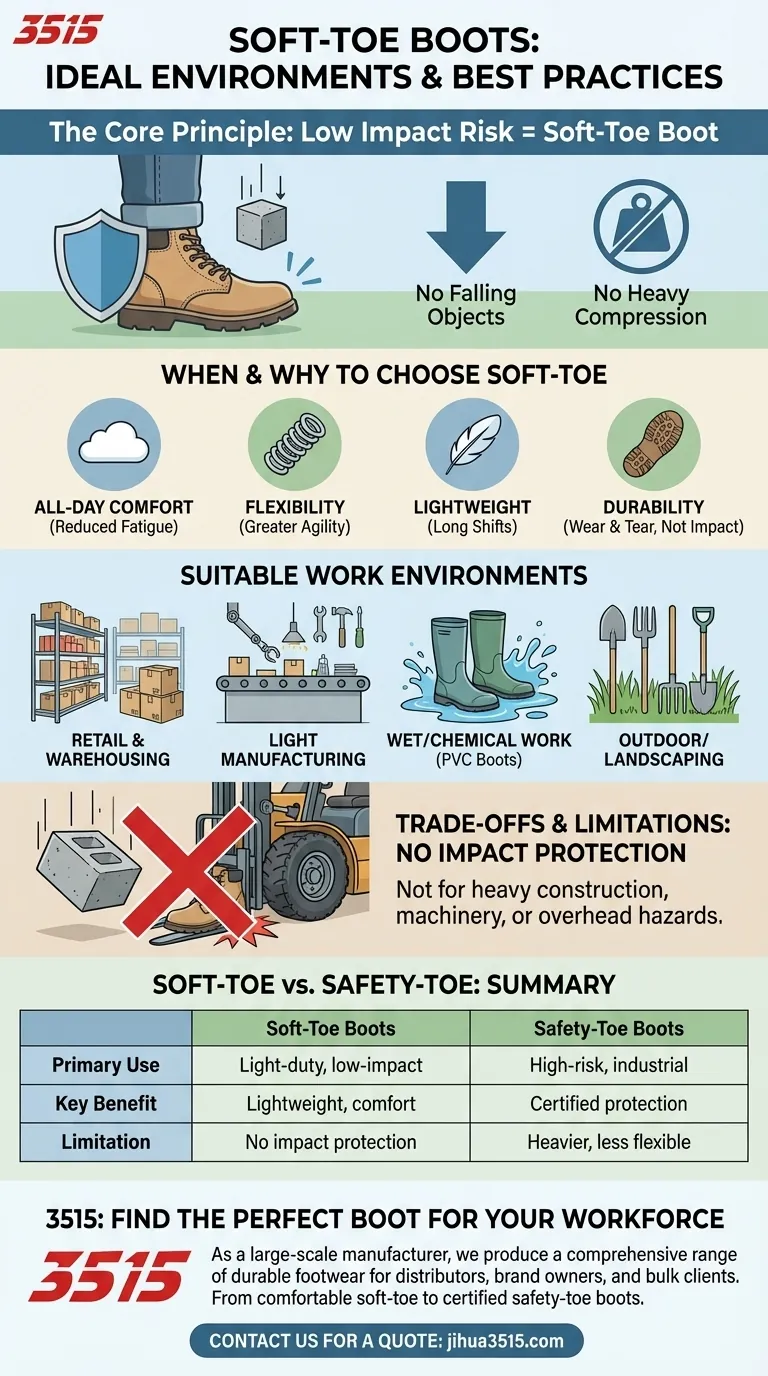
Visual Guide
Related Products
- Durable Leather Moc Toe Work Boots for Wholesale & Custom Manufacturing
- Wholesale Durable Safety Boots Manufacturer Customizable Steel Toe Work Boots
- Durable Leather Safety Boots for Wholesale & Custom OEM Manufacturing
- Puncture-Resistant Velcro Safety Boots for Wholesale & Custom Manufacturing
- Durable Goodyear Welt Leather Work Boots for Wholesale & Private Label
People Also Ask
- What are moc toe work boots designed for? Superior Comfort and Mobility for Tradespeople
- What are the key features to look for when purchasing moc toe boots? A Guide to Durability & Fit
- How did moc toe boots originate? A Legacy of Workwear Durability and Style
- What clothing items complement the Outdoorsman/Heritage Look with moc toe boots? Build a Timeless, Rugged Wardrobe
- What types of outfits can moc toe boots be worn with? Versatile Style Guide