
Optimal Western boot fit requires a precise balance between security and mobility. For performance riding, the boot must be snug across the instep and heel to provide critical stability, while remaining loose enough in the toe box to allow wiggle room. This ensures your foot stays secure in the stirrup without causing the discomfort or circulation issues that lead to fatigue.
A correct fit acts as an extension of your leg: the instep and arch must be firmly supported to lock the foot in place, while the toes remain free to move.
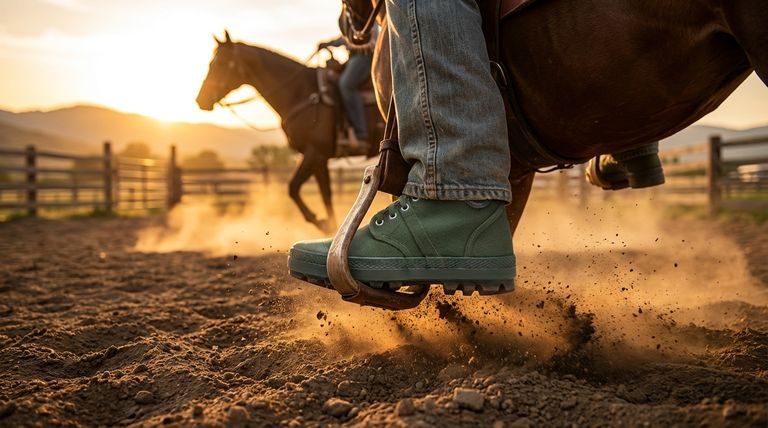
The Mechanics of a Performance Fit
The Importance of the Instep
The instep (the top of your foot) is the primary anchor point of a Western boot. This area must fit snugly to prevent the foot from sliding forward into the toe box during sudden maneuvers.
If the boot is too loose here, you lose the connection required for subtle cues. If it is too tight, you risk cutting off blood flow, leading to numbness.
Heel Stability
The heel cup should hug the back of your foot to maintain position. A snug heel is essential for safety, ensuring the boot does not fly off or shift unpredictably while your foot is in the stirrup.
While a small amount of lift is normal in new boots, excessive movement indicates a fit that is too large.
The Critical Toe Box
Despite the snugness required elsewhere, the toe box must allow for wiggle room. Your toes should never feel cramped or curled.
Space in the toe box is vital for circulation and balance. It allows your foot to spread naturally as you apply pressure in the stirrups.
Functional Design Elements
Heel Height and Safety
For riding, a heel height of approximately 1.5 inches is the standard for safety. This height creates a physical "stop" that prevents your foot from sliding all the way through the stirrup, a dangerous scenario during a fall.
Overly high heels or flat soles compromise this safety feature and can negatively impact your balance in the saddle.
Sole Selection
Slick leather soles are traditionally preferred for riding and competition. They allow the foot to slide easily in and out of the stirrup, minimizing the risk of getting hung up.
However, modern rubber-soled designs offer a hybrid solution. They provide increased traction on the ground, making them safer for walking while still functioning effectively in the saddle.
Shaft Fit
The shaft of the boot (the upper part covering the calf) must fit well without binding. A well-fitted shaft prevents discomfort and ensures that blood flow remains unrestricted during long periods of wear.
Understanding the Trade-offs
Support vs. Comfort
A boot designed purely for rigid support may feel restrictive on the ground. Conversely, a boot that feels like a bedroom slipper may lack the structural integrity needed for hard riding.
You must find the "snug but not tight" middle ground. Prioritizing extreme comfort over a secure fit can lead to dangerous instability in the stirrups.
Specialized Soles vs. Versatility
Choosing a slick sole maximizes safety in the saddle but sacrifices traction when walking on slick surfaces or mud.
Rubber soles offer versatility for all-day wear but may not release from the stirrup as fluidly as leather. You must weigh your time in the saddle against your time on the ground.
Making the Right Choice for Your Goal
Achieving the perfect fit often requires trying different sizes and widths to accommodate your specific foot shape.
- If your primary focus is Safety and Competition: Prioritize a slick sole and a strict 1.5-inch heel to ensure immediate release from the stirrup.
- If your primary focus is Versatility and Comfort: Look for rubber-soled options with a supportive arch that eliminates the need to change footwear between riding and chores.
The right boot disappears on your foot, allowing you to focus entirely on your horse and the ride.
Summary Table:
| Fit Area | Optimal Feel | Why It Matters |
|---|---|---|
| Instep | Snug, firm support | Anchors foot, prevents sliding for better control |
| Heel | Hugs the foot with minimal lift | Ensures stability and safety in the stirrup |
| Toe Box | Roomy, allows toe wiggle | Maintains circulation and balance |
| Sole | Slick leather or hybrid rubber | Balances stirrup release with ground traction |
| Heel Height | Standard 1.5 inches | Prevents foot from sliding through stirrup |
Ready for Boots That Fit and Perform Flawlessly?
As a large-scale manufacturer, 3515 produces a comprehensive range of high-performance Western riding boots for distributors, brand owners, and bulk clients. Our expertise ensures every pair delivers the precise balance of security, mobility, and durability that serious riders demand.
We help you provide your customers with:
- Superior Safety: Boots engineered with the correct heel height and sole design for secure stirrup use.
- All-Day Comfort: A focus on the 'snug but not tight' fit that prevents fatigue.
- Unmatched Durability: Built to withstand the rigors of competition and ranch work.
Let's discuss how we can manufacture the perfect riding boots for your brand. Contact our expert team today for a consultation!
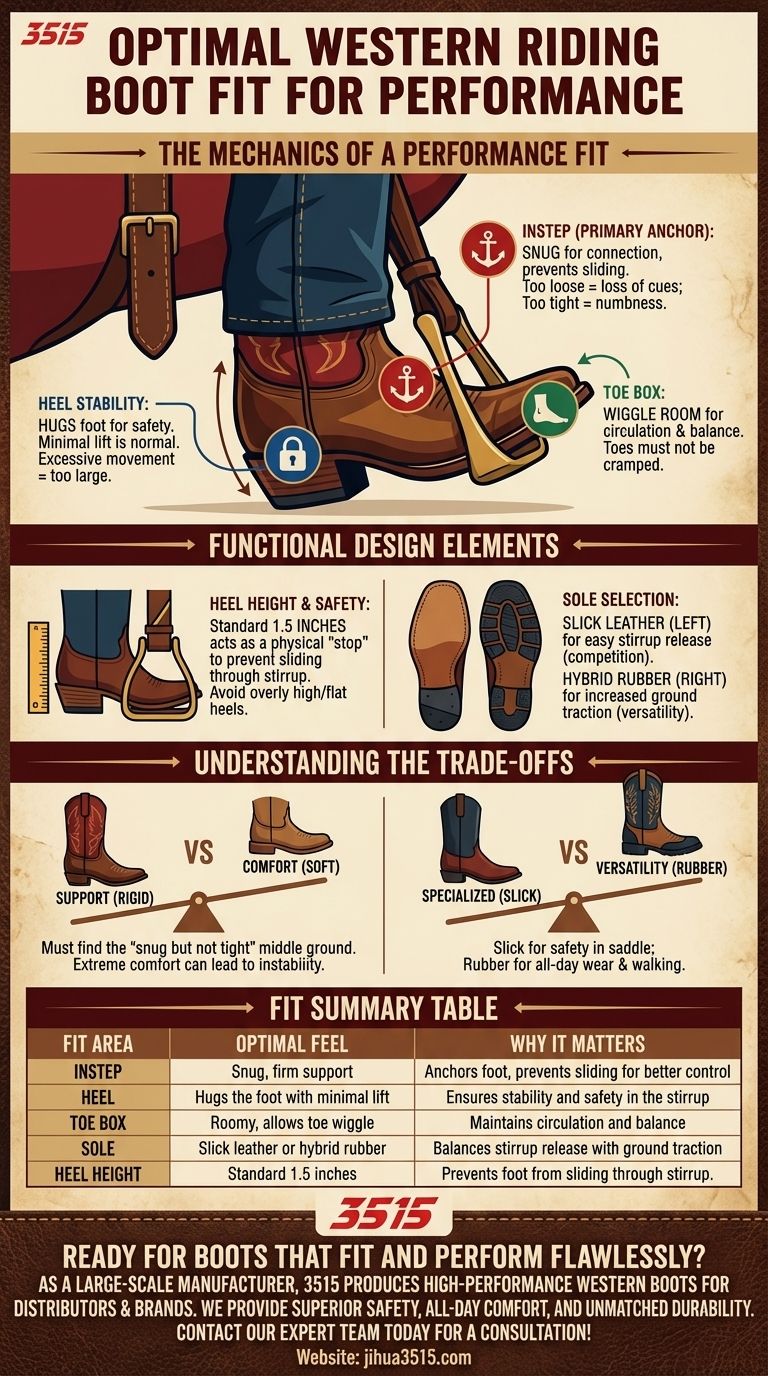
Visual Guide
Related Products
- Durable Goodyear Welt Leather Work Boots for Wholesale & Private Label
- Wholesale High-Traction Camo Boots - Custom Manufacturer for Brands
- High-Traction Suede Tactical Boots Wholesale & Custom Manufacturing
- Wholesale Waterproof Tactical Boots Custom Suede & High-Traction Soles
- Durable Military Combat Boots with Water Drainage for Wholesale & OEM
People Also Ask
- What is the difference between full-grain and top-grain leather? Premium Material Guide for Boot Manufacturers
- What are the advantages of leather as an upper material for work boots? Unmatched Durability & Custom Comfort
- Why is it important to waterproof leather work boots? Protect Your Investment and Performance
- How should new leather work boots be broken in? A Guide to Comfort and Durability
- What are the advantages of leather uppers in work boots? Unmatched Durability & Protection


















