
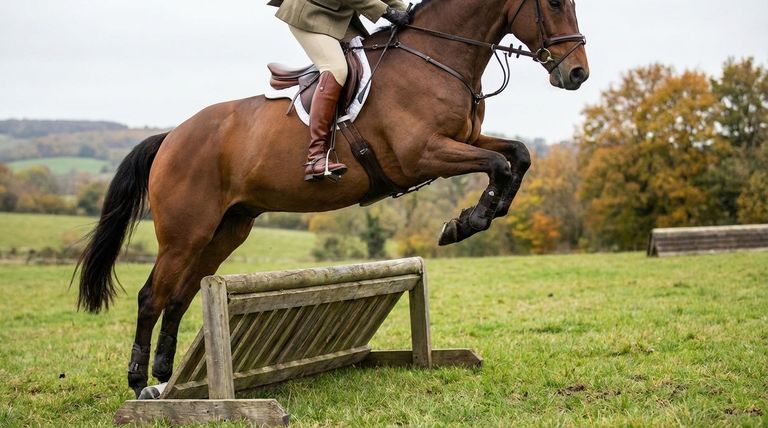
At their core, field riding boots are defined by one critical feature: their lace-up closure at the ankle. These are tall, knee-high leather boots specifically engineered to provide greater flexibility than other styles. This design allows the rider's heel to drop and the ankle to move freely, making them the standard choice for disciplines that involve jumping.
Choosing the right riding boot is about matching its design to the specific demands of your discipline. The field boot solves the unique need for ankle flexibility in jumping sports, a characteristic that fundamentally distinguishes it from the stiffer, more formal dress boot.
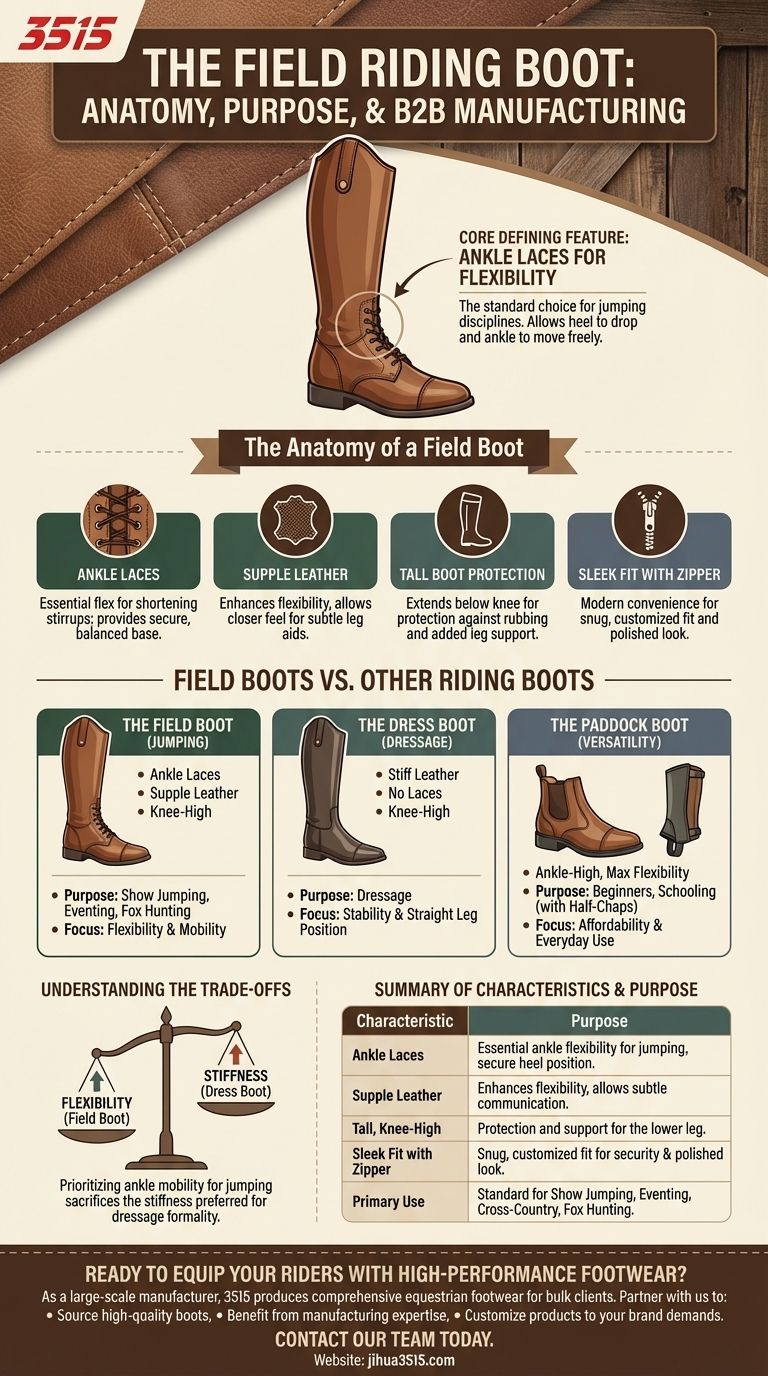
The Anatomy of a Field Boot
A field boot's characteristics are not just for aesthetics; each feature serves a distinct functional purpose designed to enhance a rider's performance and comfort, particularly over fences.
The Defining Feature: Ankle Laces
The most recognizable characteristic of a field boot is the lacing system over the instep.
This is not merely decorative. The laces allow the boot to flex at the ankle, which is essential when a rider shortens their stirrups for jumping. This flexion allows the heel to sink down, providing a secure and balanced base in the saddle.
Material and Construction
Field boots are typically crafted from soft, supple leather.
This choice of material complements the ankle laces, further enhancing flexibility. It also allows the rider to have a closer feel of the horse's side, enabling more subtle communication through leg aids.
Tall Boot Protection and Support
Despite their flexible nature, field boots are still tall boots that extend to just below the rider's knee.
This height provides crucial protection for the lower leg against rubbing from the stirrup leathers and the saddle. It also offers a degree of leg support, helping to maintain a stable and correct position while riding.
A Sleek and Secure Fit
Modern field boots often incorporate a full-length zipper along the back for convenience. Combined with the ankle laces, this allows for a very snug and customized fit.
The overall profile is sleek and traditional, ensuring a secure grip in the stirrup and a polished look suitable for the show ring.
Field Boots vs. Other Riding Boots
Understanding the purpose of a field boot becomes clearer when you compare it to the other primary styles of English riding boots. Each is a specialized tool for a different job.
The Field Boot (For Jumping)
As established, the field boot is the standard for show jumping, eventing, cross-country, and fox hunting. Any discipline requiring a shorter stirrup and a "two-point" or jumping position benefits from the boot's built-in ankle flexibility.
The Dress Boot (For Dressage)
Dress boots are also knee-high, but they have no laces and are made from much stiffer leather.
This rigidity is intentional. It helps immobilize the rider's ankle and encourages a long, straight, and still leg position, which is the ideal in the discipline of dressage. Using a dress boot for jumping would be restrictive and uncomfortable.
The Paddock Boot (For Versatility)
Paddock boots, also known as jodhpur boots, are short, ankle-high boots. They offer maximum flexibility and are often more affordable, making them popular for beginners, children, and everyday schooling.
For proper protection and grip, however, they must be paired with half-chaps (a leather or suede gaiter) to mimic the function and protection of a tall boot.
Understanding the Trade-offs
Choosing a field boot means prioritizing certain characteristics over others. Recognizing these trade-offs is key to ensuring you have the right equipment.
Flexibility Over Stiffness
The primary trade-off is sacrificing the supreme stiffness of a dress boot for ankle mobility. While this is a clear advantage for a jumper, it would be a disadvantage for a dressage rider who relies on that stiffness to help maintain a perfectly still lower leg.
Formality and Appearance
Although perfectly appropriate and standard in the hunter and jumper rings, the field boot is considered slightly less formal than the sleek, unadorned dress boot. The clean lines of a dress boot are preferred for the formal tradition of the dressage arena.
Making the Right Choice for Your Discipline
Your decision should be guided entirely by the type of riding you do.
- If your primary focus is show jumping, eventing, or fox hunting: The field boot is the industry standard, designed specifically for the ankle flexibility these disciplines require.
- If your primary focus is dressage: You should opt for a stiffer dress boot, which promotes the long, stable leg position essential for this discipline.
- If you are a beginner, a child, or focus on casual riding: A combination of paddock boots and half-chaps offers a versatile and often more affordable starting point.
Understanding the purpose behind each design detail ensures your equipment supports, rather than hinders, your performance in the saddle.
Summary Table:
| Characteristic | Purpose |
|---|---|
| Ankle Laces | Provides essential ankle flexibility for jumping and a secure heel position. |
| Supple Leather | Enhances flexibility and allows for subtle communication with the horse. |
| Tall, Knee-High Design | Offers protection and support for the lower leg while riding. |
| Sleek Fit with Zipper | Ensures a snug, customized fit for security and a polished look. |
| Primary Use | The standard for show jumping, eventing, cross-country, and fox hunting. |
Ready to Equip Your Riders with High-Performance Footwear?
As a large-scale manufacturer, 3515 produces a comprehensive range of equestrian footwear for distributors, brand owners, and bulk clients. Our production capabilities encompass all types of riding boots, including performance-driven field boots designed for optimal flexibility and support.
Partner with us to:
- Source high-quality boots built with the precise characteristics riders need.
- Benefit from our extensive manufacturing expertise and reliable supply chain.
- Customize products to meet your specific market demands and brand identity.
Contact our team today to discuss your footwear needs and discover how we can help you deliver superior products to your customers.
Visual Guide
Related Products
- Durable Military Combat Boots with Water Drainage for Wholesale & OEM
- Wholesale Lightweight Tactical Boots Custom Manufacturer for Desert & Combat Use
- High-Traction Suede Tactical Boots Wholesale & Custom Manufacturing
- Wholesale High-Traction Camo Boots - Custom Manufacturer for Brands
- Wholesale Waterproof Tactical Boots Custom Suede & High-Traction Soles
People Also Ask
- Why must gait validation for military applications be conducted in combat boots? Ensure Data Accuracy for Soldiers
- What are the common types of combat boots? Find the Right Boot for Your Mission
- What factors should be considered when choosing military boots for hiking? Durability vs. Weight for Your Terrain
- What are the key considerations when choosing military boots? Prioritize Compliance, Environment & Fit
- How should the midfoot and heel fit in military boots? Achieve a Snug, Secure Fit for Blister Prevention


















