
At its core, a walking boot serves a dual purpose: it protects an injured foot, ankle, or lower leg from further damage while immobilizing it to create a stable environment for healing. This medical device allows you to bear weight and maintain a degree of mobility that would otherwise be impossible during recovery.
A walking boot functions as a protective shield and a stabilizing brace. It is designed to restrict harmful movements and support the injured area, which allows damaged bones, ligaments, and tendons to heal properly while you continue with limited daily activities.
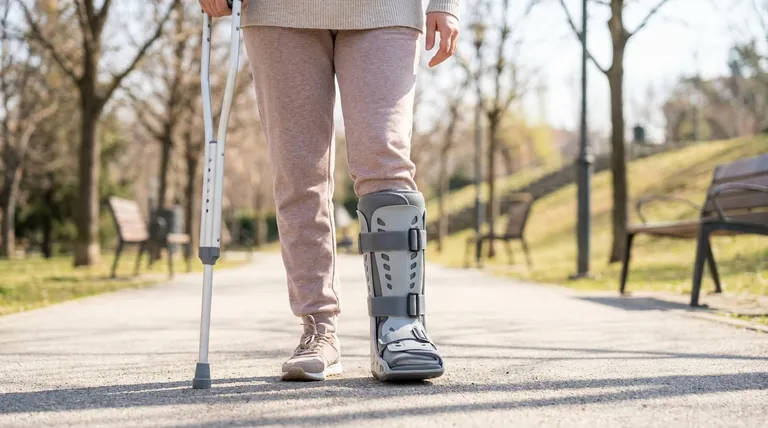
How a Walking Boot Facilitates Healing
A walking boot, often called a medical boot, is more than just a protective covering. It is an engineered tool that actively contributes to the recovery process through several key mechanisms.
Immobilization and Stabilization
The most critical function of the boot is to stabilize the injured site. Its rigid shell and adjustable straps prevent unnecessary movement of the foot and ankle, much like a traditional cast. This stillness is essential for bones to knit together and for torn ligaments or tendons to mend without being re-injured.
Protection from Further Injury
The hard outer casing of the boot acts as a shield. It protects a fractured bone, a surgical site, or a severe sprain from accidental bumps and impacts that could otherwise disrupt the healing process and cause significant pain.
Enabling Controlled Weight-Bearing
Unlike many casts, a walking boot is designed for controlled ambulation. Allowing the injured leg to bear some weight, as prescribed by a doctor, can stimulate bone healing and help maintain some muscle tone, reducing the severity of muscle atrophy during the recovery period.
Common Injuries That Require a Walking Boot
Healthcare professionals prescribe walking boots for a range of lower limb issues where stability is paramount. The decision is based on factors like pain, swelling, and the degree of instability in the joint.
Bone Fractures
Boots are commonly used for stable fractures of the foot, ankle, and lower leg, including smaller breaks and stress fractures that don't require surgical setting.
Severe Sprains and Strains
When ligaments are severely stretched or torn (sprains) or when muscles and tendons are damaged (strains), a boot provides the necessary support to prevent the joint from moving in ways that would worsen the injury.
Post-Surgical Recovery
Following surgery on the foot or ankle, a walking boot is essential for protecting the delicate repair work. It ensures the surgical site remains stable and shielded as it heals.
Understanding the Trade-offs and Risks
While highly effective, using a walking boot requires awareness of its potential side effects and challenges. Proper use is key to avoiding secondary problems.
Impact on Other Joints
The height and rigid nature of the boot alter your natural gait. This can place additional stress on your hips, back, and the knee of both the injured and uninjured leg. These joints may become sore or fatigued as they compensate for the ankle's lack of movement.
Risk of Slipping
The sole of a walking boot may not have the same grip as a standard shoe. You must exercise extreme caution when walking on wet or slippery surfaces to prevent falls, which could cause a new injury.
Skin and Circulation Issues
It is crucial to regularly check your foot and toes for excessive redness or swelling. Straps that are too tight can restrict blood flow. You may need to loosen the straps or deflate the boot's air chambers throughout the day to maintain comfort and circulation.
How to Apply This to Your Recovery
Using your walking boot correctly is just as important as wearing it. Always defer to the specific instructions provided by your orthopedic specialist or healthcare provider.
- If your primary focus is protecting a fresh injury or surgical site: Adhere strictly to your doctor's instructions on when and how to wear the boot to ensure the initial, most critical phase of healing is undisturbed.
- If your primary focus is regaining mobility safely: Use the boot to gradually increase weight-bearing as advised, but remain highly aware of any new pain in your knees, hips, or back, which could signal a need for gait adjustment.
- If your primary focus is comfort and long-term health: Commit to daily skin checks and keep the boot's liner clean by hand-washing to prevent skin irritation, pressure sores, and infection.
Properly used, a walking boot is a critical tool that bridges the gap between total immobility and a full return to activity.
Summary Table:
| Function | Benefit |
|---|---|
| Immobilization & Stabilization | Prevents harmful movement for proper healing of bones and soft tissues. |
| Protection from Injury | Hard shell shields the injury from accidental bumps and impacts. |
| Controlled Weight-Bearing | Allows limited mobility to stimulate healing and reduce muscle atrophy. |
Are you a distributor, brand owner, or bulk client in need of high-quality medical footwear?
As a large-scale manufacturer, 3515 produces a comprehensive range of protective and recovery footwear, including walking boots designed for optimal patient comfort and support. Our production capabilities encompass all types of therapeutic shoes and boots, ensuring durability and precise functionality for healthcare providers and their patients.
Let's discuss how we can support your inventory needs with reliable, bulk-order solutions. Contact our team today to request a quote or learn more about our product lines.
Visual Guide

Related Products
- Wholesale Durable Camouflage Canvas Shoes with High-Traction Cleated Rubber Sole
- Durable Rubber Sole Outdoor Shoes Wholesale & Custom Manufacturing
- Durable Goodyear Welt Leather Work Boots for Wholesale & Private Label
- Wholesale High-Traction Camo Boots - Custom Manufacturer for Brands
- Heavy-Duty Waterproof Nubuck Safety Boots Safety Shoes for Bulk Supply
People Also Ask
- Why is the selection of high-strength fabric materials necessary in the production of canvas shoes and training shoes?
- What are the properties of canvas as a shoe material? A Guide to Lightweight Comfort & Style
- Can canvas shoes be worn in rainy conditions? The Truth About Water Resistance
- What are some examples of vulcanized shoes? Discover the Flexibility and Board Feel of Classic Sneakers
- What are the characteristics of canvas as a shoe material? A Guide to Lightweight, Breathable Footwear



















