
To properly maintain wellington boots, you must focus on three key areas: cleaning them with cold, soapy water after use; treating the rubber with a conditioning spray to keep it supple; and storing them upright in a cool, dark, and dry place to prevent cracking from sunlight and heat.
The greatest threats to your wellington boots are not mud and water, but the invisible damage caused by UV light, ozone, and improper storage. A consistent care routine is designed to combat these specific factors, preventing the rubber from becoming brittle and cracked over time.
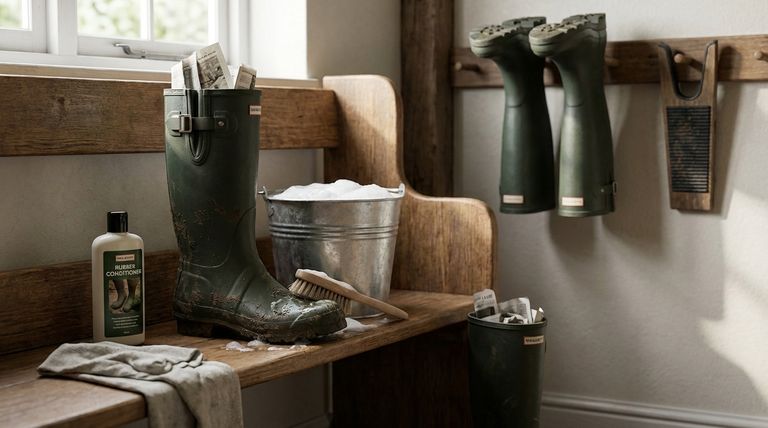
The Core Maintenance Routine: A Step-by-Step Guide
Effective wellington care is a simple process that protects the natural or synthetic rubber from premature degradation. Following these steps consistently will dramatically extend the life of your boots.
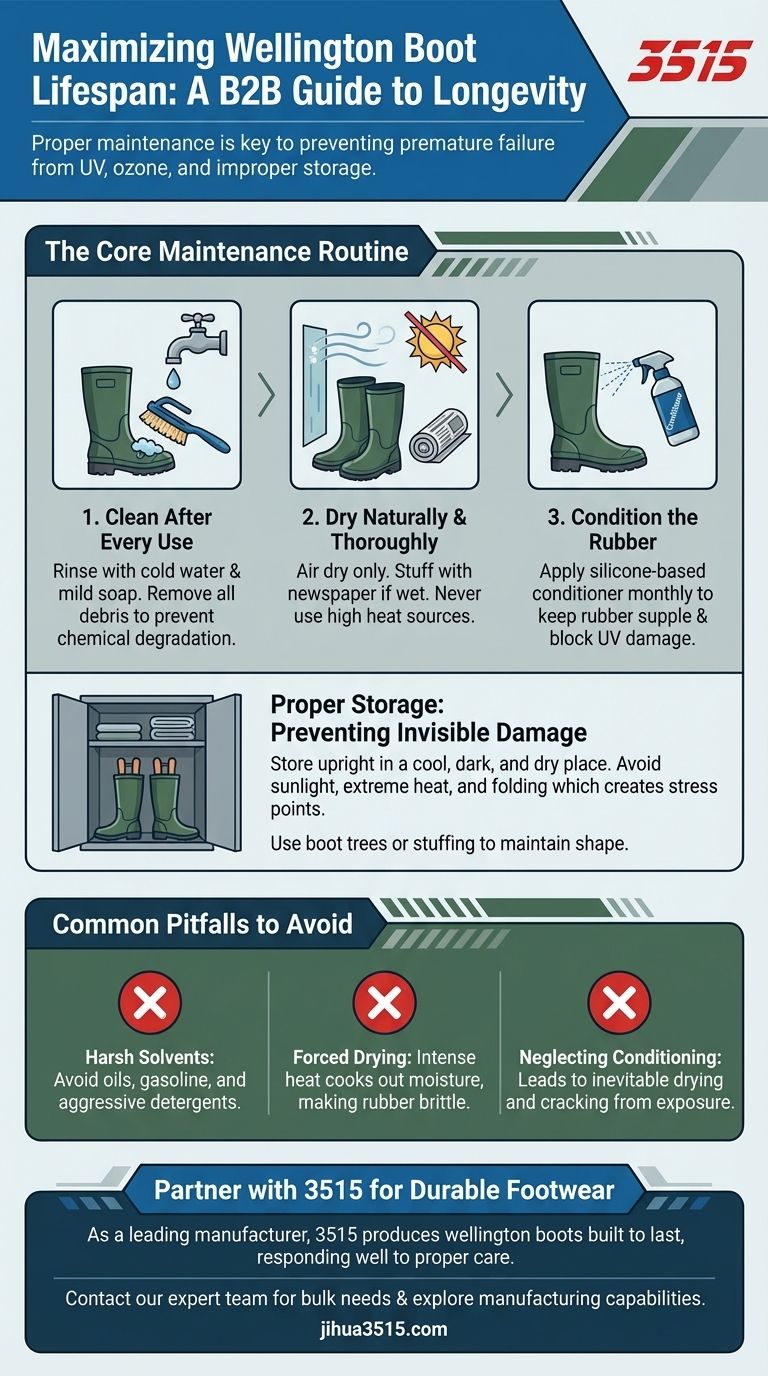
Step 1: Clean After Every Use
Dirt, mud, and farmyard waste can contain chemicals and minerals that slowly degrade rubber. Don't let them sit on your boots.
Rinse your boots with cold water and use a soft brush and mild soap to remove all debris. Avoid harsh chemical cleaners or solvents, as they can strip protective coatings and damage the rubber.
Step 2: Dry Naturally and Thoroughly
Forcing your boots to dry with high heat is one of the fastest ways to make the rubber brittle and prone to cracking.
Always allow your boots to air dry naturally. If they are wet inside, you can stuff them with newspaper to absorb moisture and help them keep their shape. Never leave them next to a radiator, fireplace, or in direct, hot sunlight.
Step 3: Condition the Rubber
Just like leather, rubber can dry out over time, leading to the infamous cracks and splits, especially along flex points.
Periodically—about once a month with regular use—apply a silicone-based rubber conditioner or boot protection spray. This nourishes the material, restores its suppleness, and adds a protective barrier against moisture and UV damage.
Proper Storage: Preventing Invisible Damage
How you store your boots between uses is just as important as how you clean them. Most wellington failures happen slowly and silently in storage.
Avoid Sunlight and Heat
The primary cause of rubber "perishing" is exposure to UV light and ozone, which break down the molecular bonds in the material.
Store your boots indoors in a cool, dark place like a closet, boot room, or garage that doesn't experience extreme temperature swings. A car trunk or a sunlit porch are among the worst possible locations.
Store Them Upright
Folding or creasing your boots creates stress points in the rubber. Over time, these areas will weaken and be the first place a split appears.
Keep your boots standing upright. If they tend to flop over, use boot trees or simply stuff the shafts with rolled-up magazines or newspaper to maintain their shape.
Understanding the Common Mistakes
Avoiding a few common pitfalls can make all the difference in boot longevity. Many well-intentioned owners cause damage without realizing it.
The Mistake of Using Harsh Solvents
Never use oils, gasoline, or aggressive detergents to clean your boots. These substances can actively dissolve or weaken the rubber, leading to catastrophic failure. Stick to simple soap and water.
The Problem with Forced Drying
The temptation to quickly dry wet boots by a heat source is strong, but it's a critical error. The intense, dry heat cooks the natural moisture and plasticizers out of the rubber, leaving it stiff and fragile.
The Risk of Neglecting Conditioning
Simply washing your boots is not enough. Without a conditioning treatment, the rubber will inevitably dry out from environmental exposure. This single forgotten step is why many expensive boots fail prematurely.
Making Your Boots Last: Key Actions for Your Goal
Tailor your maintenance routine to how you use your boots to get the best results.
- If your primary focus is preventing cracks and splits: Regularly use a silicone-based rubber conditioner and always store your boots upright, away from sunlight and heat sources.
- If your primary focus is daily-use durability: Make a habit of rinsing your boots after every use and consider rotating between two pairs to allow each to fully dry and recover.
- If your primary focus is long-term, occasional storage: Ensure they are perfectly clean, dry, and lightly conditioned before storing them in a dark, cool place, ideally protected in a box or bag.
By treating your wellington boots as a piece of technical gear, you can ensure they provide reliable service for years to come.
Summary Table:
| Key Maintenance Step | Purpose | Key Action |
|---|---|---|
| Clean After Use | Remove dirt/debris that degrades rubber | Rinse with cold water & mild soap |
| Dry Naturally | Prevent rubber from becoming brittle | Air dry; stuff with newspaper if wet inside |
| Condition Rubber | Keep rubber supple and protect from UV damage | Apply silicone-based conditioner monthly |
| Store Properly | Avoid UV light, heat, and stress points | Store upright in a cool, dark, dry place |
As a leading manufacturer, 3515 produces durable wellington boots built to last for distributors, brand owners, and bulk clients. Our comprehensive range of footwear is designed with quality materials that respond well to proper care. Ensure your customers get the longest life from their boots with our reliable products.
Let's discuss your bulk wellington boot needs — Contact our expert team today to explore our manufacturing capabilities and find the perfect solution for your market.
Visual Guide
Related Products
- Durable Waterproof Rain Boots | Custom Manufacturer for Wholesale & Brands
- Durable Goodyear Welt Leather Work Boots for Wholesale & Private Label
- Wholesale Durable Leather Work Boots | 8-Inch Goodyear Welt Manufacturer
- Premium Wholesale Tactical Style Safety Shoes Boots with Quick Lacing
- Durable High-Ankle Tactical Boots Wholesale Manufacturer for Custom & Bulk Orders
People Also Ask
- What are the main materials for waterproof rain boots? Choose the Right Material for Durability & Comfort
- What is the overall recommendation for choosing rain boot materials? A Guide to Rubber vs. PVC
- How does boot height affect waterproofing? Choose the Right Height for Ultimate Protection
- Why are rain boots more flexible and comfortable than snow boots? The Key Differences Explained
- What are the best types of shoes for different gardening conditions? Find Your Perfect Match.



















