
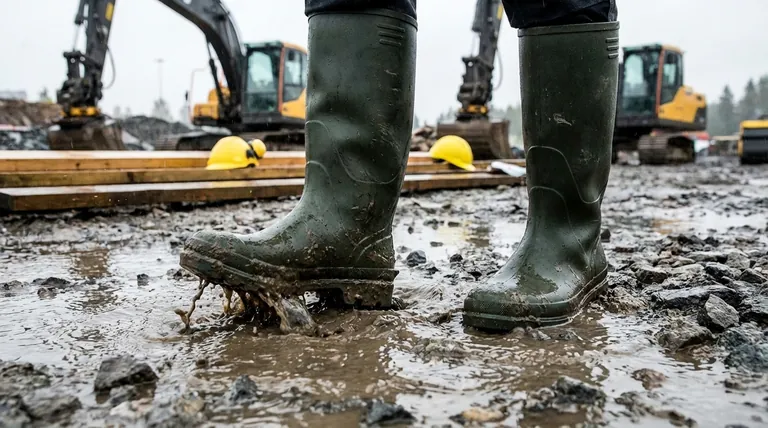
The primary benefits of rubber boots are their exceptional waterproofing, durability, and slip-resistance. This unique combination of flexibility and robust protection makes them a superior choice for navigating wet, muddy, or demanding environments where other materials would fall short.
Rubber's true value lies not just in a single feature, but in its unique balance of complete waterproof protection and natural flexibility. This combination provides both safety and all-day comfort in conditions that would compromise other types of footwear.
The Core Pillars of Protection
At its heart, a rubber boot is designed to create an impenetrable barrier between you and the environment. This protection is built on three fundamental properties.
Uncompromising Waterproofing
The molecular structure of rubber makes it inherently waterproof. Unlike treated leathers or coated fabrics that can wear down, rubber provides a seamless shield against moisture, ensuring your feet remain completely dry.
This makes it the ideal material for everything from rainy city streets to flooded work sites.
Superior Grip and Slip-Resistance
Rubber soles offer exceptional traction on wet or slippery surfaces. The material's natural elasticity allows it to conform to microscopic irregularities in the ground, maximizing surface contact and grip.
This property is crucial for safety, providing stable footing in mud, on wet concrete, or in industrial settings where spills may occur.
Resilience in Harsh Environments
Natural rubber is remarkably durable and resistant to wear and tear. It can withstand repeated flexing and abrasion without cracking or breaking down.
Furthermore, it offers good resistance to many oils and chemicals, making it a reliable choice for agricultural, industrial, and other harsh working conditions.
Beyond Protection: The Comfort Factor
While protection is paramount, rubber also delivers a surprising level of comfort, largely due to its natural material properties.
Natural Flexibility for Movement
Unlike rigid synthetic materials, rubber is highly flexible. It moves with your foot, reducing chafing and allowing for a more natural range of motion during walking or working.
This flexibility is a key contributor to comfort during prolonged wear.
Inherent Shock Absorption
The elastic nature of rubber also provides a cushioning effect. It helps absorb the impact of each step, reducing fatigue in your feet and joints over the course of a long day.
Maintaining Shape Over Time
High-quality rubber boots are less likely to stretch or lose their shape compared to other materials. This structural integrity ensures a consistent fit and continued support throughout the life of the boot.
Understanding the Trade-offs
No material is perfect for every situation. To make an informed decision, it's crucial to understand rubber's limitations.
Cost Compared to Synthetics
Rubber boots, particularly those made from natural rubber, tend to be more expensive than their synthetic counterparts, such as those made from PVC. This higher initial cost reflects the material's superior durability and comfort.
The Breathability Question
The same property that makes rubber completely waterproof also makes it non-breathable. In warm conditions or during strenuous activity, this can lead to moisture buildup inside the boot.
This is a direct trade-off for its protective qualities and is often managed with moisture-wicking socks.
How to Apply This to Your Project
Your choice should align directly with your primary use case and priorities.
- If your primary focus is hazardous work: Prioritize boots made from vulcanized rubber for maximum durability and look for specifications on chemical and oil resistance.
- If your primary focus is daily rain or garden use: A standard, flexible natural rubber boot will provide the ideal balance of comfort, waterproofing, and ease of use.
- If your primary focus is a balance of traction and breathability: Consider a hybrid shoe, such as a leather boot with a high-traction rubber sole, to get the best of both worlds.
Ultimately, choosing rubber is an investment in reliable, long-lasting protection against the elements.
Summary Table:
| Benefit | Key Feature | Ideal For |
|---|---|---|
| Waterproofing | Impermeable barrier against moisture | Rainy conditions, flooded sites |
| Durability | Resists abrasion, oils, and chemicals | Industrial, agricultural work |
| Slip-Resistance | Superior traction on wet, slippery surfaces | Safety in mud, spills, wet concrete |
| Comfort | Natural flexibility and shock absorption | All-day wear, reducing fatigue |
Ready to equip your customers or workforce with high-performance rubber boots?
As a large-scale manufacturer, 3515 produces a comprehensive range of durable, waterproof footwear for distributors, brand owners, and bulk clients. We can help you source the perfect rubber boots for your specific market needs, ensuring quality, reliability, and value.
Contact our team today to discuss your project and request a quote.
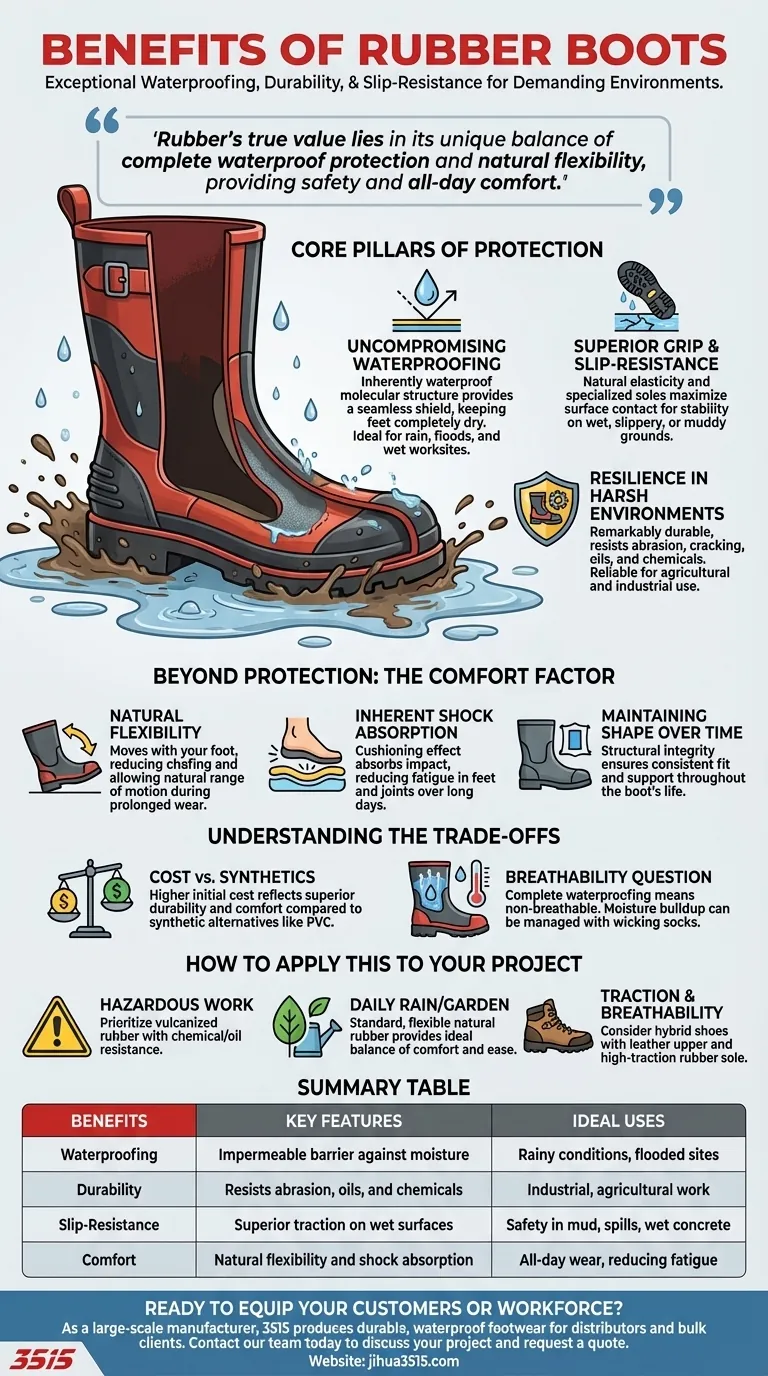
Visual Guide
Related Products
- Factory Direct Wholesale Rain Boots Durable Waterproof & Fully Customizable
- Durable Rubber Sole Outdoor Shoes Wholesale & Custom Manufacturing
- Wholesale Durable Camouflage Canvas Shoes with High-Traction Cleated Rubber Sole
- Wholesale Durable Leather Work Boots | 8-Inch Goodyear Welt Manufacturer
- Durable Goodyear Welt Leather Work Boots for Wholesale & Private Label
People Also Ask
- What are the characteristics of rain boots? A Guide to Waterproof Footwear for Every Need
- What factors should be considered when choosing rain boots? Find the Perfect Boot for Your Needs
- What are the main differences between rain boots and snow boots? Choose the Right Boot for Your Climate
- How should one decide between PVC and rubber for rain boots? A Guide to Choosing the Right Material
- Why are rain boots more flexible and comfortable than snow boots? The Key Differences Explained















