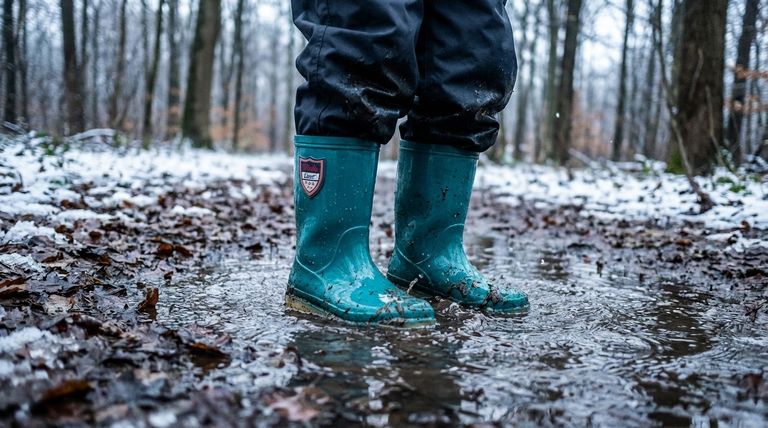
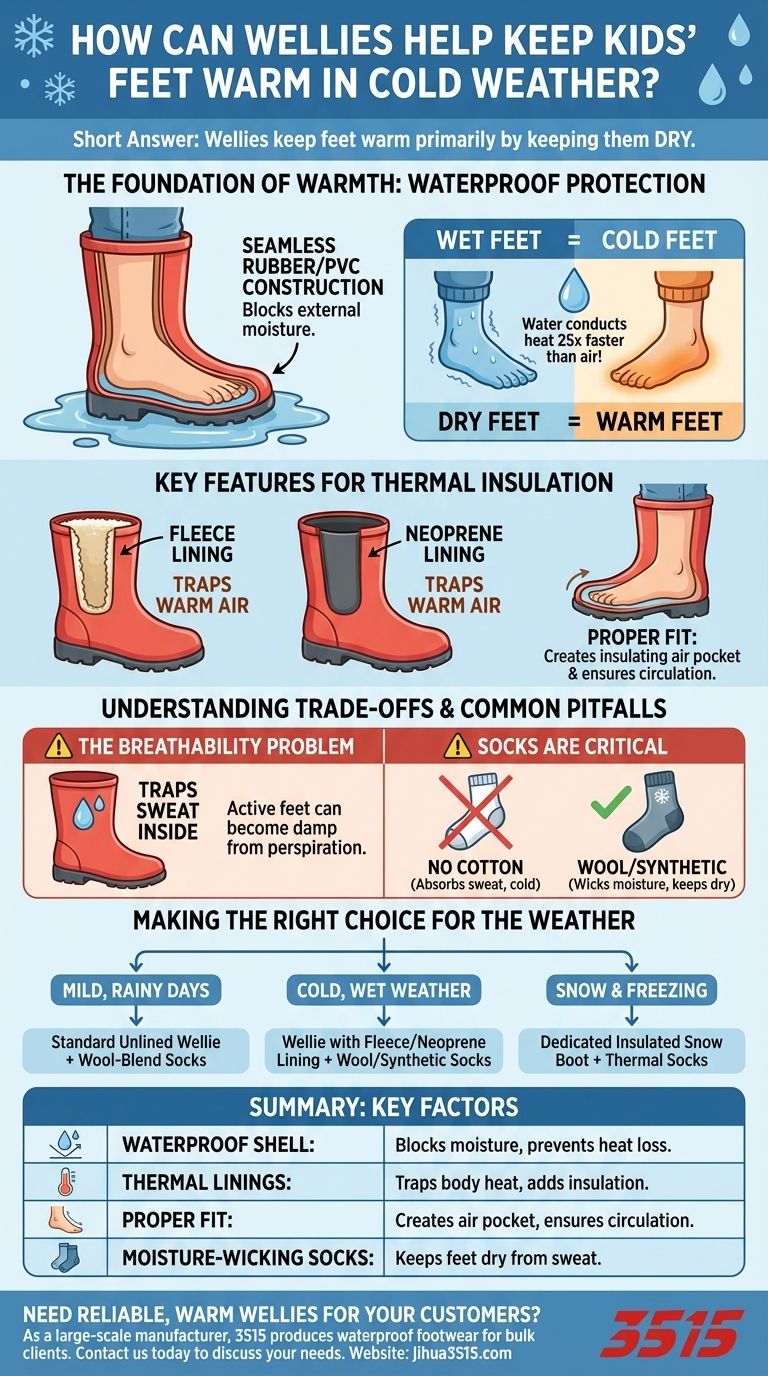
In short, wellies keep kids' feet warm primarily by keeping them dry. Their waterproof construction is the first and most critical line of defense against the cold, which is then enhanced by insulating materials, thermal linings, and the right choice of socks.
The greatest enemy of warm feet is not cold air, but moisture. A wellie's core function is to provide a waterproof barrier, which is the essential foundation for preventing the rapid heat loss caused by wet socks.
The Foundation of Warmth: Waterproof Protection
The most important job of any winter boot is to keep the foot completely dry. This is where a traditional wellie excels and is the primary reason it's effective in cold, wet weather.
Why Dry Feet Are Warm Feet
Water conducts heat away from the body about 25 times faster than air. When a child's socks get wet from puddles, slush, or snow, their feet will lose heat at an alarming rate, leading to discomfort and cold.
By creating an impermeable barrier, wellies stop external moisture from ever reaching the sock. This single function is more crucial for warmth than any amount of insulation on its own.
The Role of Waterproof Materials
Wellies are typically made from rubber or PVC (polyvinyl chloride). These materials are molded into a seamless, one-piece boot, leaving no stitches or gaps where water can penetrate, ensuring feet stay dry even when fully submerged in a puddle.
Key Features for Thermal Insulation
While dryness is the foundation, several features add the insulation needed to trap heat and provide comfort in colder temperatures.
The Power of Linings
Many wellies designed for colder weather include a built-in lining. A fleece lining is common, adding a soft layer that traps warm air close to the foot, acting as an extra barrier against the cold.
Other boots may use neoprene, the same material used in wetsuits, which offers excellent insulation even when damp.
The Importance of a Proper Fit
A wellie that is too tight can restrict blood circulation, making feet feel cold regardless of insulation. A proper fit should leave enough room for a thick pair of socks without cramping the toes.
This small pocket of air between the foot and the boot, warmed by body heat, is a crucial part of the insulation system.
Understanding the Trade-offs and Common Pitfalls
While effective, wellies are not a perfect solution for every cold-weather scenario. Understanding their limitations is key to using them correctly.
The Breathability Problem
The same waterproof rubber that blocks water from getting in also traps moisture from sweat inside the boot. On very active days, a child's feet can become damp from perspiration, which will eventually make them feel cold.
Not All Wellies Are Insulated
A standard, unlined wellie is designed for rain, not for significant cold. It offers minimal insulation on its own and will not keep feet warm in near-freezing temperatures without significant help from thermal socks.
Socks Are Not an Afterthought
Pairing wellies with the wrong socks can defeat their purpose. Cotton socks are a poor choice, as they absorb sweat and hold it against the skin, making feet cold and clammy.
Always choose socks made from wool or synthetic thermal materials. These fabrics wick moisture away from the skin, keeping feet dry from the inside and preserving warmth.
Making the Right Choice for the Weather
To ensure your child's feet stay warm, match the type of wellie and sock to the specific weather conditions.
- If your primary focus is mild, rainy days: A standard, unlined wellie paired with a quality pair of wool-blend socks is perfectly sufficient.
- If your primary focus is cold, wet weather: Prioritize wellies with a built-in fleece or neoprene lining for active insulation against the chill.
- If your primary focus is snow and freezing temperatures: Consider a dedicated, insulated snow boot, which often offers superior warmth and better breathability than a traditional wellie.
Ultimately, the right combination of a waterproof boot and moisture-wicking socks is the key to ensuring warm, dry feet for any outdoor adventure.
Summary Table:
| Key Factor | How It Keeps Feet Warm |
|---|---|
| Waterproof Shell | Blocks external moisture (rain, slush) to prevent rapid heat loss. |
| Thermal Linings (Fleece/Neoprene) | Traps body heat and adds an active layer of insulation. |
| Proper Fit with Room for Socks | Creates a warm air pocket and ensures good blood circulation. |
| Moisture-Wicking Socks (Wool/Synthetic) | Keeps feet dry from sweat, which is crucial for maintaining warmth. |
Need reliable, warm wellies for your customers?
As a large-scale manufacturer, 3515 produces a comprehensive range of waterproof footwear for distributors, brand owners, and bulk clients. Our production capabilities encompass all types of insulated boots and wellies designed to keep feet warm and dry in any condition.
Contact us today to discuss your specific needs and explore our catalog of durable, child-friendly footwear.
Visual Guide
Related Products
People Also Ask
- What are the recommended insulation ratings for mild winter conditions? A Guide for Active & Stationary Workers
- How does insulation thickness correlate with temperature ranges? A Guide to Choosing the Right Warmth
- What insulation level is needed for severe cold and stationary work? 1200g or Higher is Essential
- What safety advantages do insulated boots offer beyond warmth? Dielectric Protection & Superior Grip
- How does fleece lining contribute to the warmth of insulated boots? Trapping Air for Superior Cold Protection